Top Automated Answering Services for Small Business 2026


Don’t miss what’s next in AI.
Subscribe for product updates, experiments, & success stories from the Nurix team.
Every missed call is a missed opportunity. Research shows that 85% of callers won't try again after reaching voicemail, costing small businesses thousands in lost revenue annually.
Yet hiring full-time receptionists remains prohibitively expensive for most growing companies. Enter automated answering services, intelligent AI-powered systems that handle customer calls 24/7, qualify leads, schedule appointments, and integrate seamlessly with your business tools.
This comprehensive guide examines the 12 best automated answering services for small businesses in 2026, comparing features, pricing, and capabilities to help you choose the solution that transforms missed calls into captured opportunities.
Executive Summary
Automated answering services in 2026 range from basic call-handling tools to AI platforms that manage customer interactions and business workflows. Solutions like CloudTalk, Ruby, and NUplay by Nurix AI differ in automation depth, integrations, and scalability. While many tools focus on routing or message-taking, platforms like NUplay by Nurix AI enable end-to-end workflow execution, making them better suited for teams focused on efficiency and long-term ROI.
At a glance:
- Automated answering services can save your small business thousands by handling calls 24/7, qualifying leads, and scheduling appointments efficiently.
- Large Language Models (LLMs) offer smarter, human-like interactions by understanding context and adapting over time, making them ideal for complex business needs.
- When choosing an answering service, consider features like 24/7 availability, CRM integration, bilingual support, and the total cost of ownership.
- Not All “Answering Services” Are Automated: This list includes AI voice agents, hybrid receptionist services, and live answering providers, because your best choice depends on call volume and complexity.
- NUplay by Nurix AI stands out for its advanced AI capabilities, deep customization for various industries, and integration with existing systems, offering a strong ROI for businesses that want to capture every opportunity.
What is an Auto Answering Service?
An auto answering service is a system that answers incoming business calls automatically without requiring a live receptionist. It can include pre-recorded scripts, menu-based routing, or AI-assisted voice handling to direct callers efficiently. Small businesses use these services to ensure 24/7 coverage, qualify leads, and manage appointments, reducing missed opportunities and improving customer experience.
Differences of Auto Answering vs Automated Service vs Auto Attendant
Call-handling systems differ in purpose and functionality. “Auto answering service” handles calls automatically, “automated answering service” uses AI or pre-recorded workflows, and “auto attendant” routes callers via menus.
Here’s how each works and which fits your business needs:
- Auto Answering Service:This is the broad term people use when they want a system to answer calls without a human receptionist. It can refer to either fully automated systems or hybrid setups that combine AI with live agents.
- Automated Answering Service: This is more specific: a fully technology-driven system that handles calls, greets callers, qualifies leads, schedules appointments, and routes inquiries, all without a live person. AI or pre-recorded menus power these systems.
- Auto Attendant: A subset of automated answering services. This typically refers to a menu-based phone system that greets callers and routes them using preset options, like “Press 1 for Sales, 2 for Support.” It’s less conversational than AI-powered answering services and usually doesn’t qualify leads.
How Automated Answering Services are Transforming Business Communication?
Automated answering services powered by Large Language Models (LLMs) are revolutionizing business communication by replacing traditional, rigid Interactive Voice Response (IVR) systems with natural, intuitive conversations.
Unlike IVR systems that follow predetermined paths, Automated answering services understand and respond to complex queries in a human-like way. For example:
- LLM-powered systems can grasp intent and context. For example, when a customer asks, “Can I change my appointment and ask about my billing?” the LLM recognizes both inquiries and processes them seamlessly. It pulls relevant data—like order status or billing details—directly from your systems and responds naturally, like “Let me check your order for you.”
- LLMs are powered by advanced Speech-to-Text (STT) engines that achieve over 95% accuracy, even with varied accents and noise. The system analyzes the converted text to extract key details such as dates, product names, and customer information.
- What sets LLMs apart is their ability to learn and adapt. Through Machine Learning Operations (MLOps), the system improves with every interaction, refining its understanding of specific business terminology and unique scenarios. For instance, healthcare systems learn medical terms, while legal systems adapt to legal jargon.
NUplay by Nurix AI’s enterprise-grade LLMs take this a step further by allowing businesses to train models on their unique knowledge base, service procedures, and customer interactions. This results in intelligent answering systems that handle complex queries, maintain a consistent brand voice, and improve over time.
Now that we understand the power of LLMs in business communication, let’s dive into the essential features you should be looking for in your automated answering service.
Features to Look for in an Automated Answering Service
An effective automated answering service should enhance your business operations, provide seamless customer interactions, and reduce costs. Here are the key features to consider:
- 24/7 Availability: Ensure your answering service offers genuine 24/7 coverage, with no hidden fees for after-hours or holiday calls. Look for services with a 99.9% uptime SLA and reliable failover systems, guaranteeing consistent service around the clock.
- Live Agent vs. AI: Understand the trade-offs between live agents, AI, and hybrid models. Live agents offer emotional intelligence but at a higher cost, while AI provides scalability and efficiency. Hybrid systems optimize cost and service quality by handling simple inquiries with AI and escalating complex ones to humans.
- CRM Integration: Integrating your answering service with your CRM allows for personalized, context-aware conversations. Ensure real-time synchronization with your CRM to automate data entry, track leads, and streamline workflows.
- Custom Scripts/Greetings: Customize greetings and scripts to reflect your brand’s voice. Look for services that allow you to create different scripts for various call types and easily update them as your business evolves.
- Bilingual Support: Bilingual support is essential for businesses with diverse customer bases. Ensure the service provides 24/7 bilingual coverage with automatic language detection and seamless switching between languages.
- Appointment Scheduling: Choose a service with real-time calendar integration for appointment scheduling. It should handle complex scenarios like multi-staff calendars, timezone management, and automated reminders to reduce no-shows.
- Call Recording/Transcription: Look for call recording and transcription with advanced features like speaker identification, sentiment analysis, and automatic summarization. This provides valuable business insights and improves customer service.
- Lead Qualification: Ensure the answering service can intelligently qualify leads by asking relevant questions and scoring them based on predefined criteria. This helps prioritize high-value prospects for follow-up and integrates with your marketing automation tools.
- Pricing Transparency: Avoid hidden costs like setup fees or holiday surcharges, and request sample invoices to understand real-world costs. The most trustworthy providers (like NUplay by Nurix AI) offer detailed pricing breakdowns, ROI calculators, and transparent cost structures, enabling accurate budget planning without surprises.
- Mobile App Access: A high-quality mobile app gives you full control over your answering service from anywhere. Look for features like real-time notifications, the ability to update call routing, and easy access to call data.
These features will ensure your automated answering service meets the demands of modern businesses, enhancing customer experience and optimizing operations. But, with so many options available, how do you choose the right service for your business?
The 12 Best Automated Answering Services for Small Businesses
We've narrowed it down to the top 12 answering services that cater to various business needs and budgets. These services differ greatly in their offerings, and selecting the best one requires careful consideration.
1. NUplay by Nurix AI
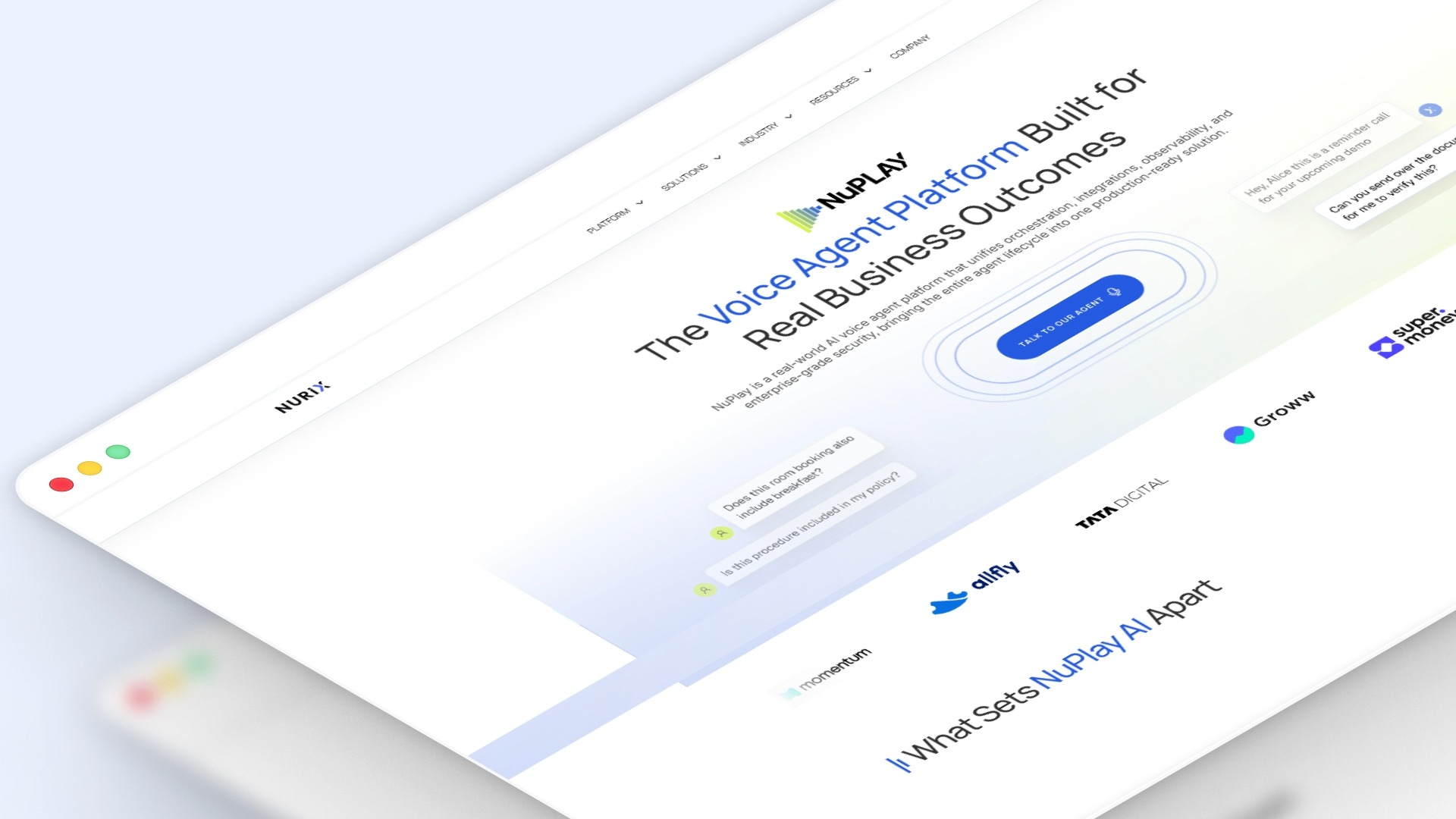
NUplay by Nurix AI is a platform designed for enterprises to deploy AI agents that handle customer conversations and execute workflows across sales, support, and internal operations.
NUplay by Nurix AI goes beyond basic answering systems by enabling organizations to design, deploy, and manage AI agents that handle real business tasks end-to-end. These agents qualify leads, execute workflows, update systems, and resolve customer requests across channels.
Built for enterprise-scale operations, NUplay by Nurix AI combines human-like voice interactions with structured workflow execution. It integrates directly with CRM, ERP, and support systems, ensuring every conversation leads to a measurable action without manual handoffs.
Key Features:
- Multi-agent orchestration: Specialized agents collaborate under a central orchestrator to handle complex, multi-step workflows
- Human-like voice AI: Natural conversations with interruption handling, context retention, and brand-aligned voice control
- Deep enterprise integrations: Connects with CRM, ERP, scheduling tools, and custom APIs for real-time execution
- Retrieval-augmented generation (RAG): Grounds responses in company knowledge to ensure accuracy and consistency
- NuPulse analytics: Real-time visibility into performance, including response times, containment, and resolution rates
- Security and compliance: PII redaction, audit trails, role-based access, and configurable data controls
Pros:
- Handles end-to-end workflows, not just call answering
- Designed for high-volume, enterprise-grade operations
- Strong integration and orchestration capabilities
- Improves performance over time with continuous learning and monitoring
- Supports voice, chat, and document-based workflows
Best For: Enterprises and fast-scaling companies that need to automate high-volume customer interactions, streamline sales and support workflows, and reduce manual effort across systems while maintaining control, visibility, and compliance.
2. CloudTalk
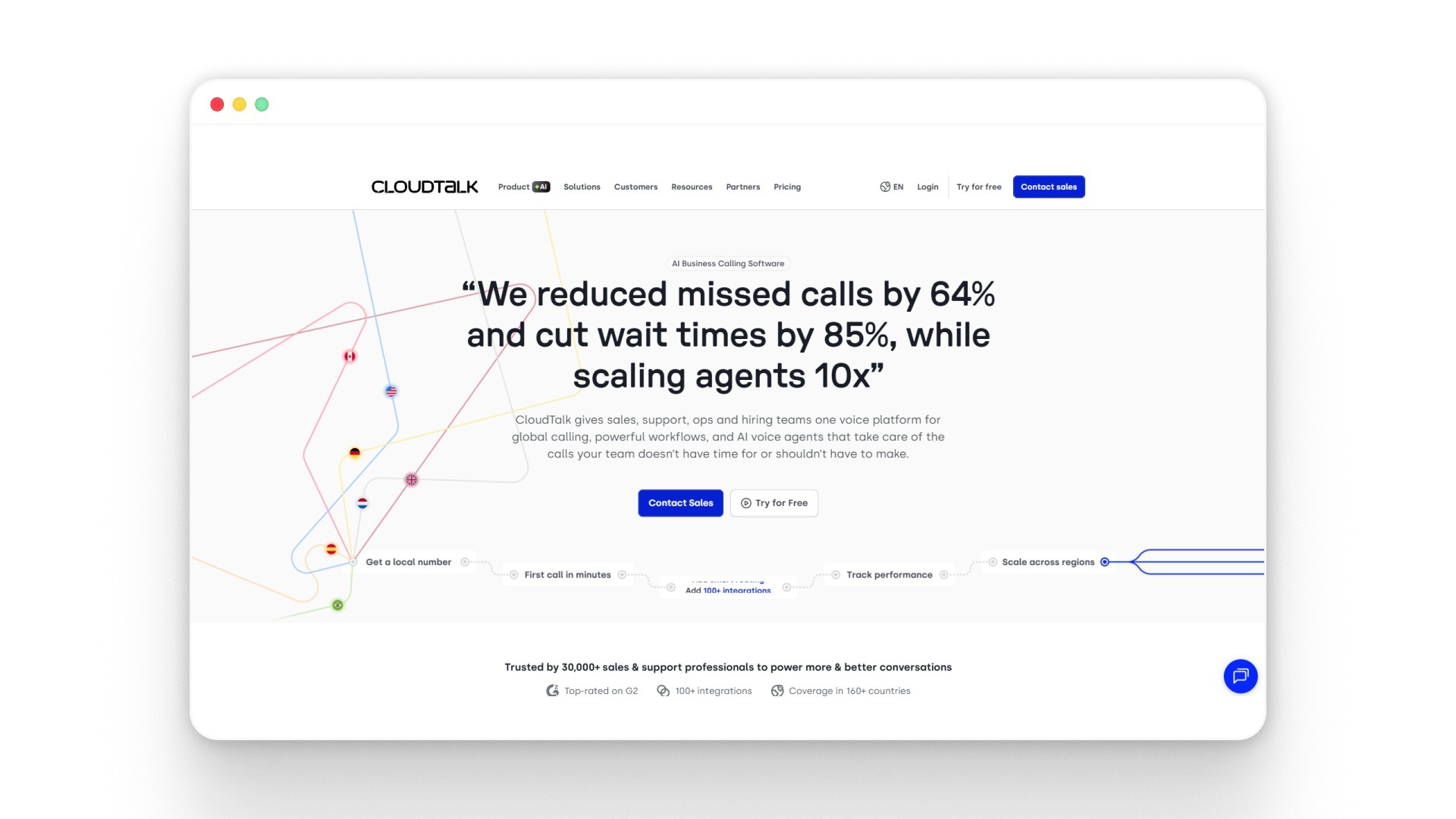
CloudTalk combines a comprehensive cloud-based phone system with AI Voice Agent capabilities, ideal for startups and small businesses needing both call automation and full business phone functionality.
Key Features:
- AI Voice Agent (CeTe) for 24/7 inbound call handling
- Smart call routing using CRM data and caller intent
- Automatic call transcription and AI-generated summaries
- 160+ business tool integrations (HubSpot, Salesforce, Pipedrive, Zendesk)
- Real-time sentiment analysis and performance insights
- International number support in 160+ countries
Pros and Cons:
Best For: Startups and growing sales teams needing a complete phone system with AI enhancement at an accessible price point.
3. Ruby Receptionist
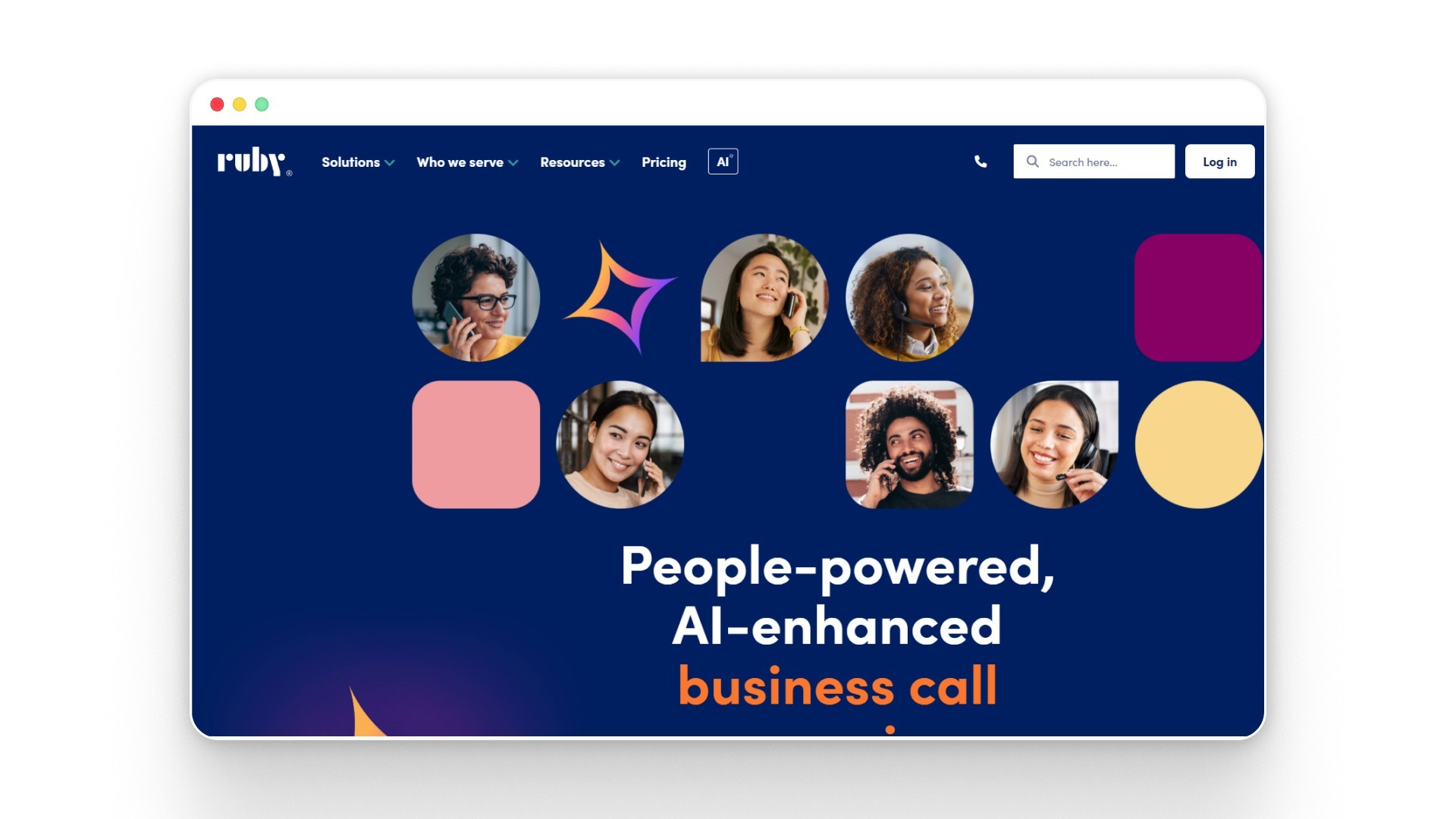
Ruby blends trained live receptionists with AI-powered call screening to deliver premium answering experiences that balance automation efficiency with authentic human connection.
Key Features:
- 24/7 live US-based receptionists backed by AI routing
- Bilingual support (English and Spanish)
- Mobile app for real-time call management
- Integration with major CRMs, calendars, and business tools
- Professional appointment scheduling and lead capture
- Customizable call handling scripts
Pros and Cons:
Best For: Professional services, real estate agencies, boutique businesses, and brands where personal touch and professional image are paramount.
4. Abby Connect
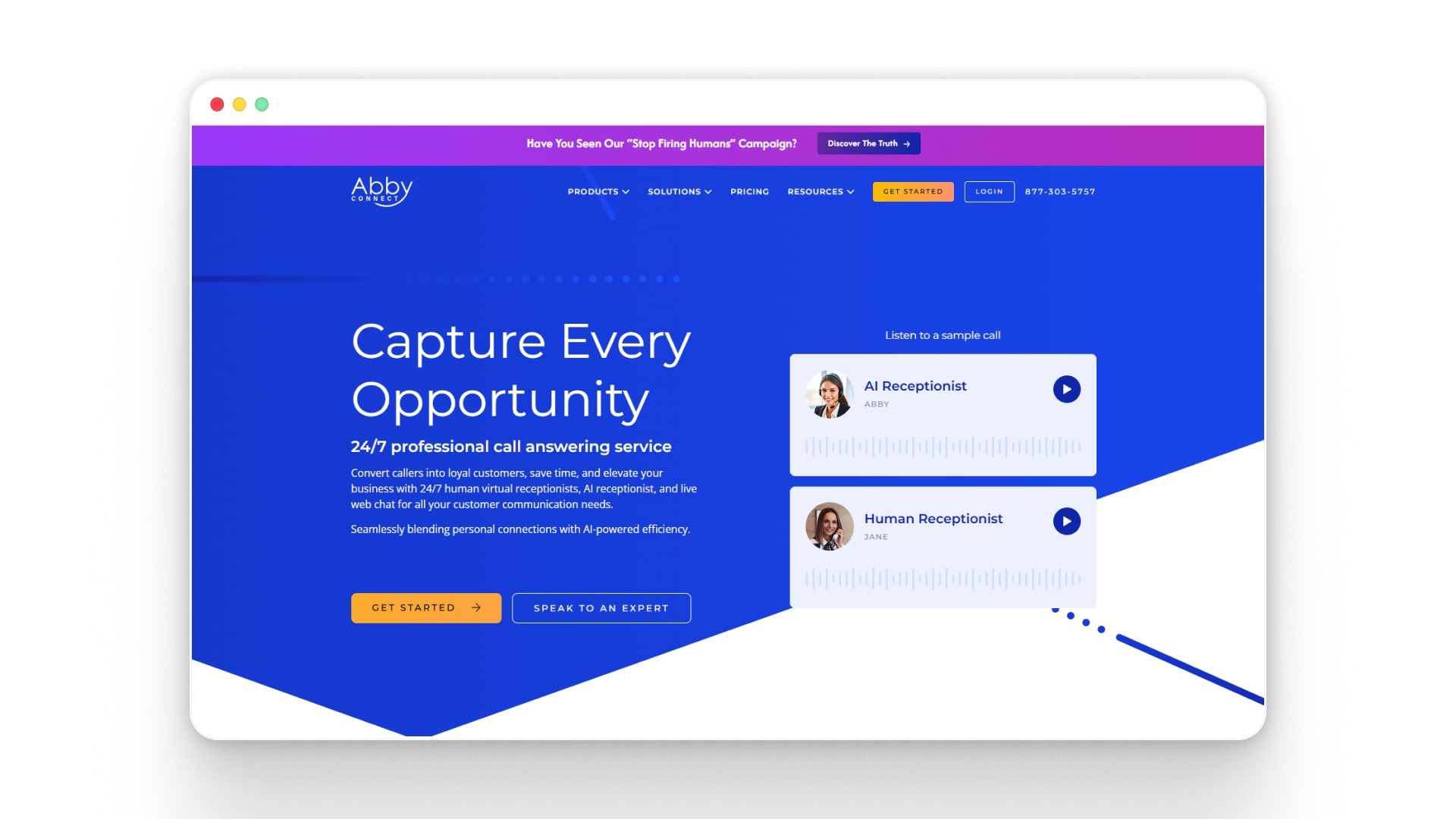
Abby Connect provides dedicated teams of 5-7 trained receptionists who learn your business intimately, enhanced by AI tools for call summaries and sentiment analysis.
Key Features:
- Dedicated receptionist teams for consistency and familiarity
- Abby AI for automatic call summaries and transcription
- Bilingual English and Spanish receptionist support
- Custom call scripts and detailed client intake forms
- Integrations with HubSpot, Salesforce, Clio, Lawmatics, and Zapier
- Mobile app (AbbyGO) for on-the-go call management
Pros and Cons:
Best For: Businesses valuing relationship-building and consistent receptionist teams, particularly in healthcare, legal, and professional services.
5. AnswerConnect
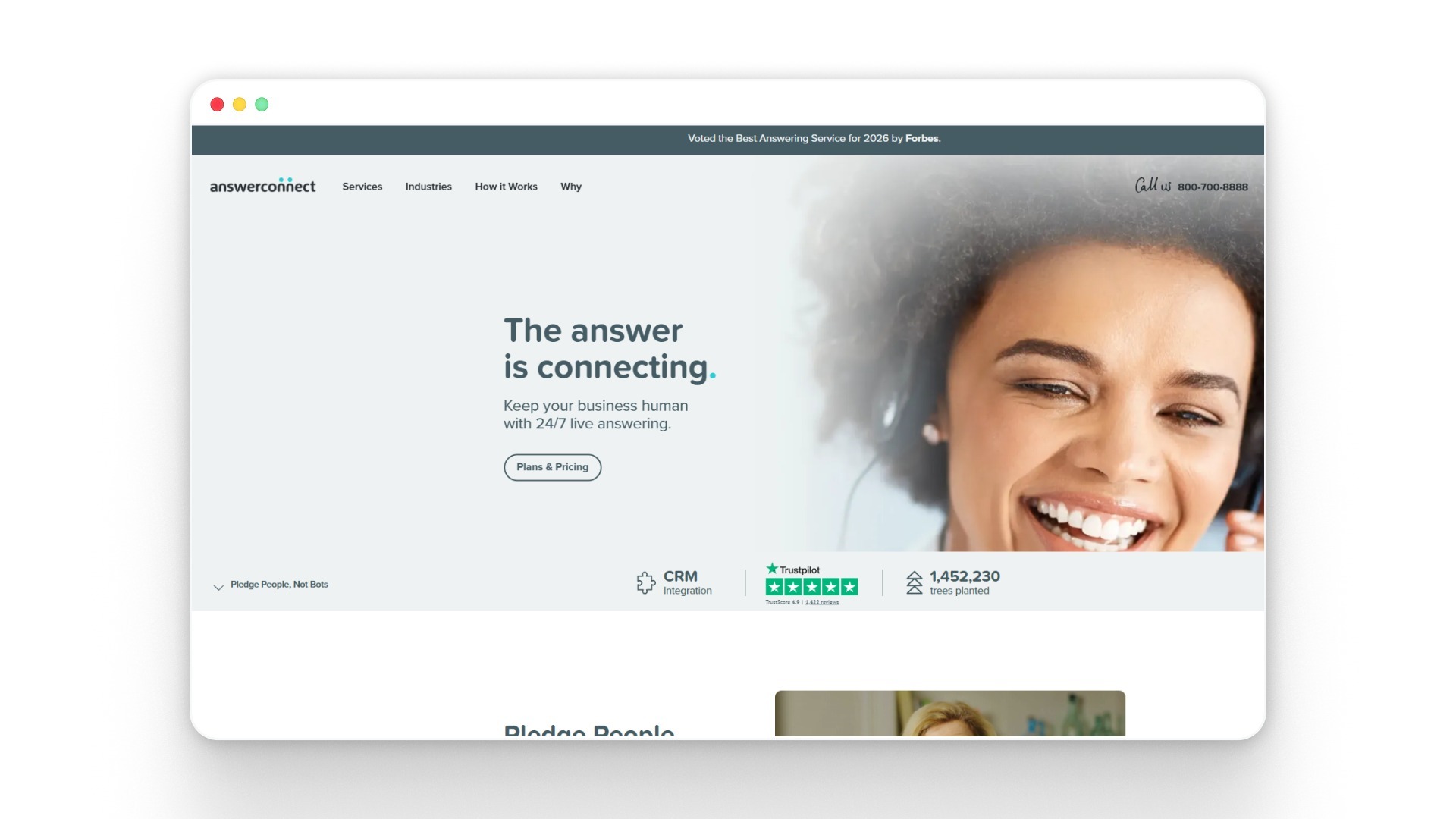
AnswerConnect specializes in lead capture and qualification with professional 24/7 live answering across the US, UK, and Canada, making it ideal for sales-driven organizations.
Key Features:
- 24/7/365 live answering with trained agents
- Inbound lead qualification protocols and scoring
- Appointment scheduling and calendar management
- Bilingual English and Spanish support
- CRM integration for automatic data synchronization
- Custom scripting for consistent brand messaging
Pros and Cons:
Best For: Sales-driven businesses, marketing agencies, and service providers who cannot afford to miss lead opportunities.
6. Posh
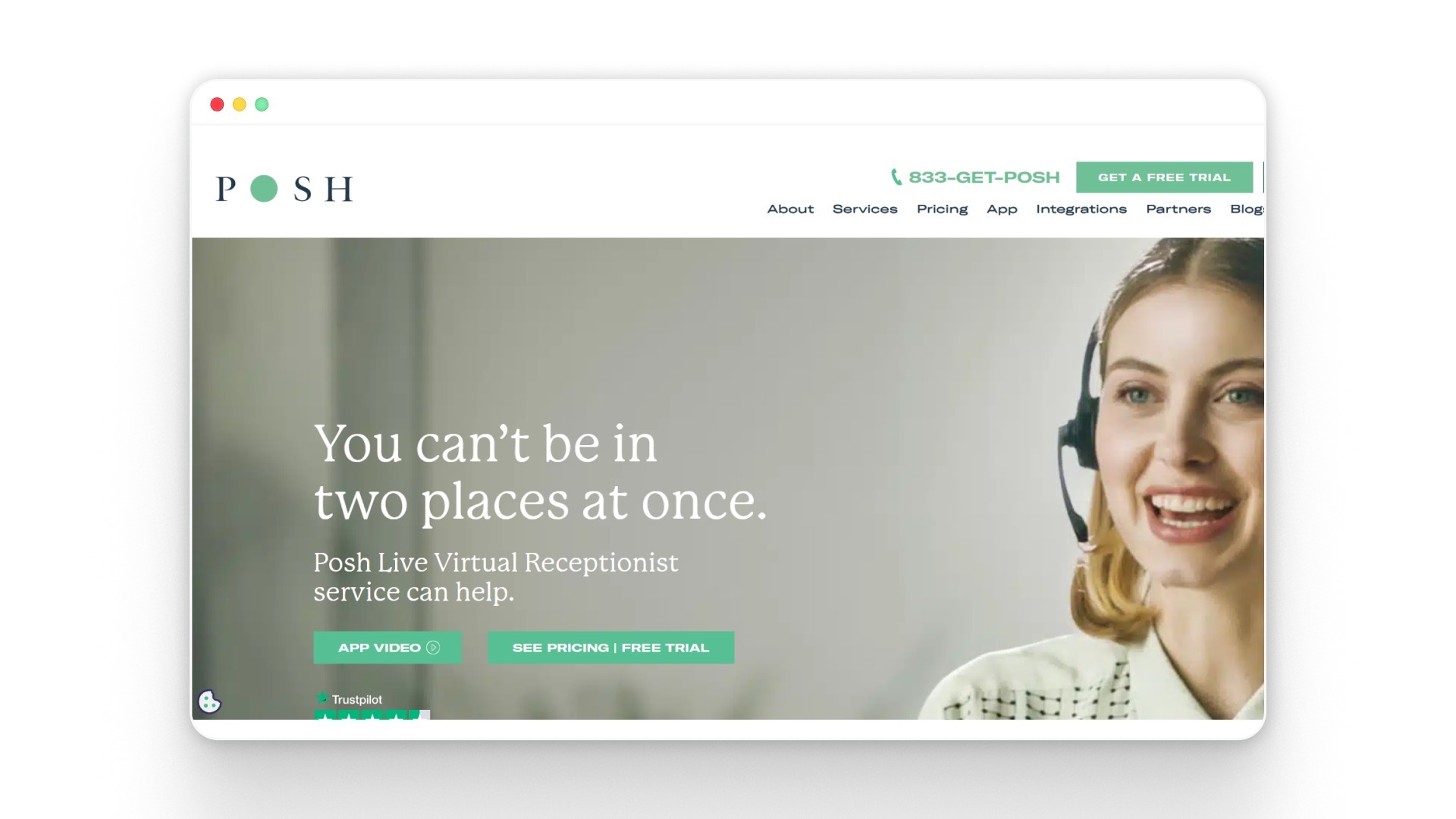
Posh focuses on professional service industries requiring compliance-aligned call handling, particularly legal, real estate, and healthcare sectors.
Key Features:
- 24/7 US-based professional receptionists
- HIPAA-compliant call handling for healthcare clients
- Customizable call scripts and workflow configurations
- Mobile app (Posh Virtual Receptionist) for complete control
- Smart call transfers (warm or blind options)
- Bilingual support available during business hours (8 AM-6 PM ET)
Pros and Cons:
Best For: Healthcare practices, law firms, real estate agencies, and consulting firms requiring compliance and professional call handling.
7. VoiceNation (Moneypenny)
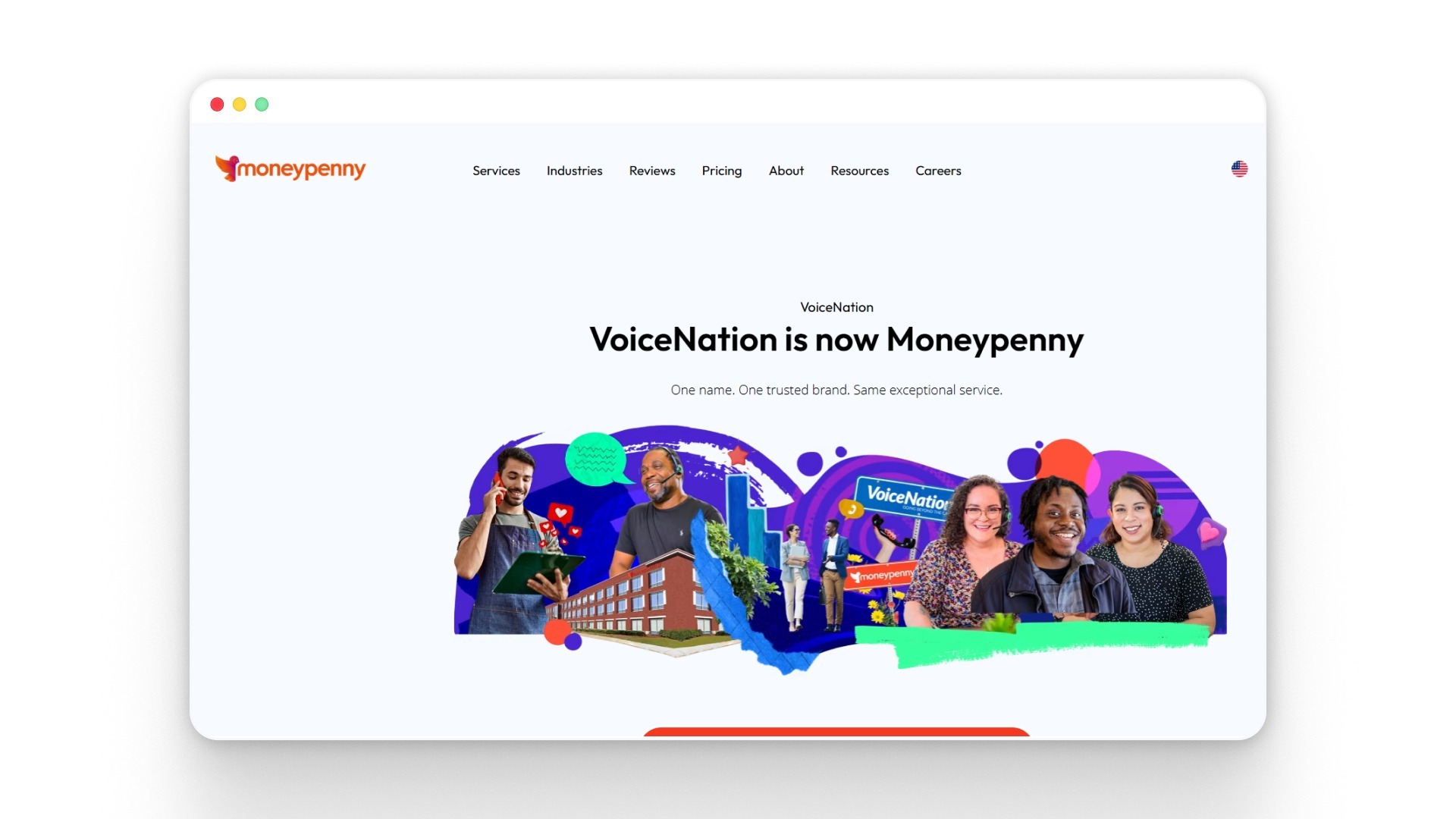
VoiceNation, now part of Moneypenny, offers instant activation with US-based bilingual receptionists and flexible no-contract plans for businesses needing immediate coverage.
Key Features:
- Instant activation with no waiting period
- 24/7 bilingual receptionists (English and Spanish)
- Custom call scripts reflecting your brand voice
- Unlimited long-distance calling is included
- Warm and blind call transfer options
- Mobile app for call history and management
Pros and Cons:
Best For: Small businesses needing immediate answering service deployment with minimal setup complexity.
8. Smith.ai
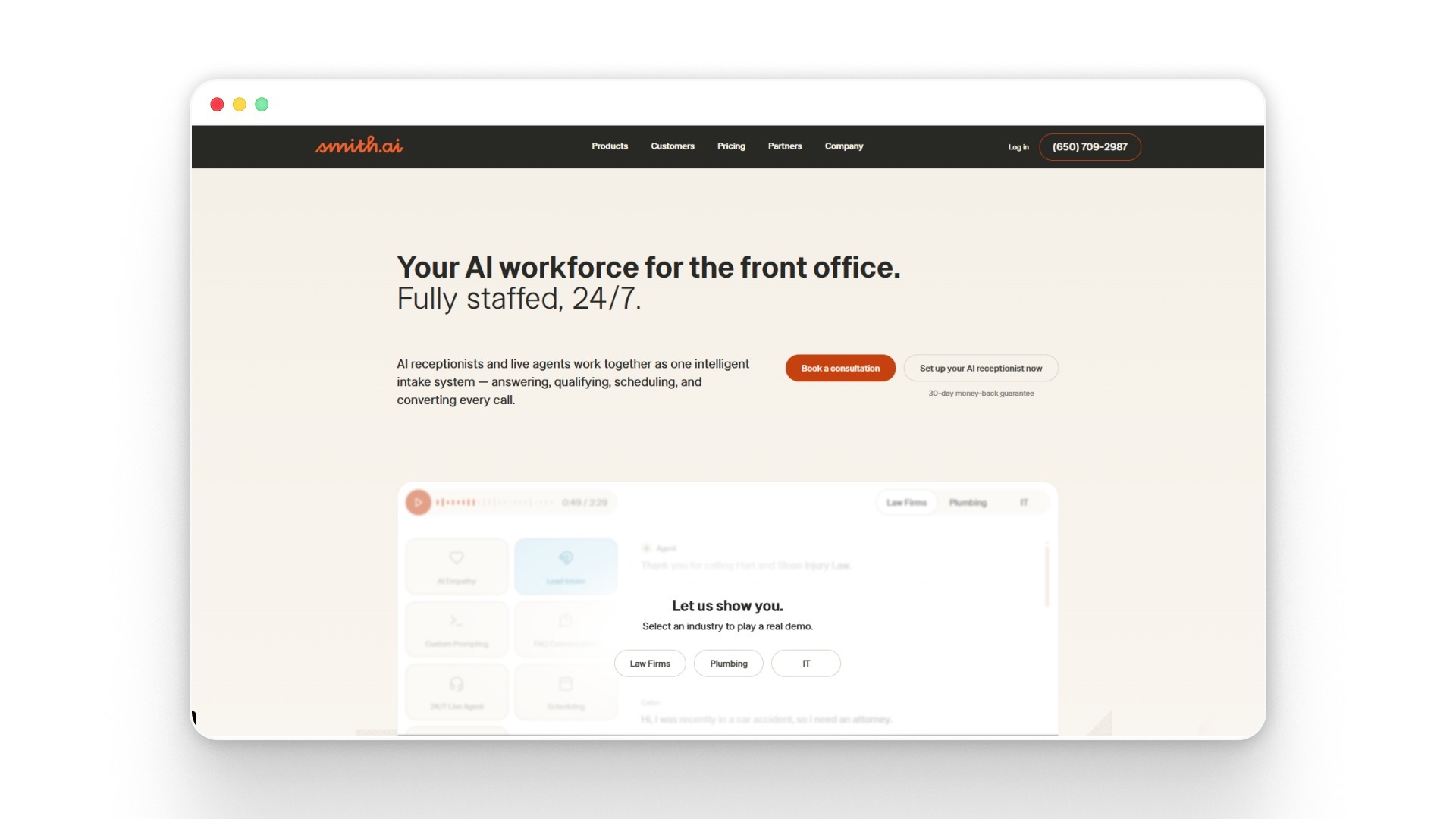
Smith.ai combines live North American receptionists with AI technology to handle calls, web chat, SMS, and social media messages from a unified platform.
Key Features:
- 24/7 live and AI hybrid receptionist support
- Multi-channel coverage (phone, chat, text, Facebook Messenger)
- Advanced lead qualification and client intake
- Spam blocking and intelligent call screening
- 70+ integrations, including HubSpot, Salesforce, and Calendly
- Outbound calling capabilities for follow-ups
Pros and Cons:
Best For: Businesses requiring comprehensive communication coverage across phone, chat, SMS, and social media channels.
9. Davinci Virtual
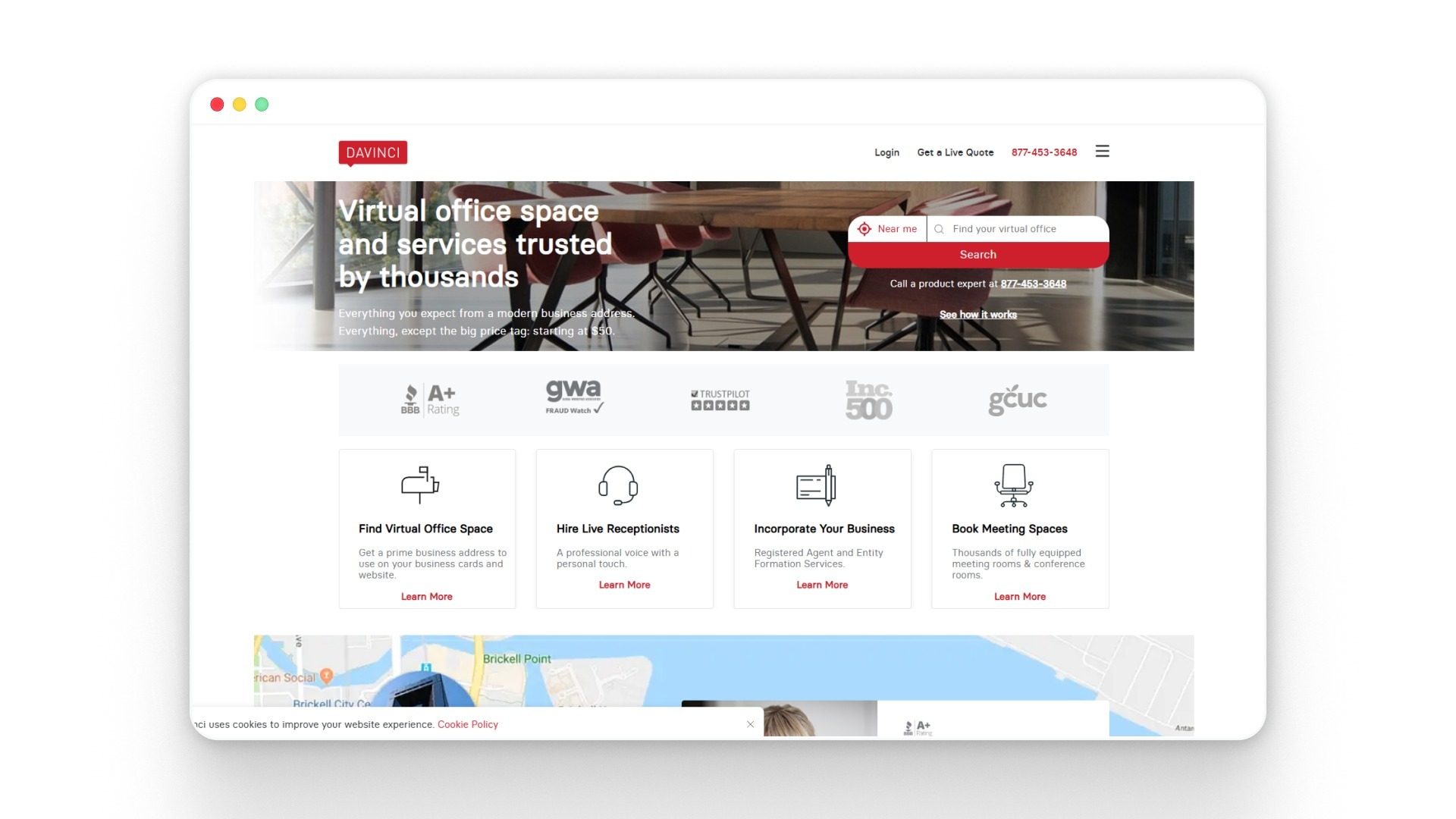
Davinci provides answering services alongside virtual office solutions, making it an affordable option for solopreneurs and early-stage startups.
Key Features:
- Live virtual receptionists during standard business hours
- Free toll-free or local phone number included
- Call forwarding and intelligent screening
- Online faxing capabilities
- Voicemail-to-email delivery
- Bilingual receptionist options available
Pros and Cons:
Best For: Budget-conscious solopreneurs and startups needing both an answering service and a professional business address.
10. PATLive
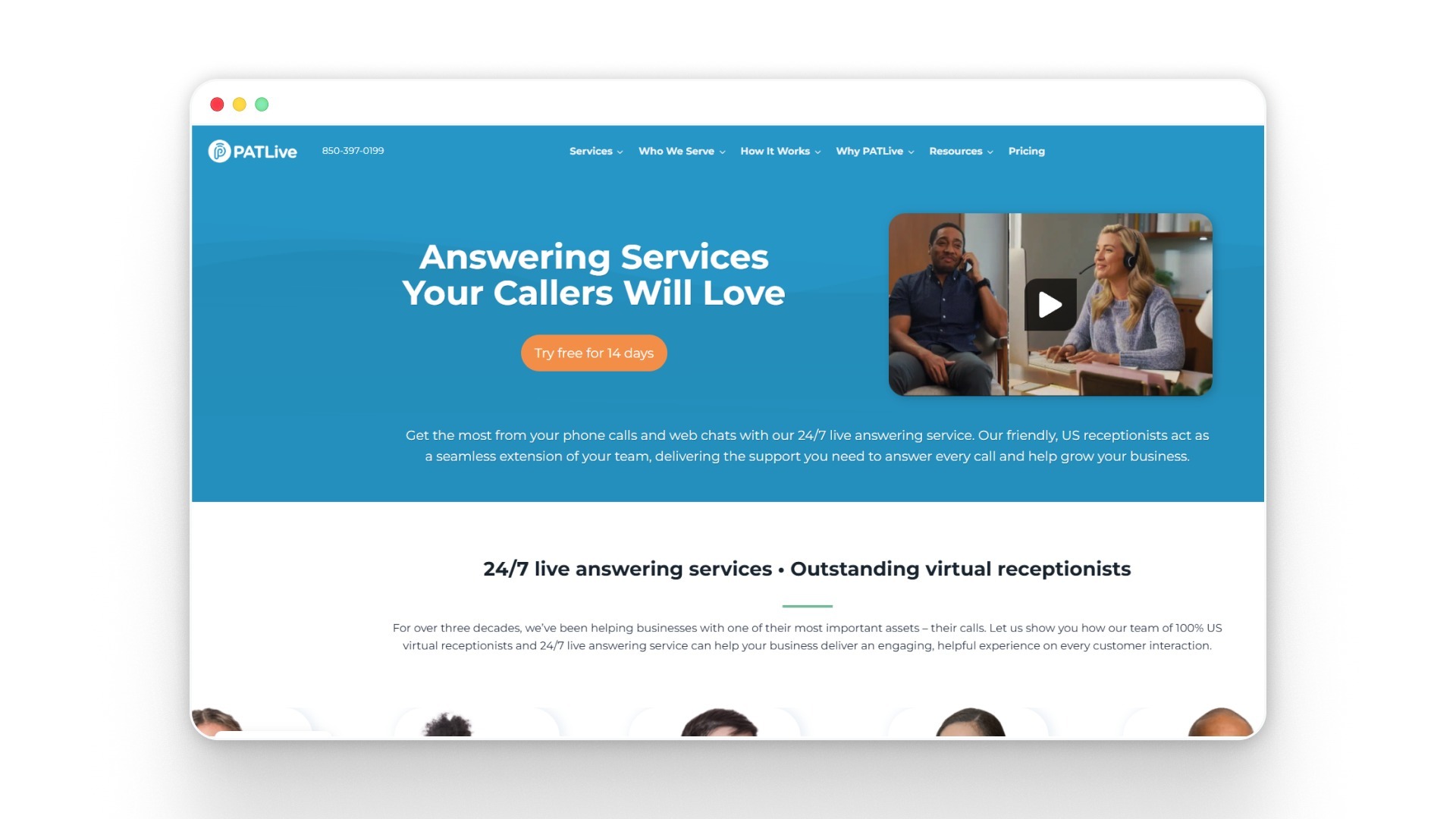
PATLive offers flexible coverage options with 30+ years of experience, specializing in overflow call management and after-hours support.
Key Features:
- 24/7 US-based live answering service
- Flexible setup (full-time, overflow, or after-hours only)
- Call transfers and intelligent screening
- Lead capture and detailed client intake
- Appointment scheduling and management
- Proprietary call-handling software
Pros and Cons:
Best For: Businesses needing backup coverage during peak periods or after-hours rather than full-time answering replacement.
11. MAP Communications
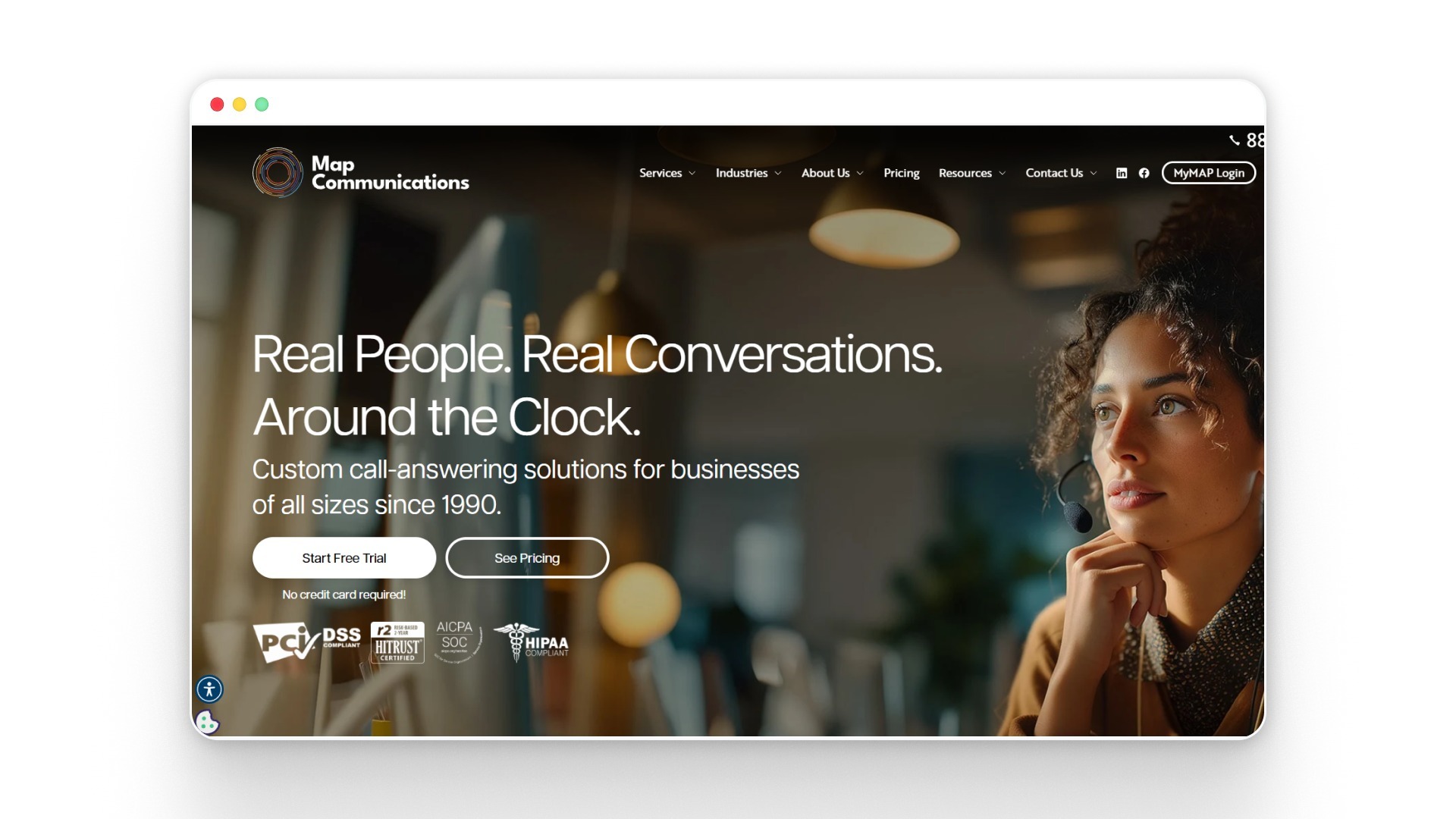
MAP Communications specializes in healthcare and regulated industries with 24/7 US-based, HIPAA-trained receptionists and comprehensive compliance support.
Key Features:
- HIPAA-compliant call handling with Business Associate Agreement
- 24/7 US-based employee-owned team
- Bilingual English and Spanish support
- Custom scripts and lead qualification tools
- Live call transfer capabilities
- Industry-specific expertise (healthcare, legal, home services)
Pros and Cons:
Best For: Healthcare practices, medical offices, dental clinics, and other regulated industries requiring strict HIPAA compliance.
12. RingCentral
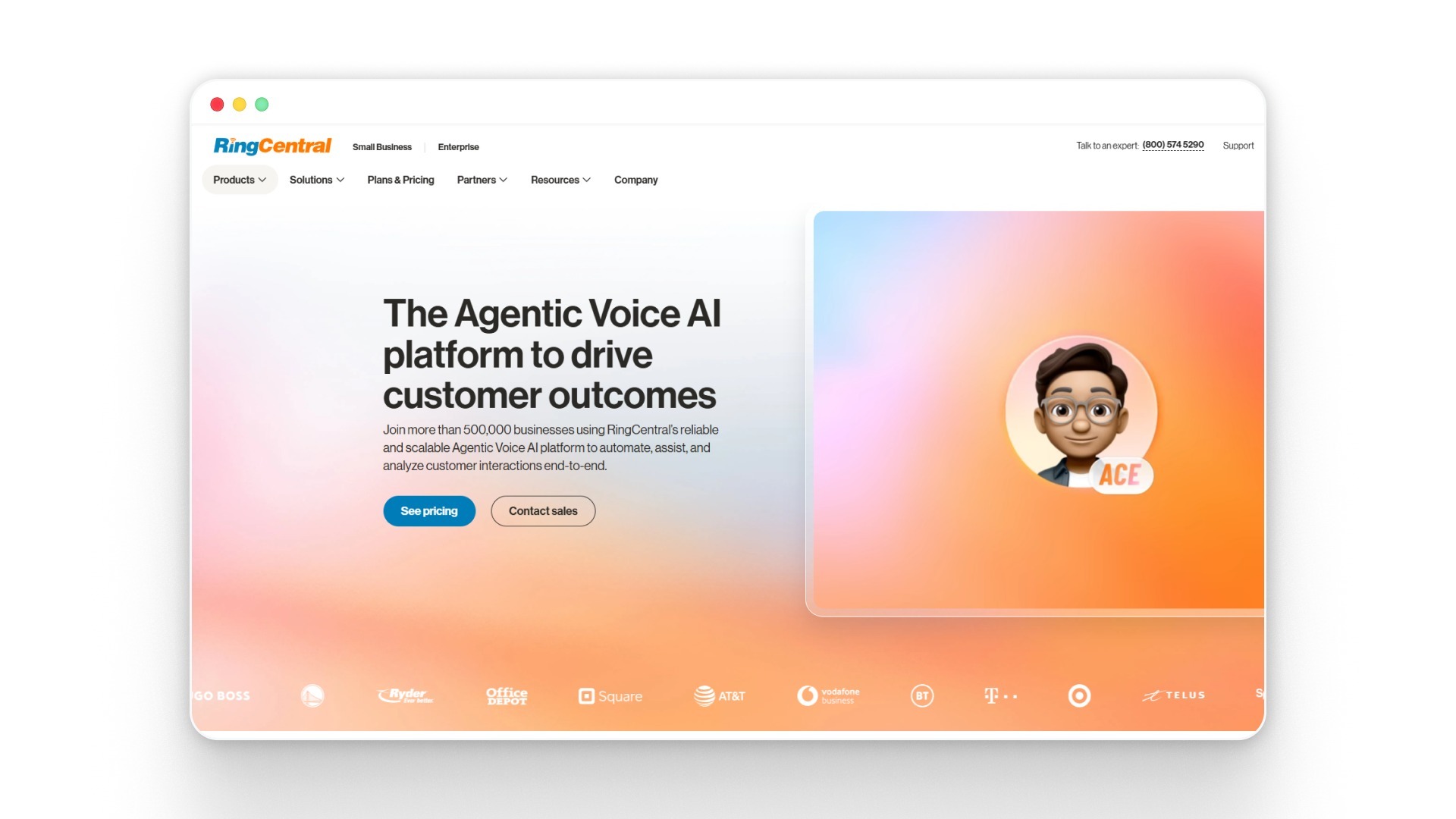
RingCentral provides an all-in-one cloud communication platform with AI-powered virtual receptionist capabilities integrated into its comprehensive VoIP system.
Key Features:
- AI-powered virtual receptionist with natural language processing
- Customizable call routing rules and workflows
- Real-time call transcription and recording
- Integration with CRM systems and knowledge bases
- Video meetings and team messaging included
- Local numbers available in 100+ countries
Pros and Cons:
Best For: Businesses seeking a complete unified communications system with an answering service as one integrated component rather than a standalone solution.
How to Compare the Top Answering Services?
Small businesses face dozens of answering service options, each with unique strengths, pricing, and specialities. Understanding the differences quickly helps you make smarter choices without testing every platform.
Here’s a clear view of what sets each service apart:
While we have discussed the top services, you must be wondering, “Why do I need an automated answering service?”
Why Your Small Business Needs an Answering Service?
Missed calls, high operational costs, and inconsistent customer service can all slow down small business growth. An answering service can address these issues by ensuring continuous availability, reducing expenses, and improving customer experience. Here’s how:
- Cut Operational Costs: Automated answering services are much cheaper than hiring a full-time receptionist. While a receptionist can cost $40,000–$55,000 annually, automated services cost only $3,000–$30,000, saving up to 95%. This cuts payroll taxes, benefits, and turnover expenses.
- Scale Without the Need to Hire More: Answering services handle any volume of calls, allowing your business to grow without increasing staffing. No more seasonal hires or expanding reception teams when adding new locations or services.
- Provide 24/7/365 Availability: Ensure your business is always accessible, capturing leads from late-night and early-morning callers. Answering services provide consistent, professional service around the clock, even during holidays.
- Improve Customer Experience Consistency: Automated systems provide accurate, error-free responses quickly, under 3 seconds, leading to a more reliable customer experience. Eliminate miscommunications and improve response time compared to human staff.
- Free Your Team for High-Value Work: An answering service handles routine inquiries, allowing your team to focus on complex, revenue-generating tasks. This reduces time spent on low-priority tasks and minimizes context-switching.
- Qualify Leads Before They Reach Sales: AI-powered answering services ask qualifying questions, ensuring only serious prospects reach your sales team. This helps streamline the sales process and improves conversion rates.
- Seamlessly Integrate with Your Existing Systems: Integrate the answering service with your CRM and workflow systems. Calls, notes, appointments, and support requests are automatically logged, reducing manual work and enhancing team efficiency.
- Maintain a Professional Image: An answering service ensures your business always projects a polished, professional image. Customers won’t reach personal voicemail, and all interactions are handled by knowledgeable representatives, boosting trust and credibility.
- Gain Valuable Business Insights: Track call volume patterns and customer interactions to identify trends and emerging issues. This data helps optimize operations, improve self-service, and refine customer service strategies.
An answering service improves efficiency, reduces costs, and enhances customer experience, making it an essential tool for growing small businesses.
What Enterprise Teams Should Evaluate Beyond Basic Call Handling?
While small businesses often focus on cost and availability, enterprise teams evaluate automated answering services very differently. The decision is less about answering calls and more about how effectively the system integrates into broader operations.
- Automation depth: Can the system resolve tasks end-to-end, or does it only route calls?
- System integrations: Does it connect deeply with CRM, ERP, and internal tools to execute actions in real time?
- Cost per interaction: How does automation reduce cost at scale compared to human agents?
- Governance and control: Are there audit trails, access controls, and data handling safeguards in place?
- Scalability: Can the system handle thousands of concurrent interactions without degrading performance?
For enterprise environments, the goal shifts from “never miss a call” to “reduce manual workload, improve resolution rates, and maintain operational control at scale.”
How to Choose the Best Answering Service for Your Small Business?
Choosing the right answering service requires careful consideration of your business needs and goals. Here’s how to systematically evaluate your options:
- Assess Call Volume and Patterns: Analyze your call data from the past 3-6 months. Look at daily and monthly call totals, peak times, and missed calls. This will help you estimate service requirements and predict costs accurately.
- Identify Your Primary Use Case: Determine what’s most important for your business. If lead capture is key, focus on services with strong qualification and CRM integration, like NUplay by Nurix AI. For appointment scheduling, prioritize services with robust calendar integration. For after-hours support, consider overflow specialists.
- Evaluate Industry-Specific Needs: Certain industries have unique requirements. Healthcare businesses need HIPAA compliance, while legal firms require confidentiality. E-commerce businesses need inventory integration, and B2B SaaS companies need technical support.
- Consider Integration Capabilities: Determine how deeply you need the service to integrate with your systems. Basic integrations (CRM, calendar) are standard, but more complex needs (custom workflows, multi-system sync) require platforms like Ruby, Smith.ai, or NUplay by Nurix AI. Also, advanced needs like API customization are best met by NUplay by Nurix AI.
- Evaluate Total Cost of Ownership: Go beyond the advertised base rate. Calculate the total monthly cost, including setup fees, integration, and training. Account for growth, and request quotes from multiple providers. Often, the cheapest option becomes more expensive when hidden fees and poor service quality are factored in.
- Test Thoroughly Before Committing: Take advantage of free trials to test real scenarios, including simple and complex calls, appointment scheduling, and industry-specific situations. Check for accuracy in call transcripts, integration sync, and reporting. Poor trial performance is a red flag.
- Prioritize Scalability and Flexibility: Choose a service that can scale as your business grows. Ensure you can add users, increase call volume, and expand features without major reconfigurations. Opt for providers with flexible contract terms for future adaptability.
- Evaluate Vendor Support and Relationship: Your answering service will be the face of your customer interactions. Evaluate the vendor’s support during the sales process and read reviews about their customer service. Services like NUplay by Nurix AI offer dedicated account managers to proactively optimize performance and resolve issues.
Choosing the right answering service means aligning it with your specific needs and business growth, ensuring efficiency and customer satisfaction.
Conclusion
Automated answering services play a direct role in reducing operational costs, improving response times, and increasing conversion efficiency. The real difference between solutions lies in how much work they can complete, not just how many calls they can answer.
For teams handling growing call volumes or complex workflows, the focus should shift toward cost per interaction, automation depth, and system integration. Solutions that only route calls or take messages may solve short-term gaps but often create operational bottlenecks as the business scales.
Platforms like NUplay by Nurix AI stand out by moving beyond basic call handling into end-to-end workflow execution, where conversations trigger real actions across CRM, support, and internal systems. This reduces manual effort, improves resolution rates, and delivers measurable ROI over time.
As you evaluate your options, prioritize systems that can scale with your business, integrate with your existing tools, and continuously improve performance. The right solution won’t just answer calls, it will become a core part of how your operations run.
Schedule a Demo to see how NUplay by Nurix AI automates high-volume interactions and turns every conversation into a completed task.
An automated answering service uses AI, pre-recorded scripts, or virtual receptionists to handle calls without human agents. Small businesses can use these services to answer calls 24/7, qualify leads, and schedule appointments efficiently.
Platforms like RingCentral, Smith.ai, and NUplay by Nurix AI offer 24/7 AI-powered call handling, ensuring businesses never miss customer interactions. While many tools focus on answering and routing calls, NUplay by Nurix AI extends this by automating workflows like lead qualification, scheduling, and system updates across integrated platforms.
NUplay by Nurix AI and CloudTalk are leading AI answering systems for small businesses. They provide human-like call handling, multilingual support, and integration with CRM systems to streamline workflows and improve customer experience.
Cloud-based answering services like Smith.ai and Ruby Receptionist offer seamless calendar integration, real-time appointment scheduling, and CRM sync. Evaluating AI virtual reception companies involves checking 24/7 coverage, multilingual options, and automated lead capture.
Affordable multilingual AI receptionist platforms like My AI Front Desk and NUplay by Nurix AI offer support for multiple languages while handling calls, scheduling, and customer queries 24/7. These systems help small businesses serve diverse customers without hiring multilingual staff, while platforms like NUplay by Nurix AI extend this further by integrating workflows and automating tasks across systems.
Don’t miss what’s next in AI.
Subscribe for product updates, experiments, & success stories from the Nurix team.