Top 10 AI Recruitment Platforms: Benefits & Must-Have Features


Don’t miss what’s next in AI.
Subscribe for product updates, experiments, & success stories from the Nurix team.
Recruiters today are not just competing for talent; they are racing against time. Candidate attention spans are shorter, application volumes are higher, and the pressure to deliver quality hires quickly has never been greater. Traditional hiring tools cannot keep up with these demands.
This is where AI recruitment platforms step in.
By automating repetitive tasks, predicting candidate fit, and personalizing engagement at scale, these platforms are transforming how teams attract, assess, and hire talent.
In this blog, we will explore the most important AI recruitment platform features to look for and how they can help talent acquisition teams hire smarter and faster.
At a glance:
- AI recruitment platforms automate repetitive tasks, freeing recruiters to focus on strategic hiring activities.
- Intelligent resume screening, predictive analytics, and candidate engagement tools help improve shortlist quality and decision-making.
- Automated interview scheduling and seamless workflow integrations reduce administrative burden and accelerate hiring timelines.
- Diversity and bias reduction tools enable fairer, more consistent hiring practices across all stages of recruitment.
- Choosing the right AI platform depends on your hiring priorities, team size, and which parts of the recruitment process you want to enhance.
What is AI Recruitment Software and Why It Matters
AI recruitment software is a platform that uses artificial intelligence to streamline and improve the hiring process. Instead of manually screening resumes, chasing candidates for interviews, or relying only on gut instinct for shortlisting, recruiters can use AI to handle repetitive tasks, analyze data at scale, and surface the best-fit candidates faster.
Why it matters:
- Saves time: Automates repetitive tasks such as resume screening, interview scheduling, and follow-ups. This allows recruiters to focus on strategy, relationship-building, and closing top candidates instead of getting buried in admin work.
- Improves candidate experience: Provides faster responses, timely updates, and personalized interactions. A smoother process keeps candidates engaged and reduces the chances of drop-offs.
- Delivers better shortlists: AI evaluates skills, experience, and fit more consistently than manual reviews. This means hiring managers receive higher-quality candidate pipelines and can make quicker, more confident decisions.
- Reduces bias: Standardized evaluation criteria minimize the influence of unconscious bias. This supports fairer hiring practices and helps organizations meet their diversity and inclusion goals.
- Supports scalability: Handles large volumes of applications without slowing down the process. Whether hiring for 10 roles or 1,000, the platform ensures consistency and efficiency across the board.
In essence, AI recruitment software matters because it transforms hiring from a reactive, manual process into a proactive, data-driven strategy. It helps recruiters work faster and smarter while giving candidates a better experience, ultimately making talent acquisition more competitive and future-ready.
Must-Have Features in AI Recruitment Platforms
To deliver faster and higher-quality hiring outcomes, AI recruitment platforms need to go beyond basic automation. The strongest platforms combine efficiency with intelligence, giving recruiters tools that save time, improve candidate experience, and strengthen decision-making.
Below are the features that define a modern AI recruitment solution.
1. Intelligent Resume Screening
Modern AI screening goes beyond parsing resumes. Platforms now combine skills extraction with automated eligibility checks and AI voice agents that run quick phone-screen questions on availability, salary expectations, location, and required qualifications. The system validates details, flags mismatches, and scores candidates against the job brief using consistent criteria.
This speeds up shortlisting, reduces manual review, and ensures only qualified, engaged applicants reach recruiters.
2. AI-Led Candidate Engagement
Modern candidates expect quick responses and a personalized experience. AI recruitment platforms deliver this through automated chat, email, and voice interactions that run around the clock. These tools answer FAQs, send timely updates, and nurture candidates with relevant information.
The result is stronger engagement, fewer drop-offs, and a hiring journey that feels more human even when supported by automation.
3. Advanced Matching and Predictive Analytics
Beyond basic keyword matching, leading platforms use predictive analytics to match candidates to roles based on skills, career history, and growth potential.
This not only helps fill open positions faster but also predicts performance and retention. Recruiters gain insights into which candidates are most likely to succeed long term, supporting better quality-of-hire decisions.
4. Automated Interview Scheduling and Coordination
AI scheduling tools now handle the entire interview coordination workflow end-to-end. Beyond syncing calendars and offering candidates real-time slots, voice AI agents can confirm availability, book interviews, reschedule on request, and instantly update your ATS/CRM without manual input.
Automated reminders via email, SMS, or voice reduce no-shows, while continuous status syncing keeps recruiters and hiring managers aligned, speeding candidates through the pipeline with minimal effort.
5. Diversity and Bias Reduction Tools
Building diverse teams requires more than intention; it requires process. AI recruitment platforms help by anonymizing candidate data during screening, using structured workflows to minimize bias, and flagging potential inconsistencies.
These tools make it easier to apply fair hiring practices and achieve measurable diversity and inclusion goals.
6. Seamless Integrations and Workflow Automation
No platform should operate in isolation. The best AI recruitment software integrates seamlessly with existing systems such as ATS, HRIS, CRMs, and collaboration tools like email or Slack.
This ensures smooth data flow, reduces duplication of effort, and automates repetitive workflows such as status updates and reporting. Integrated systems make recruitment not just faster but also more transparent for hiring teams.
7. Analytics and Reporting Dashboards
Recruitment today is as much about data as it is about people. AI platforms provide real-time dashboards that track metrics such as time-to-fill, source effectiveness, pipeline health, and recruiter productivity.
These insights help talent acquisition leaders identify bottlenecks, measure ROI, and continuously refine their hiring strategies with evidence-based decisions.
Taken together, these features define what makes an AI recruitment platform valuable in practice. They simplify complex workflows, reduce manual effort, and give recruiters the clarity they need to make better hiring decisions.
If you’re exploring how AI agents differ in practice, don’t miss our breakdown of AI Agents vs. Traditional AI—it highlights the subtle but critical differences that shape performance in real-world workflows.
Comparing Top AI Recruitment Platforms in 2026
Recruitment teams often evaluate multiple AI platforms before deciding which one aligns with their needs. Here is a quick breakdown of four leading options.
1. Vina by Moative
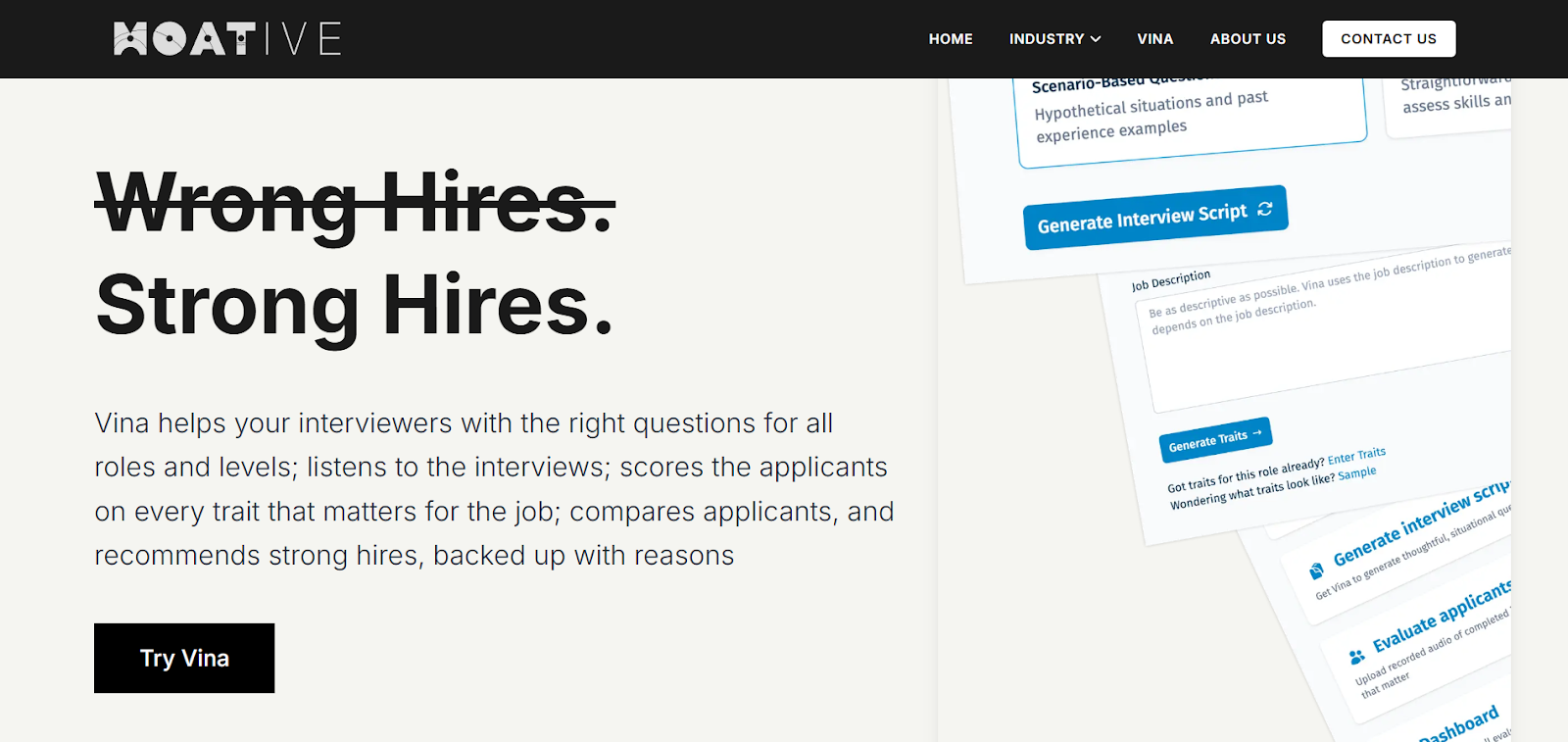
Vina is an AI-powered interview assessment tool developed by Moative. It focuses on helping recruiters and hiring managers evaluate candidates more objectively by scoring interview responses, highlighting strong applicants, and reducing human bias.
Key Features:
- Automated interview scoring for consistent evaluations.
- Bias reduction through structured assessments.
- Candidate insights for strengths and improvement areas.
- Integrates with ATS and recruitment workflows.
2. Eightfold
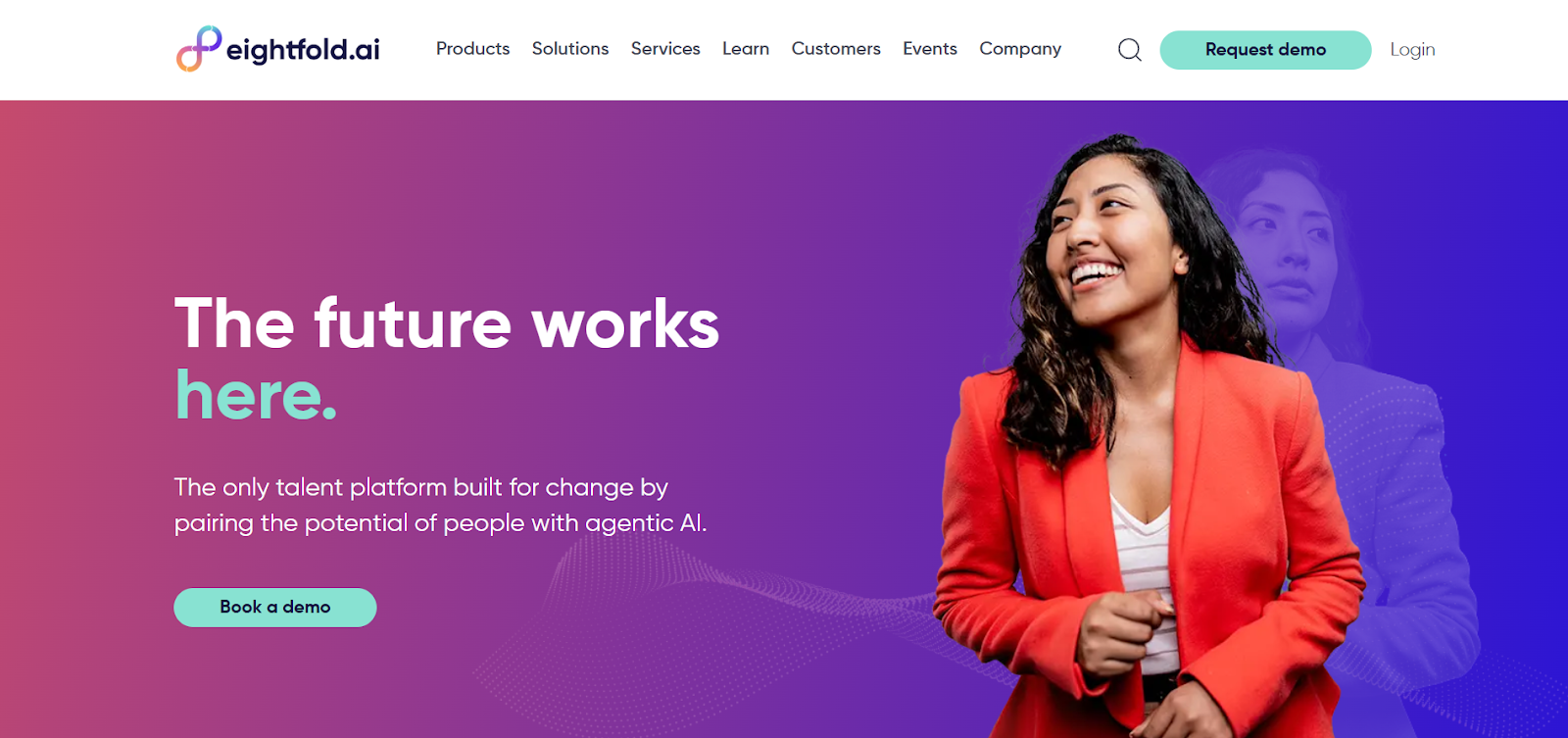
Eightfold is known for its talent intelligence capabilities, offering predictive insights into both hiring and workforce planning. It’s widely adopted by large enterprises seeking not only external hiring solutions but also internal mobility and retention strategies.
Key features:
- AI-driven skill-to-role matching.
- Predictive analytics for performance and retention.
- Internal mobility and career pathing tools.
- Comprehensive diversity and bias checks.
3. Manatal
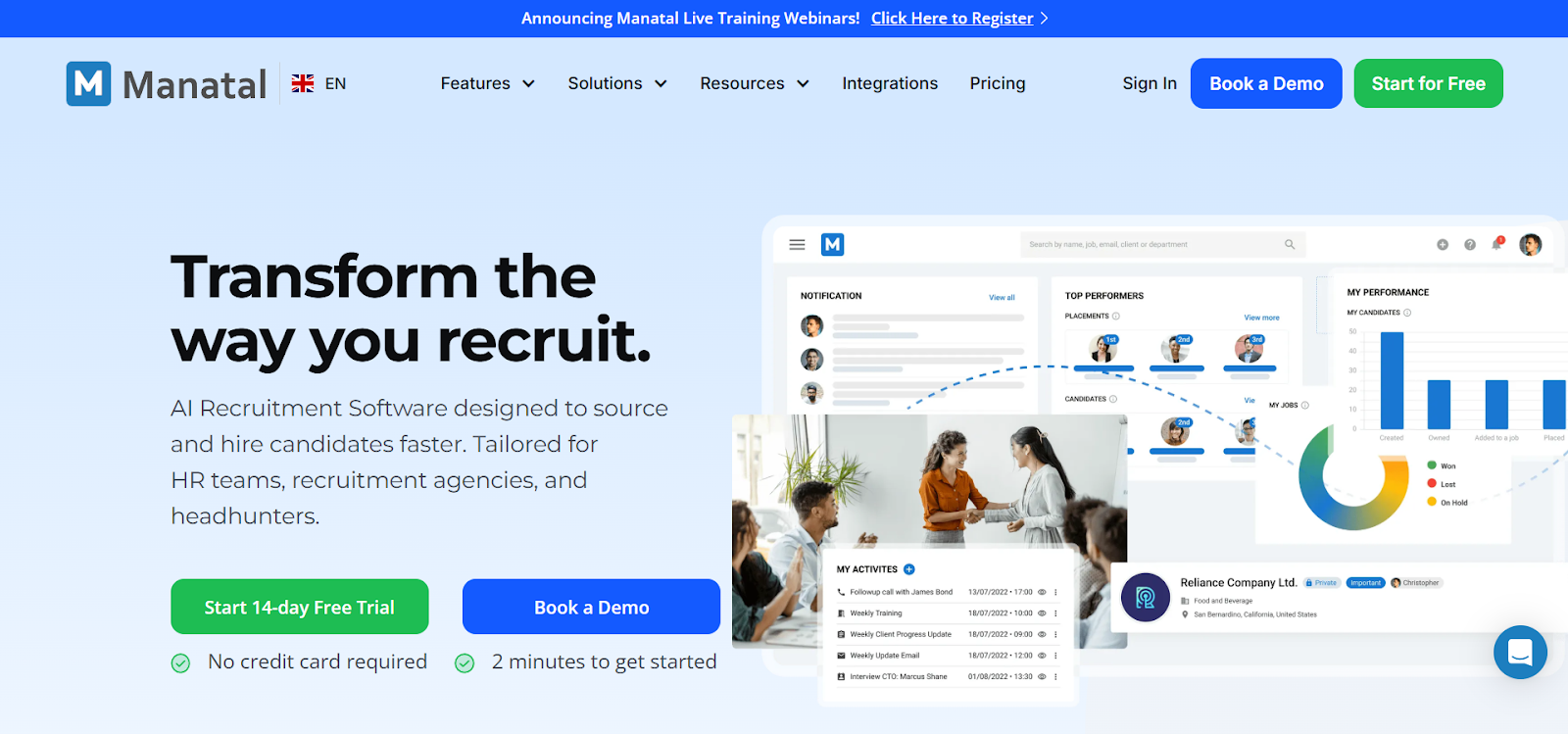
Manatal focuses on ease of use and affordability, making AI-powered recruiting accessible to small and mid-sized teams. Its lightweight design ensures quick adoption while still offering modern features that help recruiters save time and stay organized.
Key features:
- Resume parsing and candidate scoring.
- Simple drag-and-drop ATS functionality.
- LinkedIn and job board sourcing integrations.
- Lightweight CRM features for candidate tracking.
4. HireVue
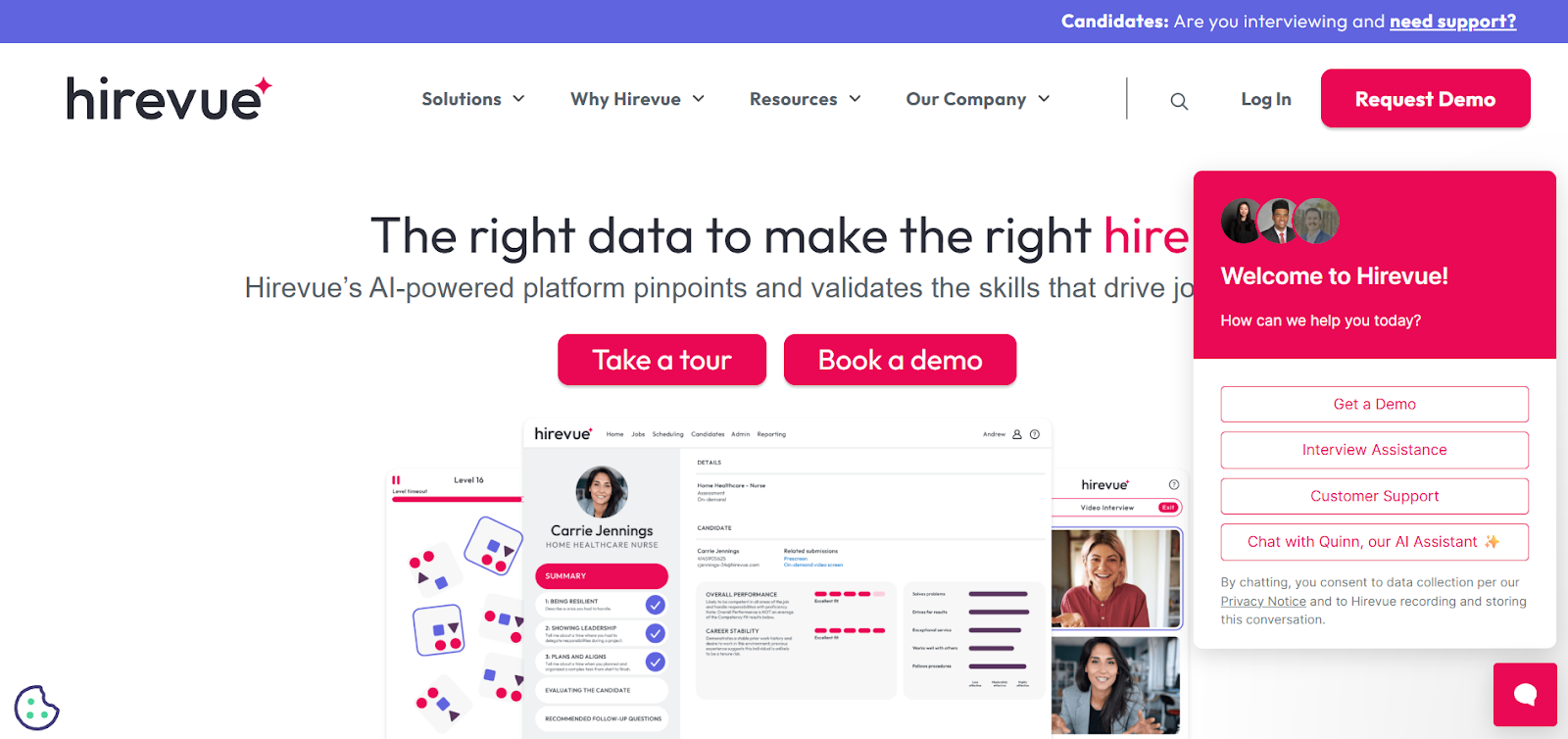
HireVue is a video-first platform with strong AI assessment tools, widely used for high-volume and structured hiring. It helps organizations accelerate decision-making through standardized video interviews and predictive scoring models.
Key features:
- On-demand and live video interviews.
- AI-based candidate assessments and scoring.
- Structured interview templates for consistency.
- Predictive analytics to forecast candidate success.
5. Fetcher

Fetcher is an AI-powered sourcing and candidate engagement platform designed to help recruiters find and connect with top talent faster. It automates sourcing, outreach, and candidate scoring to streamline the early stages of recruitment.
Key features:
- AI-driven candidate sourcing from multiple platforms.
- Automated outreach and follow-ups to nurture candidates.
- Candidate scoring and ranking for quick shortlisting.
- Pipeline tracking and reporting for recruiter efficiency.
6. Greenhouse
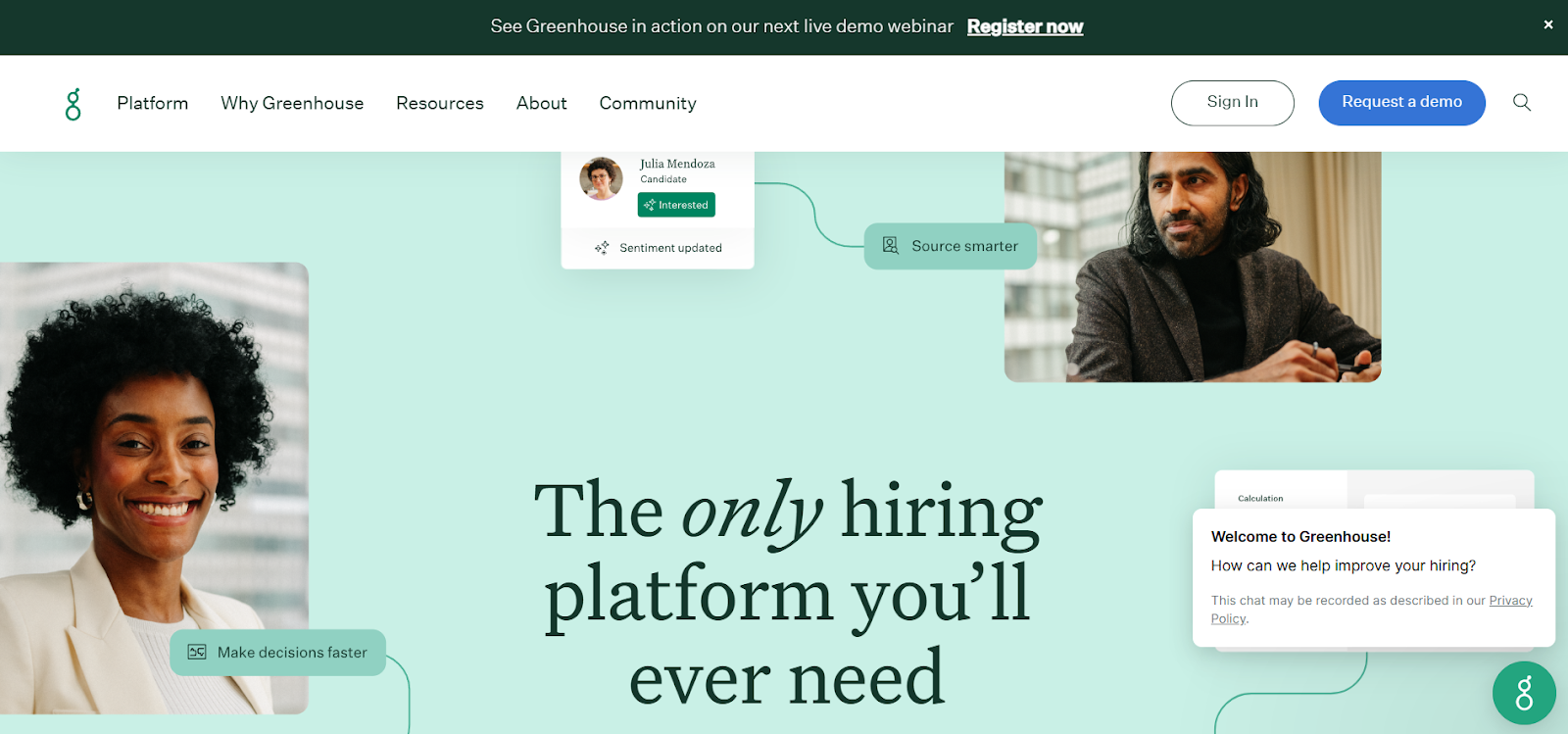
Greenhouse is a widely adopted recruiting platform that combines structured hiring practices with AI-driven automation. It’s especially strong for companies that want scalable processes and consistent candidate evaluations.
Key features:
- Structured interview kits and scorecards.
- AI-assisted candidate recommendations.
- Robust integrations with HRIS and collaboration tools.
- Advanced analytics for tracking recruiting KPIs.
7. Lever
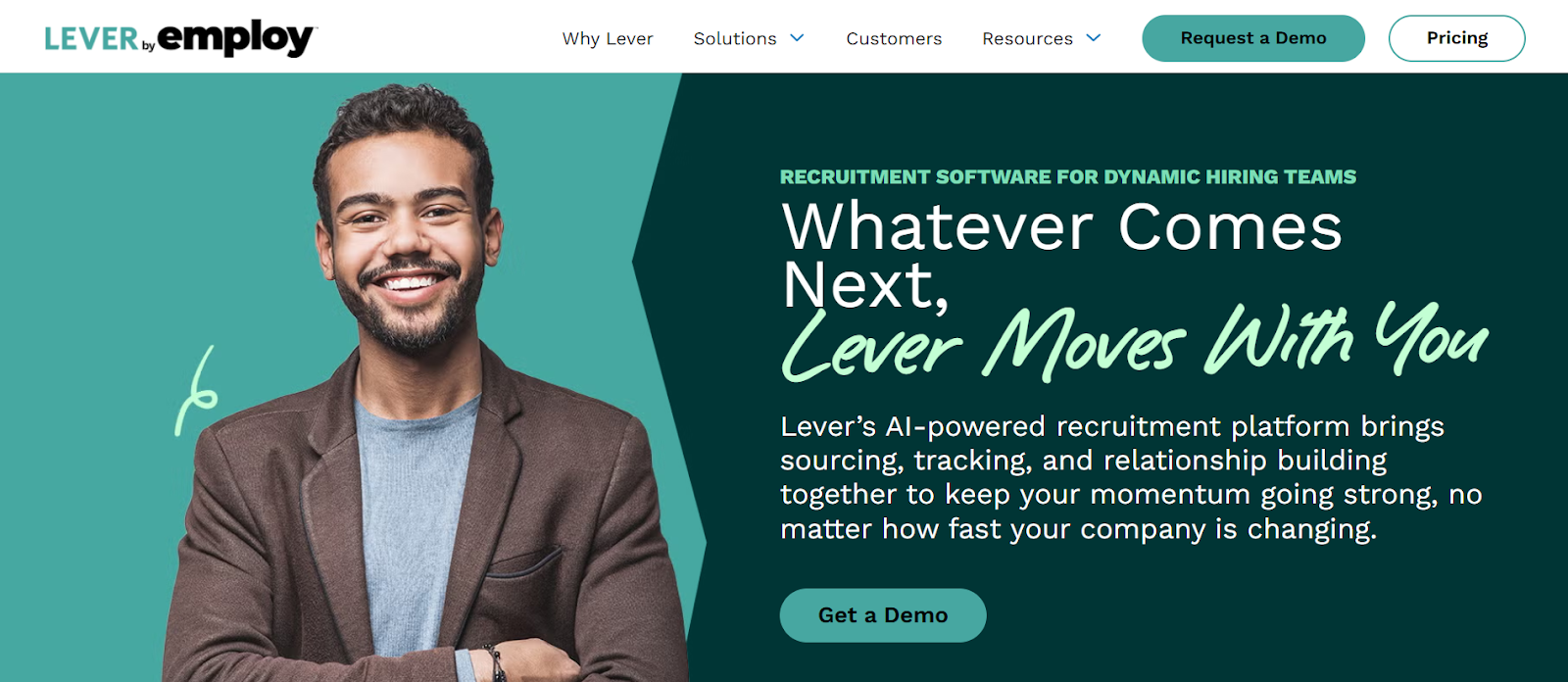
Lever blends CRM and ATS functionality into one AI-enabled platform, helping teams manage relationships with both active candidates and future prospects. It’s valued by companies that prioritize proactive sourcing and pipeline building.
Key features:
- Unified ATS + CRM system.
- AI-powered candidate rediscovery and sourcing.
- Automated workflows for email, scheduling, and follow-ups.
- Visual reporting on pipeline health and recruiter activity.
8. SeekOut
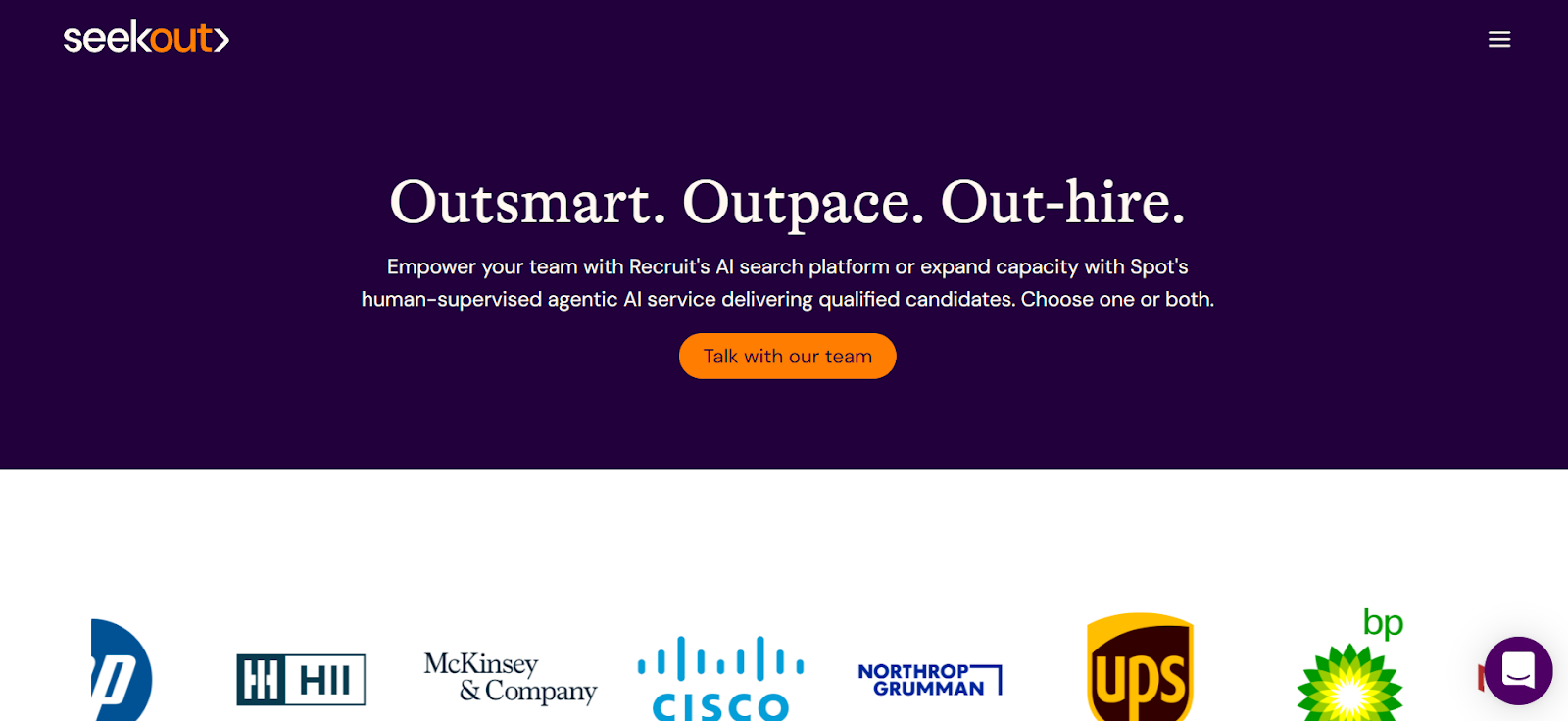
SeekOut is an AI-powered talent search and engagement platform that helps recruiters discover, evaluate, and connect with candidates across diverse sources. It’s particularly strong in skills-based matching and diversity hiring.
Key features:
- AI-driven candidate search across multiple databases.
- Skills and experience matching for precise shortlisting.
- Diversity analytics and bias reduction tools.
- Automated engagement workflows to reach candidates.
9. Pymetrics (Now Harver)
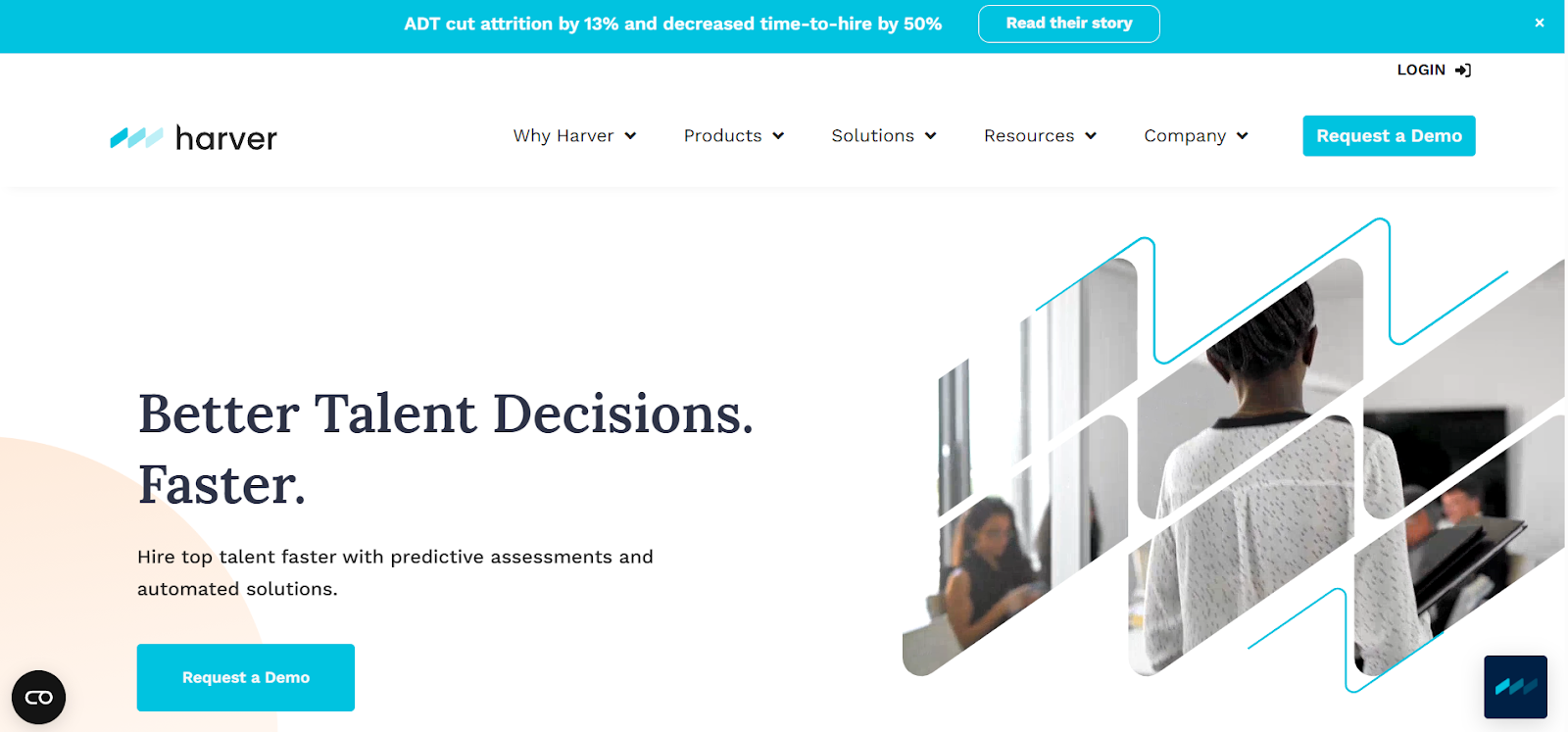
Pymetrics uses AI and neuroscience-based games to assess candidates’ cognitive and emotional traits, predicting their suitability for roles. It’s designed to complement hiring decisions with objective insights.
Key features:
- AI-powered behavioral and cognitive assessments.
- Predictive job fit scoring for candidates.
- Bias reduction through objective evaluation metrics.
- Integration with ATS for seamless candidate tracking.
10. hireEZ
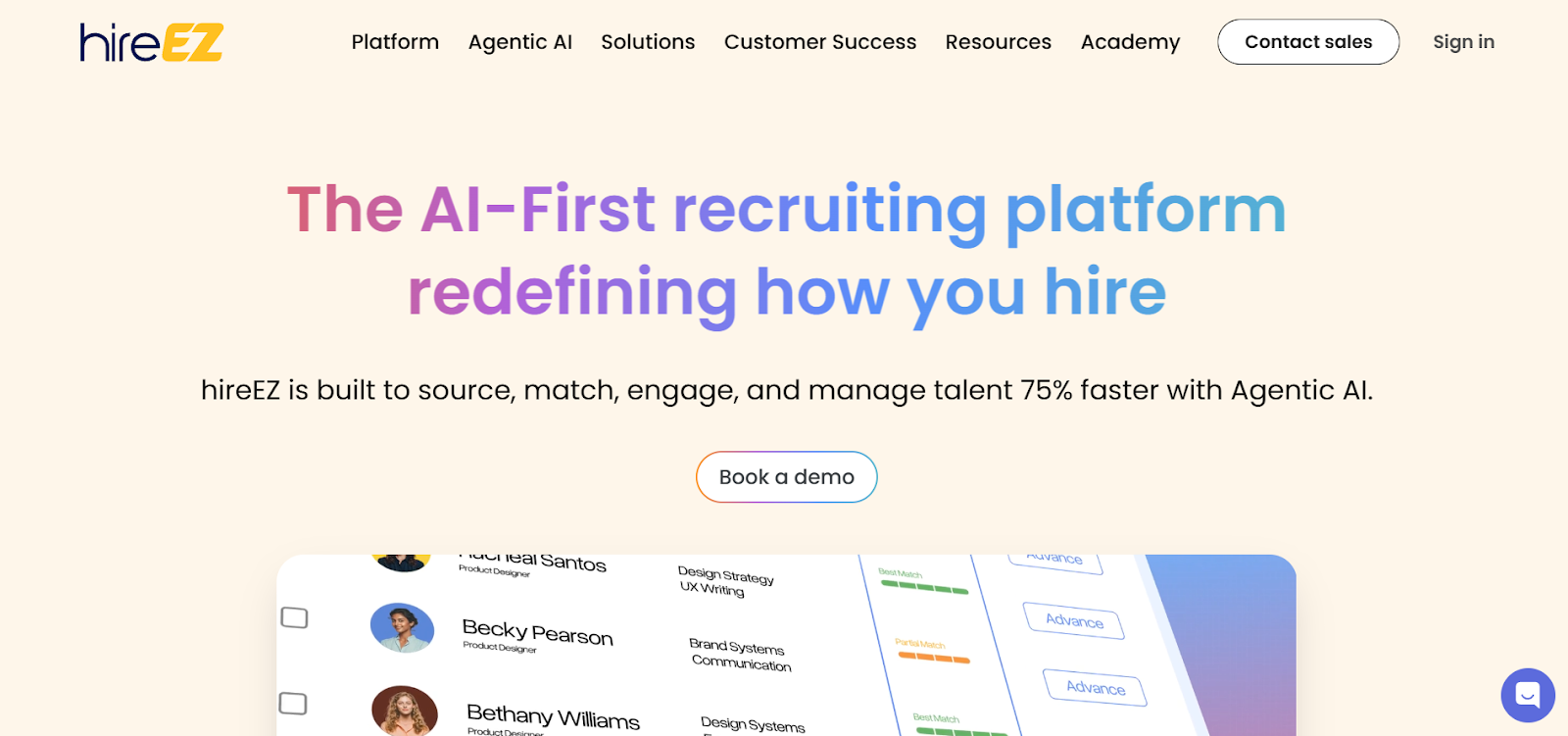
Hiretual, now known as hireEZ, is an AI-powered sourcing and candidate engagement platform designed to help recruiters find, rank, and connect with top talent efficiently. It emphasizes proactive talent acquisition with AI-driven insights.
Key features:
- AI-powered candidate sourcing from multiple platforms.
- Automated outreach and follow-ups to engage candidates.
- Candidate ranking and predictive fit scoring.
- Pipeline tracking and analytics for recruiter efficiency.
Each of these platforms uses AI in unique ways to streamline recruitment workflows, from sourcing and screening to assessments and candidate engagement. Choosing the right platform depends on your hiring priorities, team size, and the specific stages of the recruitment process you want to enhance with AI.
If you’re interested in how AI recruiting platforms connect with broader conversational AI capabilities, you’ll find our blog on What is Conversational AI? especially useful. It breaks down how voice and chat-based AI transform business interactions and why this matters for recruiting and beyond.
How to Pick the Right AI Recruitment Tool
Selecting the right AI recruitment platform can make a huge difference in efficiency, candidate experience, and hiring outcomes. Here’s a step-by-step approach to make an informed choice:
1. Identify Your Hiring Needs
- Assess which stages of recruitment you want to optimize: sourcing, screening, engagement, interviewing, or analytics.
- Determine if you need an end-to-end platform or a specialized tool for certain workflows.
2. Evaluate AI Capabilities
- Check whether AI is core to the platform or an add-on feature.
- Look for features like predictive candidate ranking, automated interview scoring, and intelligent engagement.
3. Consider Integration and Compatibility
- Ensure the platform integrates with your ATS, HRIS, calendars, email, and other recruitment tools.
- Smooth integration reduces manual work and ensures consistent data across systems.
4. Assess User Experience
- The platform should be intuitive for recruiters, hiring managers, and candidates.
- Easy-to-use dashboards, automated workflows, and clear reporting are critical for adoption.
5. Analyze Analytics and Reporting
- AI insights should provide actionable metrics: time-to-fill, candidate quality, diversity metrics, and recruiter performance.
- Platforms with strong analytics help refine hiring strategies over time.
6. Evaluate Vendor Support and Security
- Check customer support, onboarding, and training resources.
- Ensure compliance with data privacy regulations and robust security protocols.
7. Consider Scalability and ROI
- Pick a tool that can grow with your hiring volume and team size.
- Calculate potential time savings, productivity gains, and cost reductions to assess ROI.
Conclusion
AI recruitment platforms are transforming how organizations source, screen, and engage candidates. From intelligent resume screening to predictive analytics and automated interview coordination, these tools streamline hiring and improve candidate experience.
At Nurix AI, we complement recruitment workflows with our advanced AI agents that assist across multiple channels and automate complex tasks. Our solutions include:
- AI Agent Assist: Enhances productivity by supporting real-time decision-making, handling queries, and providing relevant data to streamline tasks, including candidate sourcing, screening, and recruiter workflows.
- AI-Driven Engagement: Manages end-to-end interactions, answering questions and providing timely responses to improve engagement. While not limited to recruitment, it can support candidate communications and follow-ups.
- Automated Data Analysis and Workflow Management: Delivers actionable insights, uncovers patterns, and helps optimize processes, enabling smarter hiring decisions and improved recruitment efficiency.
- Seamless System Integration: Easily connects to databases, ATS, HRIS, and enterprise systems for streamlined operations, ensuring AI tools fit into existing recruitment workflows.
- Task Automation: Handles repetitive tasks such as updating information, processing transactions, and generating reports, freeing human teams to focus on higher-value recruitment activities.
- Context-Aware Assistance: Provides personalized, context-sensitive support, reminders, and relevant suggestions for informed decision-making, which can extend to hiring processes.
- Advanced Data Insights: Identifies patterns and trends from vast datasets, supporting recruitment analytics and workflow optimization.
By combining specialized AI recruitment platforms with our enterprise AI solutions, organizations can achieve smarter, faster, and more scalable hiring processes while enhancing overall productivity and candidate satisfaction.
Talk to us today and see how intelligent automation can elevate your recruitment process.
AI recruitment platforms offer automated resume screening, candidate matching, interview scheduling, chatbots, and predictive analytics to streamline hiring and improve candidate fit. These features help HR teams save time while improving candidate quality.
AI reduces bias, automates repetitive tasks, enhances candidate engagement, and provides data-driven insights to improve hiring efficiency and quality. It also enables recruiters to focus on strategic decision-making rather than manual work.
Yes, AI platforms can be customized for various industries like technology, healthcare, finance, and education to meet specific recruitment and compliance needs. This flexibility allows organizations of all sizes to adopt AI effectively.
Most platforms integrate seamlessly with ATS, HRIS, and other HR software, ensuring smooth workflows and consistent data across systems. This integration also reduces errors and avoids duplication of work.
Benefits include faster hiring, reduced costs, scalable candidate handling, and actionable insights for more informed recruitment decisions. Organizations can also improve candidate experience and maintain a competitive hiring edge.
Don’t miss what’s next in AI.
Subscribe for product updates, experiments, & success stories from the Nurix team.