.jpg)

Half of today’s sales teams lose momentum on qualified leads because manual qualification and routing take too long and leak value before representatives even engage.
According to a 2025 U.S. and Canada marketing survey, 22% cited conversions and product sales as key AI outcomes. This shows conversion remains a priority for teams evaluating AI investments across marketing workflows today.
But enterprise leaders evaluating AI for lead generation must look beyond buzz to understand which approaches actually improve qualification and pipeline conversion outcomes.
In this blog, you’ll explore nine practical AI lead generation strategies and key performance indicators that show how AI can improve lead qualification, speed‑to‑lead, and measurable pipeline results in 2026.
Executive Summary: AI lead generation in 2026 is shifting from scattered automation to structured workflows that qualify, prioritize, route, and engage leads in real time. By combining dynamic scoring, behavioral signals, and multi-channel engagement, AI helps teams reduce manual effort, improve speed-to-lead, and focus sales attention on prospects most likely to convert.
Key Takeaways:
- Dynamic Lead Prioritization: AI scores and ranks lead dynamically to focus teams on the most conversion-ready prospects.
- Workflow Automation: Multi-step processes are automated, reducing manual handoffs and operational bottlenecks.
- Unified Lead Context: Consolidated Customer Relationship Management (CRM) and behavioral data ensure scoring and routing reflect the complete lead context.
- Personalized Engagement: Interactions are tailored to prospect behavior, improving response rates and conversion likelihood.
- Smarter Outreach Decisions: Historical and real-time analytics inform prioritization and outreach strategies.
- Multi-Channel Coordination: AI coordinates email, chat, voice, and social interactions to maintain consistent engagement.
- Continuous Optimization: Automated feedback loops refine scoring, routing, and messaging to sustain lead quality.
What is AI-Driven Lead Generation?
AI lead generation describes how data‑driven systems assist human teams by continuously capturing, analyzing, and moving leads through qualification and routing with minimal manual intervention.
Instead of one‑off, manual list building or gut‑based lead scoring, these systems use behavioral signals, firmographic patterns, and intent‑driven criteria to prioritize prospects dynamically and keep high‑value opportunities in play.
In practice, real workflows that use AI combine inbound capture, automated scoring, purposeful routing, and personalized engagement so sales reps spend more time closing deals and less time on repetitive tasks.
Where AI Fits in the Lead Generation Funnel?
AI enhances the lead generation funnel by automating routine tasks, enriching lead data in real time, and helping teams prioritize high‑value prospects instead of manual guesswork. It doesn’t replace human judgement, it strengthens decision points where leads are assessed, nurtured, and routed toward conversion.
How AI integrates across the funnel:
- Inbound capture automation: Detects and classifies form fills, chat engagements, and behavioral signals as leads arrive.
- Lead enrichment: Appends firmographic, behavioral, and intent data to make profiles more actionable.
- Automated scoring: Applies dynamic scoring models that adjust based on real‑time interactions and intent changes.
- Intent signal detection: Spot early interest patterns (e.g., repeat visits, content interaction) and elevate lead priority.
- Routing and assignment: Sends high‑priority leads to the right reps or sequences instantly to reduce speed‑to‑lead delays.
- Nurture personalization: Tailors follow‑up sequences using behavior triggers rather than static workflows.
- Conversion feedback loops: Feeds conversion outcomes back into scoring and prioritization logic for continuous learning.
That definition becomes clearer when you look at the exact points where leads enter, move, stall, or convert.
Also read: How Artificial Intelligence Can Impact Startup Growth
Traditional vs AI Lead Generation Differences
AI transforms lead generation by addressing inefficiencies in traditional methods. Below is a structured comparison highlighting how AI fundamentally changes outcomes across key metrics:
The gap shows up most clearly when AI-led workflows are compared with the older, manual way of managing leads.
The Data You Need Before You Automate Anything
Effective AI lead generation depends on clean, structured, and actionable data. Without reliable inputs, even the most advanced AI workflows fail to improve lead qualification or conversion outcomes.
Critical data elements for AI lead generation:
- Lead Source Information: Website forms, chat interactions, webinar sign-ups.
- Behavioral Data: Page visits, content downloads, email engagement, product usage.
- Firmographic Data: Company size, industry, location, and role.
- Intent Signals: Repeat site visits, product interest, request-for-demo interactions.
- Historical Conversion Metrics: Past lead outcomes, time-to-conversion, engagement patterns.
- CRM Integration: Access to sales notes, account history, and prior interactions.
- Data Quality Checks: Deduplication, accuracy verification, and completeness validation.
Also read: Top 6 Interesting AI Success Stories Transforming Industries
With the right data foundation, you can apply AI to high-impact use cases that directly improve lead qualification and conversion.
9 High-Impact AI Lead Generation Use Cases
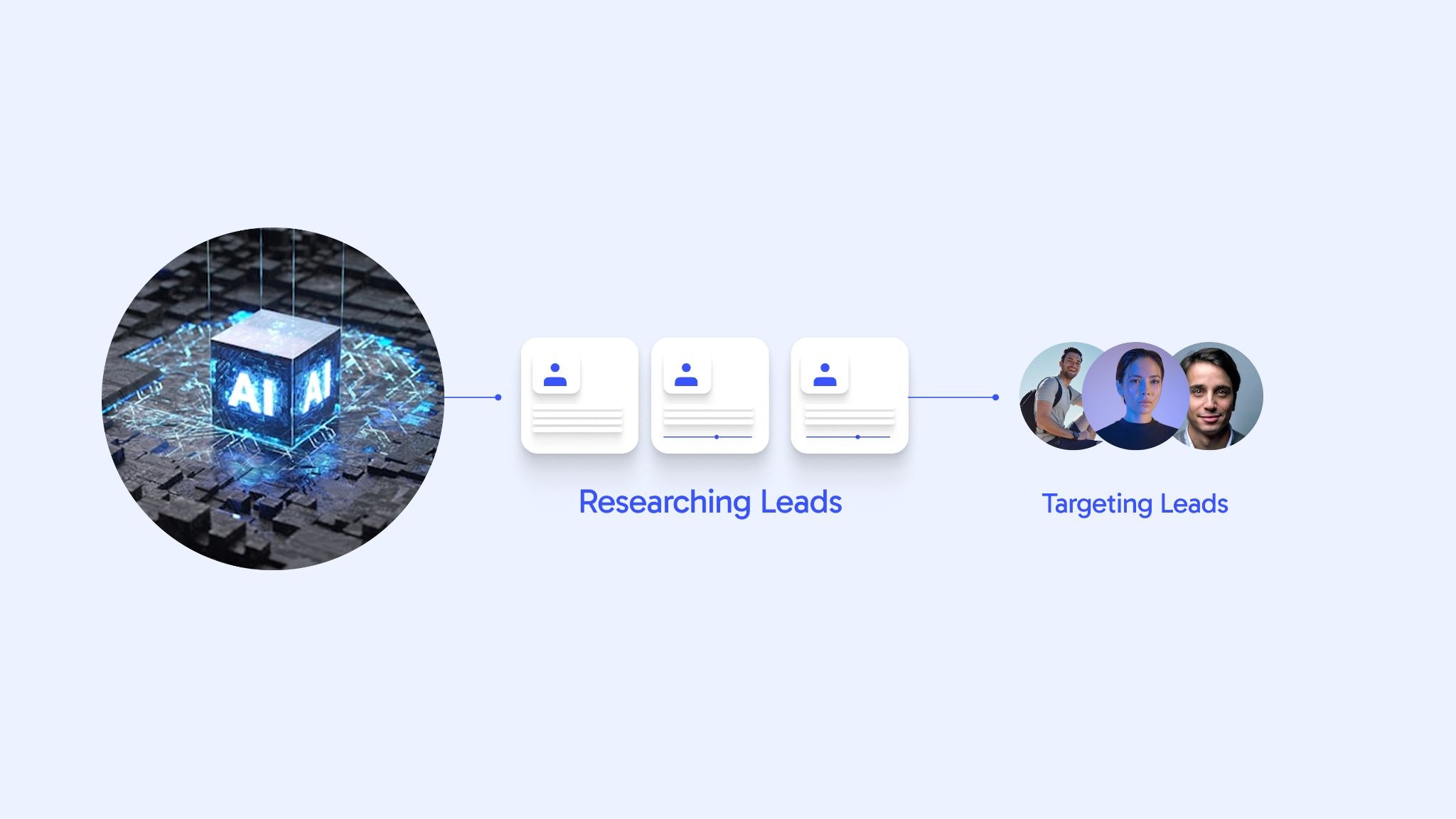
AI delivers the greatest impact when applied to workflows that improve lead qualification, accelerate follow-up, and enhance pipeline efficiency. Properly implemented AI ensures high-potential leads are prioritized and nurtured effectively across multiple channels.
The following strategies show how AI can transform real workflows to increase the number of qualified leads and accelerate conversions.
1. Refining Your Ideal Customer Profile (ICP)
AI identifies the traits of leads most likely to convert, helping teams focus on high-value prospects first. This reduces wasted effort on poorly qualified leads.
- Analyze CRM and engagement data to detect patterns among top-converting accounts.
- Identify company size, industry, and decision-maker role to focus targeting.
- Continuously update ICPs as new lead behavior emerges.
Workflow example: A Software as a Service (SaaS) company using AI to identify that mid-market finance firms were converting faster than other segments, refocusing campaigns to increase qualified lead flow.
2. Automated Lead Scoring and Qualification
AI evaluates incoming leads in real time, scoring them based on behavior, intent, and engagement signals. This ensures sales teams prioritize leads that are ready to convert.
- Assign dynamic scores that adjust as leads interact across channels.
- Filter out low-priority leads to reduce manual review time.
- Trigger follow-up actions based on high-priority lead identification.
Workflow example: An enterprise marketing team deploying AI scoring to automatically route high-intent webinar sign-ups to senior sales reps, cutting follow-up time from days to hours.
AI agents play a critical role in lead nurturing, qualification, and guiding prospects through the sales funnel by continuously adapting interactions to intent and engagement.
3. Personalized Outreach at Scale
AI tailors messages to each lead based on past interactions and predicted intent. Personalized outreach increases engagement and the likelihood of conversion.
- Customize email, chat, and landing page content for each prospect.
- Adjust messaging in real-time based on behavioral cues.
- Highlight relevant product features or content aligned with inferred needs.
Workflow example: A Business-to-Business (B2B) software provider senting AI-personalized onboarding tips to leads based on their prior product trial usage, increasing demo completion rates.
4. Optimizing Lead Nurture Campaigns
AI optimizes the timing and sequence of communications to maintain the lead's interest. This keeps leads engaged and moves them faster through the funnel.
- Identify optimal send times for emails and follow-ups.
- Sequence messages based on interaction patterns and engagement triggers.
- Adjust content dynamically to match lead behavior and stage.
Workflow example: A marketing automation firm using AI to reschedule email campaigns for leads who previously engaged on weekends, resulting in higher engagement during off-peak hours.
5. Using AI-Powered Chatbots for Qualification
Chatbots engage prospects immediately, answering key questions and capturing critical qualification data. This accelerates lead triage and ensures no high-value prospect is lost.
- Collect essential lead information via structured dialogues.
- Assess lead readiness using automated qualification questions.
- Route qualified leads directly to sales reps or targeted workflows.
Workflow example: An enterprise consulting firm implementing an AI chatbot on its website to pre-qualify inbound leads based on budget and timeline, to automatically assigning high-priority leads to senior consultants.
6. Predictive Prioritization of Leads
AI predicts which leads are most likely to convert using historical patterns and real-time behavior. This ensures follow-up efforts are focused where they have the most impact.
- Highlight leads exhibiting high-intent signals across channels.
- Adjust prioritization dynamically as new engagement occurs.
- Reduce response times for high-potential leads to increase the likelihood of conversion.
Workflow example: A cloud services provider using predictive AI to identify prospects most likely to purchase additional modules, allowing the sales team to focus outreach on high-value opportunities.
7. Data-Driven Insights for Workflow Improvements
AI analyzes which activities and sequences lead to conversions, informing workflow and strategy refinement. Teams can focus on steps that deliver measurable Return on Investment (ROI).
- Track engagement across touchpoints to identify high-impact actions.
- Recommend adjustments to nurture sequences for improved efficiency.
- Identify segments that require more focused follow-up or tailored content.
Workflow example: A software company utilizing AI insights to discover that demo attendees who interacted with pricing content were more likely to convert, prompting targeted follow-ups.
8. Advanced Segmentation for Targeted Engagement
AI segments leads into precise groups based on engagement, intent, and demographic data. Targeted segmentation ensures messaging resonates and drives higher conversion rates.
- Group leads by behavior patterns, interests, and conversion likelihood.
- Deploy campaigns tailored to each segment for relevance and impact.
- Continuously refine segments as behavior and engagement change.
Workflow example: An enterprise analytics provider segmenting leads by feature interest and engagement frequency, enabling the marketing team to send highly relevant product updates that improved trial-to-paid conversion.
9. Social Media Listening for Opportunity Discovery
AI monitors social channels to detect emerging interest in products or services. Early identification of intent allows timely engagement with prospects before competitors.
- Track mentions, discussions, and keyword signals relevant to your offerings.
- Identify leads showing explicit or implicit purchase intent.
- Prompt timely, personalized outreach to convert leads faster.
Workflow example: A cybersecurity firm using AI to detect real-time mentions of compliance software requirements on LinkedIn and immediately reach out to potential leads with tailored resources.
This is where NuPlay by Nurix AI, an enterprise-grade voice and chat AI platform, can support the next step in the workflow. Once a high-intent lead is identified, NuPlay by Nurix AI helps teams automate engagement, qualification, routing, and follow-up, so prospects move into the right sales path without delayed manual handoffs.
With these use cases in place, the next step is to explore how inbound lead capture and routing workflows use AI to maximize qualified lead flow and pipeline efficiency.
Also read: Understanding Different Types of AI Models
Examples for Inbound Lead Capture and Routing & Outbound Prospecting and Outreach
AI can simplify both inbound and outbound lead workflows by automating capture, qualification, routing, and engagement. The following table contrasts how AI improves efficiency, lead quality, and conversion opportunities in real-world enterprise scenarios.
With both inbound and outbound workflows optimized, the next section explores the best AI lead generation tools by category to implement these strategies efficiently and at scale.
5 Best AI Lead Generation Tools by Category

Choosing the right category ensures you match technology to workflow needs, from inbound capture and qualification to scoring and proactive outreach. The list below shows widely recognized tools across lead generation functions in 2026:
1. Data & Enrichment Platforms
Data and enrichment platforms help teams fill gaps in lead, contact, and account records. They improve lead profiles with firmographic, demographic, intent, and company-level data so scoring and segmentation are based on stronger inputs.
Here are the key ways these platforms support AI lead generation:
- Provide firmographic and contact data to augment raw lead information.
- Essential for improving scoring and segmentation accuracy before outreach.
Examples: Examples: ZoomInfo for contact data and intent signals, Clearbit by HubSpot / Breeze Intelligence for enrichment, scoring, routing, and buyer intent context.
2. Outbound Engagement & Sequencing Tools
Outbound engagement tools help sales teams automate prospecting workflows across email, calls, and follow-up sequences. These platforms are useful when teams need to scale outreach while keeping cadence, timing, and personalization consistent.
These tools typically help teams with the following functions:
- Automate multi‑channel sequences including email, calls, and social.
- Help scale outreach while adapting content and cadence based on responses.
Examples: Apollo.io (B2B database + sequencing), Instantly (email deliverability & automation).
3. CRM‑Integrated Lead Automation
CRM-integrated automation tools help teams manage scoring, routing, and next-step actions inside the systems sales teams already use. They are useful when lead capture, qualification, and pipeline movement need to stay connected to CRM records.
Here are the core capabilities these tools usually provide:
- Built into CRM systems to automate scoring, routing, and next‑step triggers.
- These tools connect lead capture directly to pipeline tasks for faster qualification.
Examples: HubSpot for lead scoring, CRM-based automation, and Breeze AI; Salesforce with Einstein Lead Scoring for prioritizing leads based on conversion patterns.
4. Conversational AI & Voice/Chat Agents
Conversational AI tools engage prospects in real time through chat or voice interactions. They are especially useful for high-volume inbound environments where teams need instant qualification, data capture, routing, and follow-up without waiting for manual review.
The main lead generation functions include:
- Engage visitors in real time, qualify inbound interest, and gather structured lead data.
- Ideal for always‑on capture and early qualification in high‑volume environments.
Example: NuPlay by Nurix AI supports this category by integrating voice and chat agents with backend systems, enabling real-time routing and workflow execution. For lead generation teams, that means qualified prospects can be captured, assessed, and moved into the right sales workflow without delayed manual handoffs.
5. Predictive Scoring & Analytics Engines
Predictive scoring and analytics platforms help teams identify which accounts or leads are most likely to convert. They combine intent, engagement, behavioral, and historical data to guide prioritization and improve campaign decisions.
These platforms are commonly used for the following purposes:
- Use behavior and intent signals to prioritize leads most likely to convert.
- Offer insights that reshape campaigns and follow‑up strategies.
Examples: 6sense (account prioritization), DemandBase (ABM analytics).
Also read: Top AI Software Examples and Their Use Cases
With an understanding of which tools serve specific lead generation workflows, the next step is to clarify how to choose the right tools for your team size and structure, ensuring adoption scales and aligns with operational goals in 2026.
How to Choose Tools for Your Team Size?
The best AI lead generation tool depends less on company size alone and more on how leads move through your sales process. A five-person sales team does not need the same system as an enterprise team managing thousands of inbound leads, multiple CRMs, regional routing rules, and compliance requirements.
For most teams, the right choice comes down to three questions: how many leads you handle, how fast they need follow-up, and how many systems the tool must connect with.
With the right tools selected for your team size, the next step is to build a 30-day implementation plan with checkpoints to apply AI lead-generation strategies effectively.
30-Day AI Lead Generation Implementation Plan
A structured 30-day plan helps teams implement AI tools efficiently while maintaining lead quality and conversion focus. Breaking implementation into clear checkpoints ensures tasks are completed in sequence and adoption is measurable.
Key implementation checkpoints are as follows:
- Week 1 – Data Preparation: Cleanse and consolidate CRM, behavioral, and firmographic data to ensure AI has reliable inputs.
- Week 1 (Define ICP & Scoring Rules): Establish ideal customer profiles and lead scoring criteria for AI workflows.
- Week 2 (Tool Configuration): Set up AI platforms, integrations with CRM, chat, and email systems, and enable routing logic.
- Week 2 (Initial Workflows): Deploy inbound capture and outbound sequences in a controlled test environment.
- Week 3 (Pilot Testing): Run a small batch of leads through AI workflows, monitor scoring accuracy, routing, and engagement.
- Week 3 (Feedback & Adjustment): Refine scoring thresholds, routing rules, and personalization based on pilot results.
- Week 4 (Full Deployment): Scale workflows across all leads and teams, ensuring all automated touchpoints are active.
- Week 5 (Monitoring & Analytics): Track KPIs like lead conversion, response times, and engagement to ensure system effectiveness.
- Ongoing (Continuous Improvement): Review performance weekly, adjust scoring, nurture sequences, and update ICPs as needed.
With AI workflows implemented, the next step is to measure their impact using KPIs that show pipeline outcomes and justify continued investment.
Key KPIs to Measure AI Lead Generation Success
Measuring the right KPIs ensures your AI lead-generation strategy delivers real results and validates the investment in automation. Tracking these metrics helps identify bottlenecks, optimize workflows, and improve lead conversion across teams.
Core KPIs for pipeline impact are as follows:

- Lead Volume: Total number of leads captured through AI-powered workflows.
- Lead Quality: Percentage of leads matching the ideal customer profile or scoring above a set threshold.
- Conversion Rate: Ratio of leads that progress through the funnel to booked meetings, demos, or closed deals.
- Speed-to-Lead: Average time taken for leads to receive follow-up after initial capture.
- Engagement Rate: Interaction levels, including email opens, clicks, chat responses, and content consumption.
- Pipeline Velocity: How quickly leads move through the funnel stages from capture to conversion.
- Channel Performance: Effectiveness of inbound and outbound channels in generating qualified leads.
- Forecast Accuracy: Alignment between predicted lead outcomes and actual conversions.
Also read: The Power of AI in Sales and Marketing Strategy
Once you can measure these KPIs, it’s important to next focus on common mistakes that reduce lead quality and how AI can help mitigate them.
Common Mistakes That Reduce AI Lead Quality
Even with AI workflows in place, poor lead quality often results from avoidable operational or data issues. Recognizing these mistakes helps teams fine-tune scoring, routing, and engagement to ensure leads entering the funnel are truly high-value.
Common pitfalls and how they affect lead quality:
- Incomplete or inaccurate data: Missing firmographics or behavioral signals can cause AI to misprioritize leads.
- Over-reliance on automation: Fully automated scoring without human review may miss nuanced signals or exceptions.
- Ignoring engagement patterns: Failing to factor real-time lead behavior leads to stale or low-intent contacts moving through the funnel.
- Poor ICP definition: AI models are only as good as the profiles they use; weak ICPs result in lower conversion potential.
- Misconfigured scoring rules: Incorrect attribute weightings can prioritize the wrong leads for sales follow-up.
- Lack of continuous optimization: AI models degrade without regular retraining or adjustments to reflect changing buyer behavior.
- Fragmented data sources: Disconnected CRM, marketing, and chat systems reduce AI’s ability to see the full lead picture.
Correcting these mistakes ensures that leads entering your funnel are high-value and actionable, setting the stage to see how NuPlay by Nurix AI enhances lead-generation workflows and improves qualification outcomes.
How NUplay by Nurix AI Supports AI-Driven Lead Generation Workflows
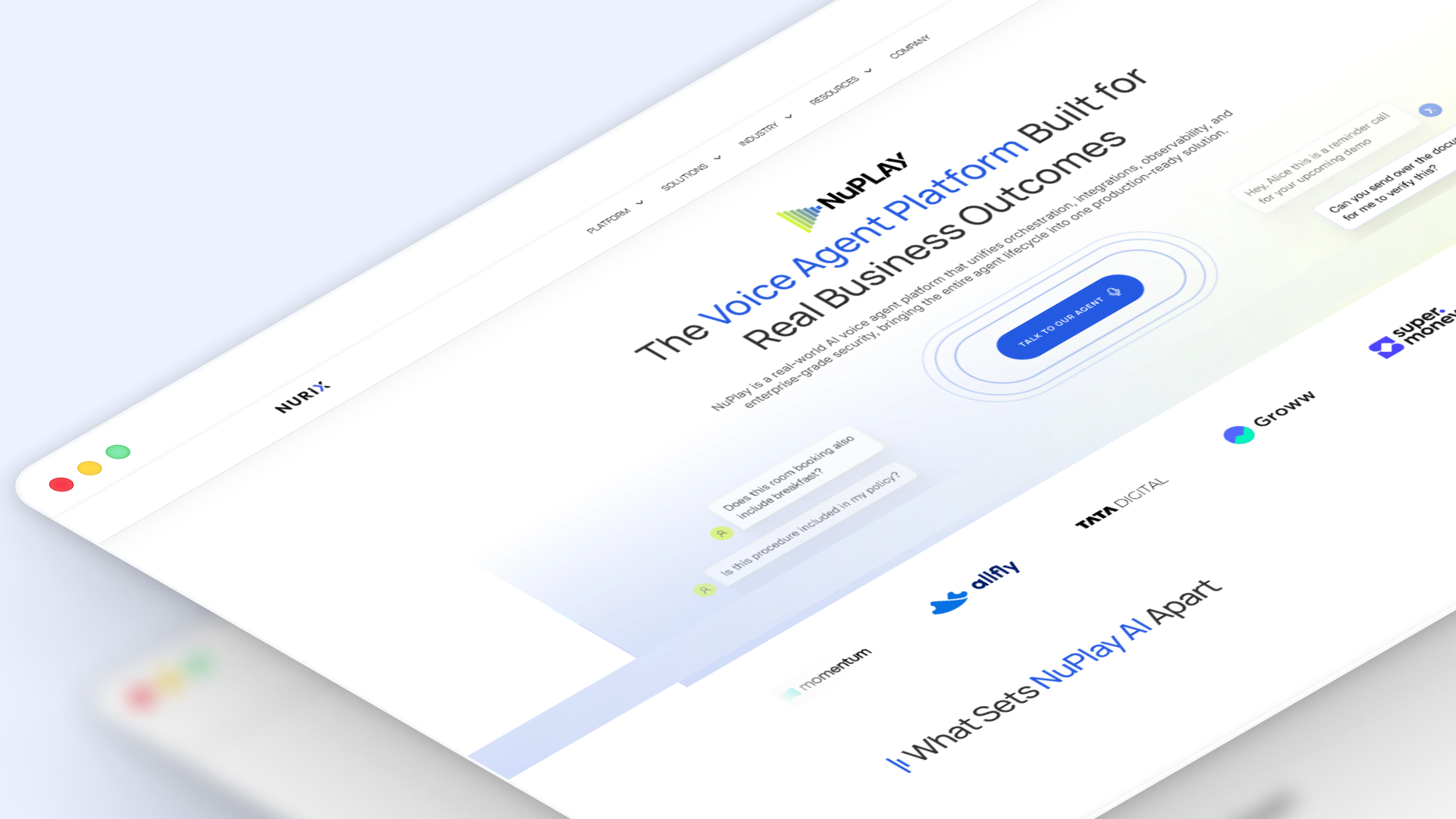
NUplay by Nurix AI enables AI lead generation strategies to move beyond scoring and outreach into end-to-end workflow execution. Instead of treating lead generation as disconnected steps, NUplay by Nurix AI connects capture, qualification, routing, and follow-up into a single, orchestrated system.
Here’s how NuPlay by Nurix AI fits across your lead generation workflows:
- Inbound lead capture and qualification: Voice and chat agents engage leads instantly, ask structured qualification questions, and capture intent in real time. High-intent leads are identified early without manual triage.
- Real-time routing and action execution: Qualified leads are automatically routed to the appropriate sales team, while actions such as CRM updates, meeting scheduling, or ticket creation are completed within the same workflow.
- Outbound and nurture engagement: Leads are re-engaged through coordinated voice and chat interactions based on behavioral triggers, ensuring follow-ups happen at the right time with relevant context.
- Multi-agent orchestration for complex workflows: Specialized agents handle different tasks such as qualification, routing, and follow-up, coordinated through a central system to improve consistency and scalability.
- Data-grounded conversations and accuracy: Responses are generated using enterprise data, ensuring interactions remain relevant, accurate, and aligned with business context.
- Monitoring and continuous optimization (NuPulse): Real-time insights track response times, lead handling efficiency, and conversion signals, helping teams refine scoring, routing, and engagement strategies.
- Enterprise integration and workflow continuity: Seamless connections with CRM, marketing tools, and internal systems ensure that lead data flows across the pipeline without manual handoffs.
For teams managing high-volume lead pipelines, NuPlay by Nurix AI helps connect engagement, qualification, routing, and follow-up into a more controlled workflow. This gives sales and operations teams better visibility into how leads move, where delays happen, and which interactions need improvement.
Conclusion
AI lead generation has moved beyond filling the top of the funnel. The bigger challenge now is what happens after a lead comes in: how fast it is qualified, who it reaches, and whether follow-up happens before intent drops.
When capture, scoring, engagement, and routing work as one workflow, teams lose fewer high-intent prospects to delays. They also get a clearer view of which leads are worth pursuing and where the pipeline is slowing down.
NUplay by Nurix AI supports this approach by enabling end-to-end execution across lead workflows, with visibility into performance and control over how each interaction is handled. This allows enterprises to scale lead generation without losing accuracy, context, or operational control.
As AI adoption matures, the focus moves from isolated automation to systems that can execute, monitor, and continuously improve lead workflows at scale.
See how NUplay by Nurix AI orchestrates lead qualification, routing, and follow-ups across your pipeline. Schedule a Custom Demo to explore how it fits into your existing workflows.
Author: Sakshi Batavia, Marketing Manager
Sakshi Batavia is a marketing manager focused on AI and automation. She writes about conversational AI, voice agents, and enterprise technologies that help businesses improve customer engagement and operational efficiency.