
Multilingual customer support helps your business serve customers in their preferred language across channels, including phone, email, chat, and self-service. For global enterprises, it is a customer experience strategy that improves clarity, builds trust, and supports growth across markets.
As an enterprise leader, you know that poor multilingual support can lead to frustrated customers, long wait times, and even lost revenue. If your company isn’t meeting your customers' multilingual needs, you risk falling behind competitors who offer faster, more efficient support.
Even research shows that 76% of online shoppers prefer to buy products with information in their native language.
So, whether you're in retail, insurance, or enterprises with high query volumes and struggling to scale multilingual customer support, this blog is for you.
Here you will explore what multilingual customer support really means, why it matters for enterprise growth, and how automation can help you deliver a seamless customer experience.
Executive Summary (2026): Multilingual customer support helps global enterprises reduce friction, improve response times, and serve customers across regions. However, scaling support across languages requires more than translation. It depends on automation, system integration, and operational control. Enterprises are adopting AI-driven platforms to manage multilingual workflows efficiently while maintaining quality, consistency, and performance at scale.
Key Takeaways:
- Multilingual Support: It is about providing a culturally sensitive, personalized experience across various channels to make your global customers feel understood and valued.
- Key Benefits: Offering multilingual customer support boosts customer satisfaction, increases brand reach, improves your competitive advantage, strengthens your global position, and boosts customer loyalty.
- Tips for Success: To build an effective multilingual support system, promote workplace diversity, determine the languages you can realistically support, and create cross-cultural best practices.
- AI Integration: Leverage AI-powered chatbots and voice agents for scalable multilingual support. These tools improve efficiency, reduce human error, and ensure 24/7 support in multiple languages.
- Implementation Steps: To implement multilingual support, start by assessing your current capabilities, defining a clear strategy, choosing the right technology partner, and rolling out a phased approach.
What is Multilingual Customer Support?
Multilingual customer support involves providing seamless, culturally sensitive service across multiple languages and channels. It's about delivering a personalized, consistent experience that speaks to your customer’s unique needs, preferences, and cultural nuances.
From phone and email to chat and social media, true multilingual support ensures your customers feel understood and valued, no matter the language they speak.
Whether you're managing a retail, insurance, or real estate company, offering multilingual support increases trust and builds stronger, more meaningful relationships with customers worldwide.
There are three main models businesses use for providing multilingual customer support:
- Human Agents: Native or fluent speakers offering personalized, culturally sensitive support.
- AI-Powered Chatbots: Automated systems that handle routine queries across multiple languages.
- Hybrid Models: A combination of AI efficiency for routine tasks and human expertise for complex or sensitive issues.
To ensure your business remains competitive in a global market, offering multilingual customer support brings numerous advantages. Let’s explore the key benefits of implementing this approach.
Also Read: Multilingual AI for Customer Support Best Practices
5 Key Benefits of Multilingual Customer Support
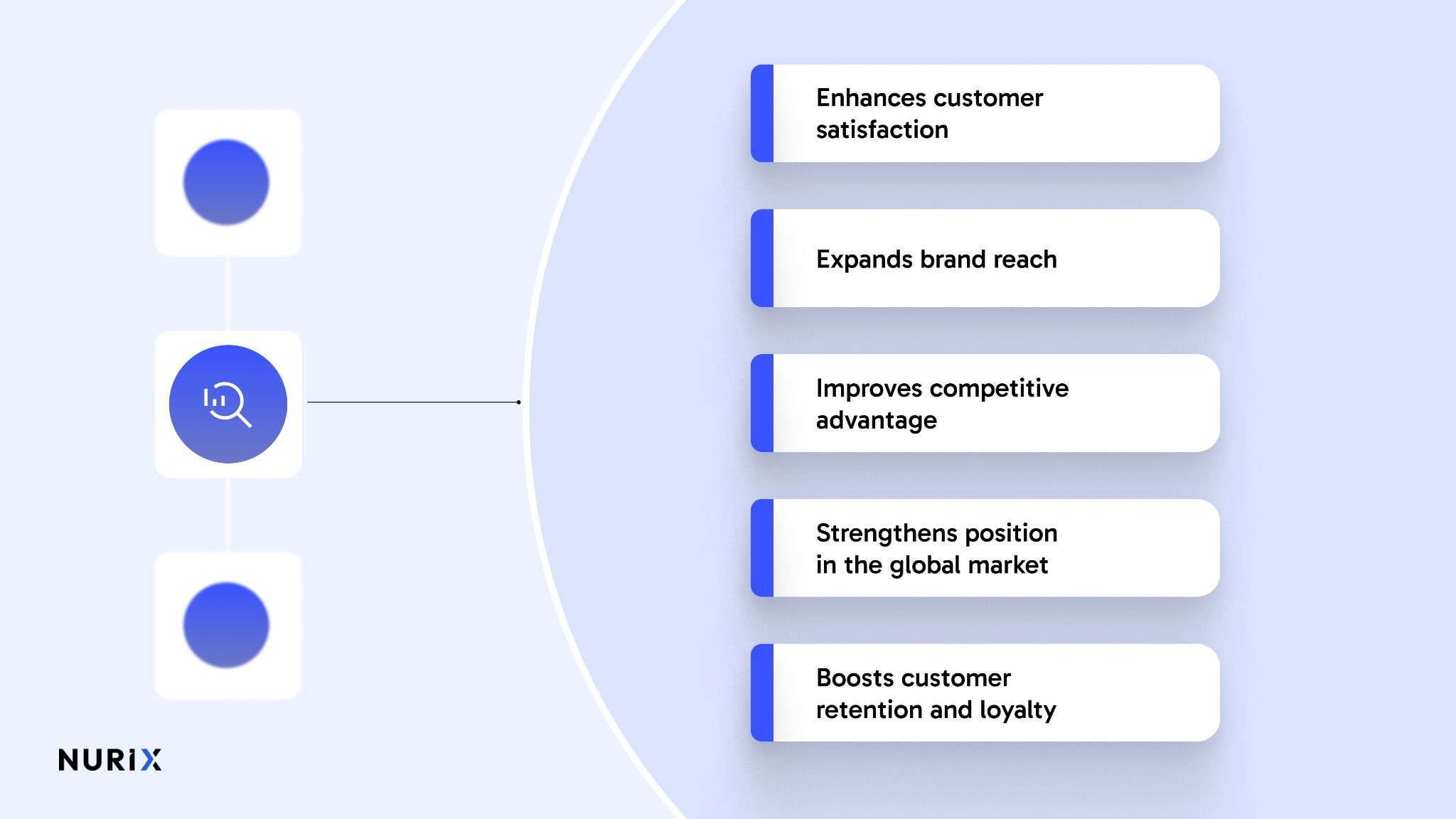
As most customers prefer conducting business in their native or preferred language, multilingual customer support can significantly enhance satisfaction and loyalty. Expanding your language capabilities allows your business to increase its global reach and become more accessible to new markets.
Multilingual customer support helps:
1. Enhance customer satisfaction
When support is limited to a single language, customers who aren’t fluent often feel excluded, leading to frustration. Multilingual support ensures customers can communicate in their preferred language, making interactions smoother and faster. This results in higher Customer Satisfaction Scores (CSAT) and lower churn rates.
2. Expand brand reach
Offering support in multiple languages allows companies to tap into new markets and grow internationally. By speaking the customer’s language, you eliminate barriers, making your brand more accessible to a global audience with diverse markets.
3. Improve competitive advantage
In competitive industries, failing to offer multilingual support can push customers toward competitors who can communicate in their native language. By addressing customer needs inclusively, multilingual support sets you apart as a customer-centric brand, making you the preferred choice in crowded markets.
4. Strengthen position in the global market
Companies aiming to expand globally often struggle to break into new regions without offering multilingual support. Providing assistance in multiple languages demonstrates cultural sensitivity, boosts credibility, and helps build trust with local customers, positioning your business as a global player.
5. Increase customer retention and loyalty
When customers face language barriers, it negatively impacts their experience and reduces loyalty. Multilingual customer service fosters stronger relationships by ensuring customers feel understood and valued, which leads to higher retention rates and long-term loyalty.
To fully realize the benefits of multilingual customer support, it's essential to choose the right channels to engage with your diverse customer base effectively.
5 Top Channels for Providing Multilingual Customer Support
To deliver effective multilingual customer support, it's essential to use the right mix of channels. Each channel plays a distinct role in how your customers seek help, and providing them in local languages ensures a more inclusive and effective experience.
Here are the key channels that work best for multilingual support:

1. Phone
Phone support is one of the most personal and direct ways to assist customers. However, language barriers can lead to confusion and frustration. By using multilingual agents or AI-assisted translation tools, you can offer clear, empathetic support, ensuring quick and effective resolutions.
2. Email Support
Email remains a preferred channel for customers who need detailed responses or support across different time zones. Without multilingual capabilities, email exchanges can be delayed or misinterpreted.
Offering support in multiple languages ensures clarity and accuracy and provides a written record that customers can refer to.
3. Live Chat
Live chat enables real-time support, but language mismatches can slow responses. With multilingual live chat powered by either native-speaking agents or AI-driven translation tools, you can provide instant, understandable answers, maintaining the smoothness and efficiency of the interaction.
4. Social Media
Many customers turn to platforms like Facebook, Instagram, or X (formerly Twitter) to ask questions or voice complaints. Limiting responses to a single language can hinder engagement and give the impression of exclusivity.
By offering multilingual support on social media, your business can foster a more inclusive image and improve customer engagement across global communities.
5. Self-Service Portals
Self-service options such as knowledge bases, FAQs, and help articles are most effective when available in multiple languages. If these resources are available only in one language, customers from different regions may avoid them altogether.
Multilingual self-service portals empower your customers to solve problems independently, reducing support volume and boosting satisfaction.
By using these channels effectively, your business can deliver better, more efficient multilingual support, ensuring that customers feel heard and valued at every interaction.
However, at enterprise scale, multilingual customer support is not just about handling conversations. It requires coordination across channels, systems, and workflows while maintaining consistency and control.
This is where NuPlay by Nurix AI comes in.
NuPlay by Nurix AI is an enterprise-grade voice and chat AI platform designed for support, sales, and workflow automation. It builds voice agents for real-world conversations, handling low latency, interruptions, and complex multilingual interactions with natural flow.
NuPlay by Nurix AI also supports multi-agent orchestration, enterprise integrations, and real-time observability to maintain consistent performance across languages and channels.
With full customization control, you can easily adjust tone, personality traits, formality level, and even language preferences to suit your brand’s identity.
Now, let's focus on developing a strategy to implement multilingual support across your organization.
How to Implement Multilingual Customer Support?
Implementing multilingual customer support requires a well-thought-out approach to meet the diverse needs of your global customer base. By following a strategic framework, you can scale efficiently and deliver exceptional support across multiple languages.
Here are the steps to help you get started:
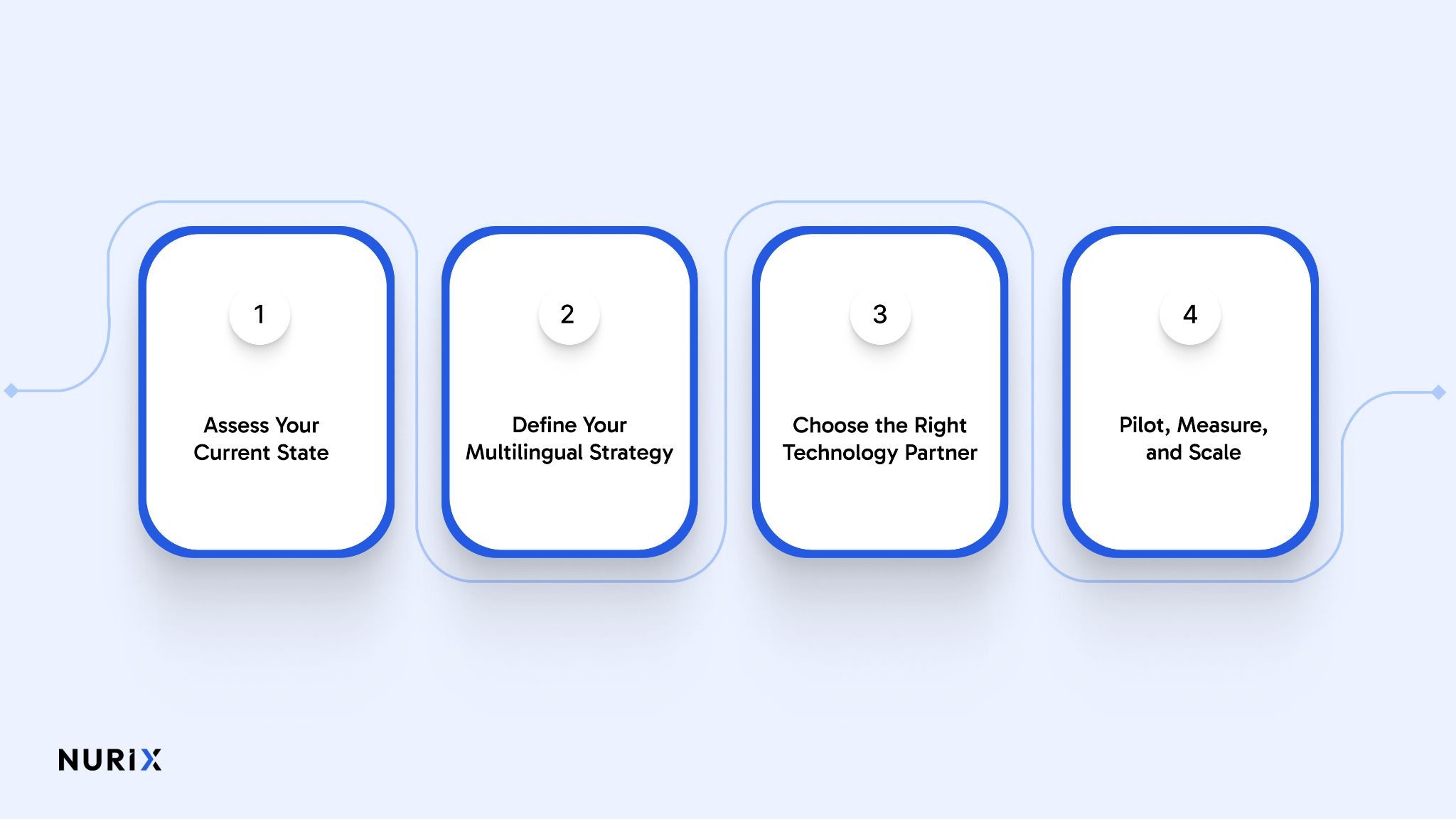
Step 1: Assess Your Current State
Start with an honest assessment of your current multilingual capabilities. Ask yourself key questions to understand your existing situation:
- How many languages do you currently support (both officially and unofficially)?
- What is the language distribution of your customer base?
- Which support channels do customers use to contact you?
- Where are language gaps causing friction or customer dissatisfaction?
- What language-related complaints are emerging from support tickets and customer feedback?
Identifying these areas will help pinpoint where you’re losing customers or struggling to expand, allowing you to take targeted action.
Step 2: Define Your Multilingual Strategy
Based on your assessment, define a clear multilingual strategy:
- Priority languages: Start with 3-5 languages that will have the most impact on your business.
- Channel strategy: Decide whether to offer multilingual support across all channels or focus on specific ones first.
- Service level targets: Set response time and availability goals by language to ensure consistent support quality.
- AI vs. human support: Determine how much of the workload will be automated versus handled by human agents.
This strategy ensures that you focus on the most important markets first while creating a scalable plan for future expansion.
Step 3: Choose the Right Technology Partner
Choosing the right technology platform is crucial to ensure seamless multilingual support:
- Language coverage: Evaluate if the platform can support your current and future language needs.
- Integration capabilities: Ensure the platform integrates smoothly with your existing tech stack (CRM, helpdesk, etc.).
- AI quality: Consider the platform’s AI capabilities for voice and text support to ensure they meet your business needs.
- Analytics and reporting: Look for platforms that provide in-depth metrics and insights into your multilingual operations.
- Scalability and pricing: Ensure the platform scales with your business and fits within your budget.
Seek platforms with proven experience in enterprise-level deployments, and ask for references from similar industries handling high volumes of customer interactions.
Step 4: Pilot, Measure, and Scale
Start small and expand gradually by following a phased approach:
- Pilot phase: Implement multilingual support for your top 2-3 priority languages.
- Measure rigorously: Track key performance indicators (KPIs) like response time, customer satisfaction, and resolution rates.
- Optimize: Use insights from the pilot phase to refine AI training, routing rules, and escalation paths.
- Scale: Gradually add more languages and support channels based on the success of the pilot phase.
By following these steps, your business can effectively implement multilingual support, driving customer satisfaction and growth across regions.
To successfully implement multilingual support, it's important to not only set up the right systems but also adopt best practices that enhance efficiency and customer experience.
5 Tips for Developing Multilingual Customer Support

Building a strong multilingual customer support system requires the right strategies, tools, and a focus on cultural inclusivity.
Here are five tips to help you enhance your support operations and meet the needs of your diverse, global customer base:
1. Promote Workplace Diversity
Building a multilingual support team starts with hiring employees from diverse linguistic and cultural backgrounds. A diverse team helps deliver more personalized and culturally relevant support.
Key benefits include:
- Better understanding of regional nuances.
- More personalized customer interactions.
- Culturally relevant solutions.
- Stronger customer trust and connection.
A workforce with multilingual and culturally aware employees helps customers feel understood and valued in every conversation.
2. Determine the Level of Support You Can Provide
Before expanding your multilingual support services, you need to evaluate how many languages you can realistically handle based on your customer base and business goals. Depending on the regions you serve, you might need to offer a broader range of languages or focus on key markets.
For example:
- Businesses serving Europe may prioritize German, French, and Spanish.
- Global enterprises may require wider language coverage.
This targeted approach helps:
- Focus support on key markets
- Improve customer experience
- Optimize operational efficiency
3. Create Cross-Cultural Best Practices
Cultural sensitivity is a critical factor in delivering exceptional support. This involves developing guidelines for communicating effectively with customers from diverse cultural backgrounds.
This should include:
- Tone of communication.
- Level of formality.
- Regional communication norms.
- Cultural expectations.
These best practices help support teams handle multilingual interactions with greater respect and understanding, improving customer satisfaction and loyalty.
4. Use AI and Chatbots
AI-powered chatbots help businesses provide instant responses 24/7. These tools support multilingual communication through built-in translation capabilities.
Benefits include:
- Faster response times.
- Reduced workload for human agents.
- Scalable multilingual support.
- Consistent answers across languages.
At enterprise scale, managing multilingual interactions requires more than automation alone. Platforms like NuPlay by Nurix AI help handle this complexity.
Our Brand Voice Intelligence learns from your business materials, such as websites, help centers, playbooks, and past customer interactions, to create a voice agent. You get full control over your AI’s tone, personality traits, and even language preferences.
At scale, this requires coordination across AI agents, system integrations, and performance visibility across languages, where platforms like NuPlay by Nurix AI go beyond standalone chatbots.
5. Communicate Support Availability
Clear communication is essential to setting the right expectations for your customers. Make sure customers know when they can reach support. This becomes especially important when dealing with customers in different time zones, ensuring they understand your team's availability and the level of support they can expect.
Clear availability information helps:
- Reduce wait times.
- Improve response expectations.
- Increase customer retention.
- Strengthen loyalty.
By incorporating these tips into your multilingual support strategy, you can better serve your global customer base, enhance customer satisfaction, and build stronger, more loyal relationships.
However, even with the best plans in place, businesses face certain challenges when managing multilingual customer service.
Common Challenges in Providing Multilingual Customer Service
Providing effective multilingual customer service can be challenging, especially for enterprises with high query volumes. It requires careful planning to ensure consistent, high-quality support while managing costs and cultural nuances.
Here are some of the common challenges with effective solutions:
- Maintaining consistency across languages: Ensuring that your customer support is consistent in every language is difficult, as tone and messaging can vary. Use AI-driven tools that allow you to standardize responses and ensure your brand voice is consistent across all languages.
- Managing costs while maintaining quality: Balancing the cost of multilingual support with the need for high-quality service can be tricky. Use automation to handle routine tasks and reduce the reliance on human agents, thus cutting costs while maintaining service quality.
- Ensuring cultural sensitivity beyond translation: Translation alone isn’t enough; understanding and respecting cultural differences is vital. Train your multilingual agents and AI tools to understand cultural nuances, ensuring customer interactions are personalized and culturally appropriate.
By addressing these challenges with the right strategies, you can build a multilingual support system that not only meets the needs of your global customer base but also improves efficiency and satisfaction.
Also Read: Voicebot and Conversational AI for Customer Support
Conclusion
Multilingual customer support helps global enterprises improve customer satisfaction. It supports market expansion and strengthens competitiveness. Culturally sensitive support creates smoother interactions and faster resolutions. It also builds stronger customer loyalty. With the right strategy, technology, and team structure, the system can scale with business growth.
To make this work at scale, businesses also need the right foundation behind the experience. This includes strong integrations, clear governance, and tools that help maintain consistency across channels and languages. It also provides real-time observability to monitor performance and ensure consistent quality at scale.
If you are looking for an AI agent capable of handling complex multilingual customer interactions, NuPlay by Nurix AI can help.
NuPlay by Nurix AI is an enterprise-grade voice and chat AI platform built for real business outcomes, with low-latency voice agents, natural turn-taking, interruption handling, and brand voice intelligence (NuRep) to align every interaction with your brand.
Schedule a custom demo with NuPlay by Nurix AI today and see how you can deliver scalable, brand-aligned multilingual support across every customer touchpoint.
Author: Sakshi Batavia — Marketing Manager
Sakshi Batavia is a marketing manager focused on AI and automation. She writes about conversational AI, voice agents, and enterprise technologies that help businesses improve customer engagement and operational efficiency.