
Customer expectations are higher than ever. People want fast, accurate answers, and they want them in their language. For businesses expanding globally, this can be a challenge. Providing support in multiple languages without overwhelming your team or stretching resources too thin isn’t easy, but it’s necessary.
That’s where voice agents come in. With the voice AI market set to grow by USD 10.96 billion, businesses are clearly recognizing the potential of voice agents to meet these demands in 2026 and beyond. But here's the big question: Are there pre-trained models for English and multilingual voice agents that can help companies get started right away, without reinventing the wheel?
In this guide, we’ll find out whether there are pre-trained models for English and multilingual voice agents, how they work, how they can save time and effort, and why they might be the solution you’ve been looking for to upgrade your customer experience.
Executive Summary
Pre-trained models for English and multilingual voice agents accelerate deployment, but they only solve parts of the stack. Enterprises require orchestration, integrations, and governance to run production-grade voice systems. Platforms like NUplay by Nurix AI combine these models into end-to-end workflows, helping organisations scale automation, reduce operational costs, and deliver consistent, multilingual customer experiences across voice, chat, and document-driven interactions.
Key Takeaways
- Pre-trained Voice Agents Save Time and Money: Automating routine tasks with pre-trained voice agents cuts operational costs by 50%, simplifying processes like lead qualification and reducing the need for large support teams.
- Improved Customer Satisfaction with Faster Responses: Pre-trained voice agents deliver quick, accurate responses around the clock, reducing wait times and improving customer satisfaction, leading to higher engagement and better overall experiences.
- Multilingual Capabilities Expand Global Reach: With multilingual support, pre-trained voice agents allow businesses to reach diverse global audiences, providing smooth communication without the need for additional staff in each region.
- Improved Accuracy and Consistency in Service: Voice agents offer consistent service quality across various touchpoints, minimizing human errors and providing reliable interactions that improve customer trust and provide uniform responses in multiple languages.
- Efficient Integration with Existing Systems: Pre-trained voice agents integrate smoothly with current business systems like CRM and ERP, improving operational efficiency without requiring major changes to existing infrastructure or workflows.
Understanding Pre-Trained Model Voice Agents
Pre-trained model voice agents are AI-driven systems trained on vast datasets to recognize, process, and respond to voice commands or queries. They improve human-device interaction without the need for custom training from scratch.
Core Technologies of Pre-Trained Model Voice Agents:
Let’s take a look at some of the core technologies that power pre-trained voice agents and allow them to perform smoothly across a variety of tasks.
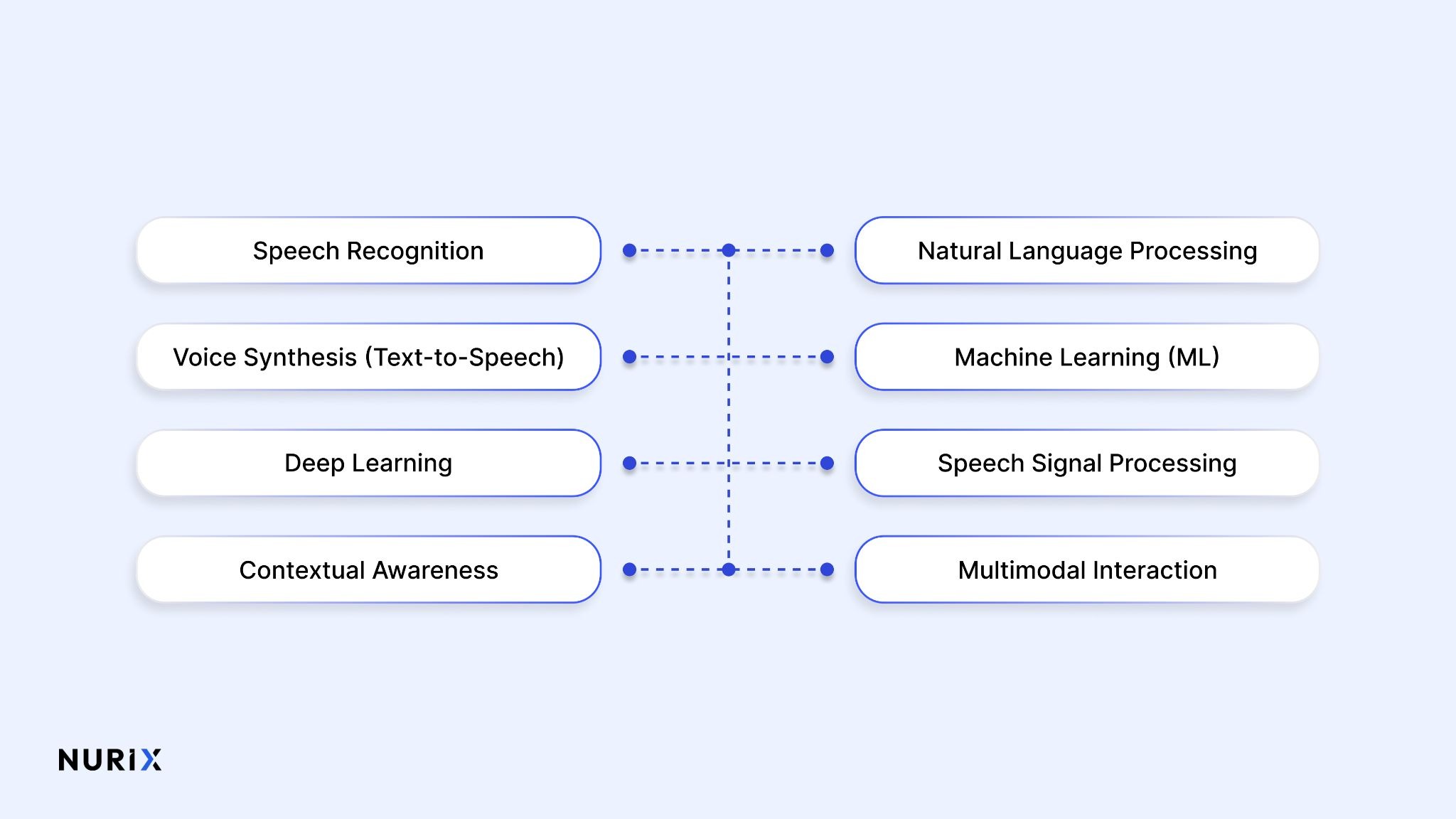
- Speech Recognition: Speech recognition technology converts spoken language into written text, allowing devices to understand verbal commands accurately through deep learning techniques and large training datasets.
- Natural Language Processing (NLP): NLP allows voice agents to interpret and process human language, including identifying user intent, context, and sentiment, facilitating more human-like conversations with the system.
- Voice Synthesis (Text-to-Speech): Voice synthesis generates spoken language from text. This technology allows pre-trained voice agents to deliver responses in natural-sounding voices, improving user interaction quality.
- Machine Learning (ML): Machine learning helps voice agents improve performance over time by learning from new data. It adjusts to individual users' speech patterns, accents, and preferences, improving accuracy.
- Deep Learning: Deep learning models analyze and recognize complex patterns in voice data, allowing voice agents to understand diverse speech inputs, even in noisy or challenging environments.
- Speech Signal Processing: This technology focuses on improving the quality of audio input, filtering out noise, and improving speech clarity to guarantee that voice agents understand commands with higher precision.
- Contextual Awareness: Contextual awareness allows voice agents to track ongoing conversations, remembering prior interactions to provide more relevant and context-sensitive responses over time.
- Multimodal Interaction: Multimodal interaction integrates voice with other types of input, such as visual or gesture-based commands, allowing more flexible and richer user interactions with the voice agent.
Discover the milestones and innovations that have transformed the industry from the 1990s to today. Learn more in The ENTIRE Voice AI Evolution 1990s to 2025!
Are There Pre-Trained Models for English and Multilingual Voice Agents?
Yes, there are pre-trained models available for both English and multilingual voice agents. These models handle specific components like speech recognition, language understanding, and voice generation, making it easier to get started without building systems from scratch. However, they typically solve individual parts of the workflow, not the full conversation or task execution.
To deploy voice agents in real-world environments, businesses need orchestration, integrations, and monitoring. NUplay by Nurix AI is an enterprise-grade voice and chat AI platform that enables organisations to design, deploy, and manage AI agents across voice, chat, and document workflows. It brings these models together into production-ready systems that can handle end-to-end interactions across multiple languages and business systems.
Key Features of NUplay by Nurix AI AI Multilingual Voice Agent:
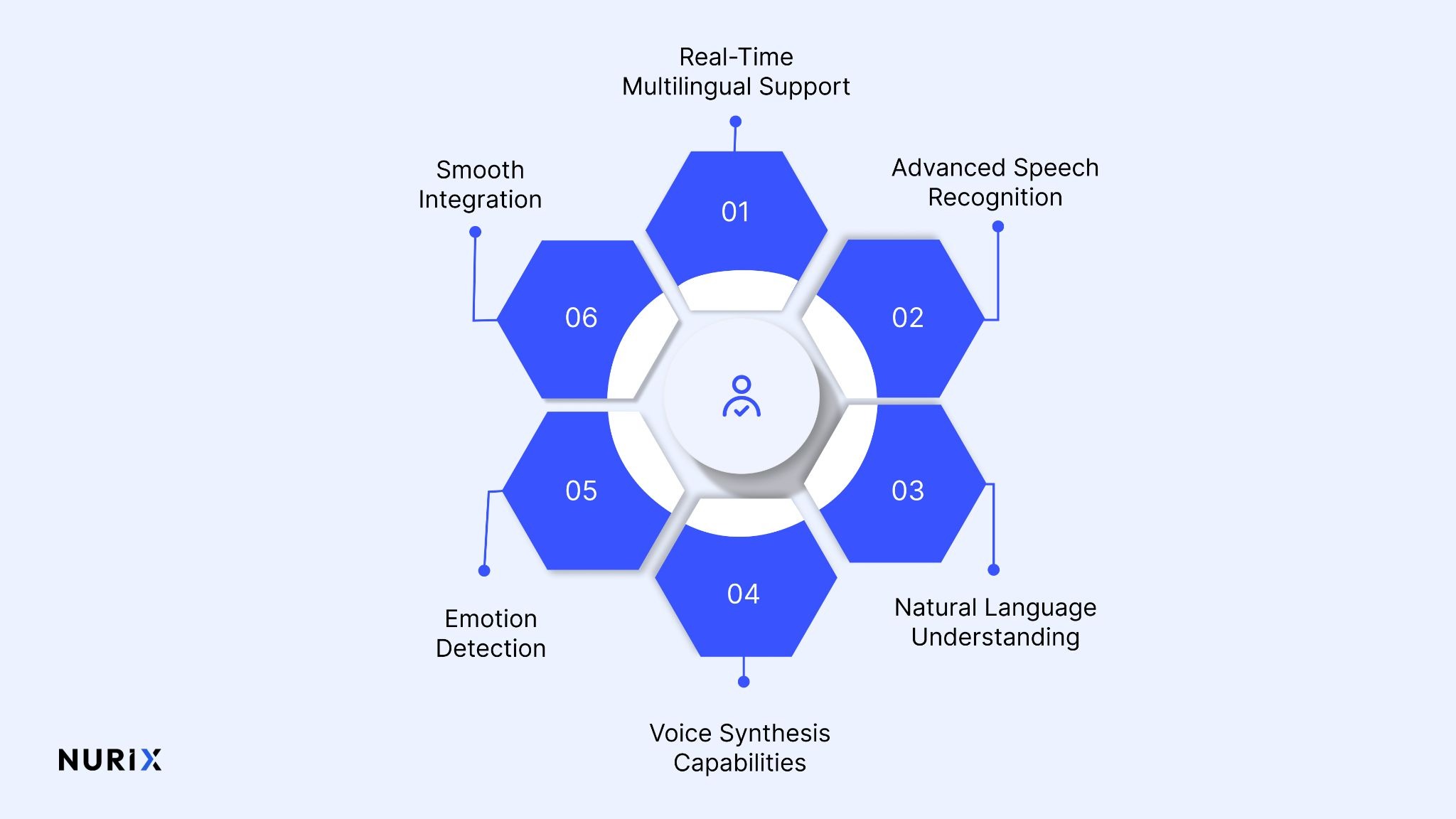
- Real-Time Multilingual Support: NUplay by Nurix AI platform guarantees that voice agents can engage with customers in multiple languages without delays, providing real-time responses that mimic natural human conversations.
- Advanced Speech Recognition: The system employs state-of-the-art speech recognition technology to convert spoken words into text with high accuracy, accommodating various accents and dialects.
- Natural Language Understanding: Utilizing advanced natural language processing algorithms, NUplay by Nurix AI voice agents comprehend user queries, discerning intent and context to deliver appropriate responses.
- Voice Synthesis Capabilities: The platform incorporates advanced text-to-speech technology, producing voice outputs that sound natural and engaging, improving user experience.
- Emotion Detection: NUplay by Nurix AI voice agents are equipped with emotion detection features, allowing them to identify and appropriately respond to the emotional tone of the user's voice.
- Smooth Integration: The solution is designed to integrate smoothly with various enterprise systems, such as CRM and ERP platforms, confirming that voice agents can access and utilize relevant data to assist users effectively.
Which Pre-Trained Models Exist?
Several pre-trained models already support English and multilingual voice agents, each built for a specific layer like speech recognition, language understanding, or voice output. Here are the most relevant ones used today.
- Whisper: OpenAI’s Whisper is widely used for speech-to-text. It performs well across multiple languages and accents, and handles noisy audio better than most open models, which makes it reliable for real-world voice inputs.
- XLS-R: Meta’s XLS-R is designed for multilingual speech recognition at scale. It is trained on a large mix of languages and works particularly well for languages where training data is limited.
- Massively Multilingual Speech (MMS): Also from Meta, MMS focuses on language coverage. It supports over 1,000 languages, making it useful for global applications where broad language support matters more than fine-tuned accuracy.
- Google Speech-to-Text and Dialogflow CX: Google combines speech recognition with conversational flow management. Speech-to-Text handles voice input, while Dialogflow CX manages intents, flows, and responses for enterprise voice agents.
- Amazon Lex and Polly: Amazon Lex handles conversation logic and integrates with backend systems, while Polly generates natural-sounding speech. Together, they support building end-to-end voice experiences.
- Azure AI Speech: Microsoft’s Azure AI Speech provides both speech recognition and text-to-speech, along with options for custom voice models and enterprise-grade deployment.
- ElevenLabs: ElevenLabs is focused on text-to-speech and voice generation. It is known for producing highly realistic voices and is often used where voice quality directly impacts user experience.
On their own, these models solve specific parts of the problem. In practice, they’re brought together into one system that can handle full conversations, which is where platforms like NUplay by Nurix AI come in.
Use Cases of NUplay by Nurix AI AI Voice Agents
Let’s look at a few ways NUplay by Nurix AI voice agents are making an impact in real-world applications.
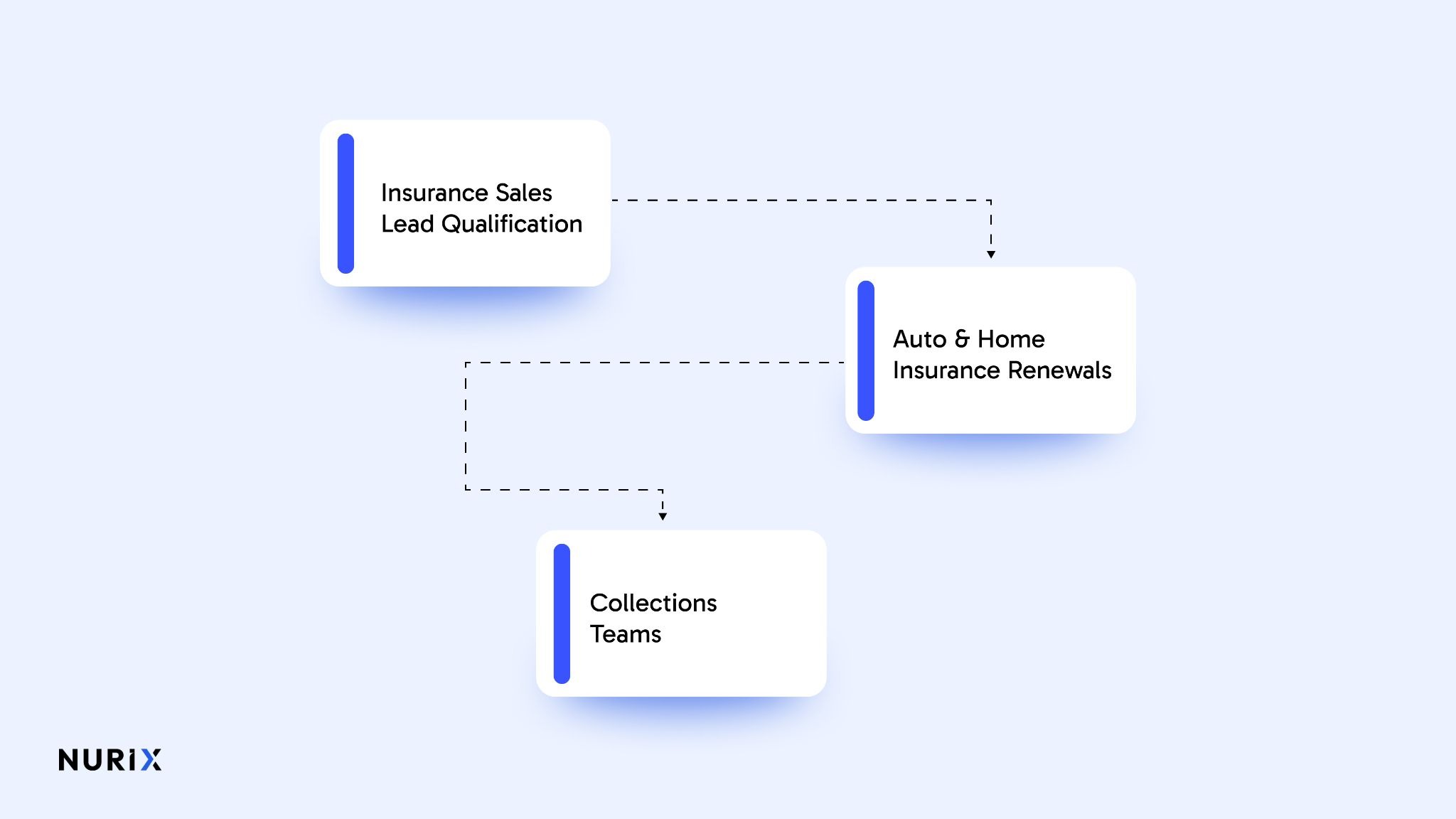
- Insurance Sales Lead Qualification: NUplay by Nurix AI voice agents automate the qualification of insurance leads by collecting basic details, identifying intent, and filtering out cold leads. This resulted in a 70% qualification rate before agent involvement, cutting operational costs by 50% and increasing conversion rates by 10%.
- Auto & Home Insurance Renewals: Voice agents handle policy renewals, confirming details and scheduling follow-ups, reducing policy lapses by 35% and cutting renewal costs by 50%, with 80% of customers preferring AI-driven calls.
- Collections Teams: AI agents automate compliance checks, identity verification, and account qualification in debt collection, boosting first-touch call automation by 70%, increasing recovery rates by 3x, and improving connect rates by 7x.
Also read: Conversational AI in BFSI: Top Use Cases and Voice-First Automation
Practical Applications of Pre-Trained Voice Agents
As businesses look for ways to improve their operations, pre-trained voice agents are stepping in to handle tasks that were once time-consuming and resource-heavy. Whether it's managing customer inquiries, assisting with appointments, or guiding shoppers through online stores, these voice agents are becoming essential tools.
Let’s explore some practical applications where these agents are already making a real difference.
After seeing how pre-trained voice agents are making a real impact across various industries, it’s clear that investing in these solutions can offer significant returns. Let’s look into the potential ROI of adopting these models for your business.
ROI of Investing in Pre-Trained Models for English and Multilingual Voice Agents
Investing in pre-trained voice agents is more than just a way to keep up with the times; it's a practical move that can drive real business results. By offloading routine tasks to voice agents, companies can simplify operations, improve service quality, and cut costs.
Here’s how implementing pre-trained models can deliver a solid return on investment.
- Automating routine tasks reduces human labor costs: Investing in pre-trained voice agents eliminates the need for large support teams, cutting down on salaries, training, and other operational expenses.
- Faster response times lead to higher satisfaction: Pre-trained voice agents provide quick and accurate responses, improving customer satisfaction by reducing wait times and guaranteeing 24/7 availability.
- Easily scale operations without significant additional costs: Voice agents can handle a high volume of inquiries simultaneously, supporting business growth without the need to hire more staff or expand infrastructure.
- Assures uniformity in customer interactions: Voice agents provide consistent responses and service quality, reducing human error and delivering reliable interactions across different touchpoints and languages.
- Expands your customer base across different regions: With multilingual capabilities, voice agents help businesses reach a wider audience, offering support in multiple languages without the need for additional personnel in each region.
- Quick deployment of pre-trained models saves development time: By using pre-trained models, businesses can implement voice agents more quickly, reducing the time it takes to go live and start realizing the benefits.
Also read: How We Evaluate Voice AI Models, From ML to LLMs to Agents to Real Time Voice
Overcoming Challenges That May Come Up During Implementation
Implementing pre-trained voice agents comes with its own set of challenges, but they aren't impossible to overcome. From handling different accents to providing smooth integration with existing systems, it's important to address these issues upfront.
Below are some of the key obstacles businesses face and practical solutions to keep things on track.
Conclusion
As businesses look to expand globally, providing multilingual support through voice agents is quickly becoming a must-have. Pre-trained models for English and multilingual voice agents offer companies a practical way to scale their operations without the need to develop complex systems from scratch.
Choosing the right solution is crucial, and NUplay by Nurix AI offers a powerful platform designed to help businesses provide reliable, multilingual support with minimal setup. If you're wondering, "Are there pre-trained models for English and multilingual voice agents?" the answer is yes, NUplay by Nurix AI has the right solution for you.
Schedule a custom demo to see how NUplay by Nurix AI automates multilingual voice interactions across your support, sales, and workflow operations.