How Chatbots Identify Intent: NLP, Machine Learning & Real-World Examples


Don’t miss what’s next in AI.
Subscribe for product updates, experiments, & success stories from the Nurix team.
Chatbots identify user intent by analyzing language, context, and behavior using natural language processing (NLP) and machine learning models. This allows them to understand what users want, whether it's support, information, or a transaction, and respond accurately in real time.
In this blog, you'll explore how chatbots identify intent, the crucial role of chatbot intent classification, and how it can transform customer interactions.
Executive Summary (2026): Chatbots identify user intent using Natural Language Processing (NLP) and machine learning, ensuring personalized and accurate responses. This enhances customer experience by addressing queries efficiently, improving satisfaction, and reducing response times. Effective intent detection drives business benefits like better service speed, higher personalization, and cost savings, while addressing challenges like typos and context shifts.
Key Takeaways
- Intent Accuracy: When chatbots miss intent, customers get irrelevant answers, slower support, and a poor experience.
- Core Process: Chatbots identify intent using Natural Language Processing, context, and machine learning.
- Business Impact: Strong intent detection improves speed, personalization, and resolution quality.
- Main Challenges: Vague queries, typos, and context shifts reduce accuracy.
- Performance Boost: Better training data, feedback loops, and fallback flows improve results.
What is Intent in Chatbots?
Intent is the driving force behind every user query to a chatbot. It’s not just a technical concept; it’s about delivering personalized, meaningful experiences that address real needs. Across industries like retail, healthcare, finance, and customer support, chatbots are becoming indispensable tools.
This growing reliance underscores the importance of intent classification. By accurately identifying what users want, whether it’s making a purchase, seeking help, or exploring options, chatbots can deliver precise, context-aware responses. Effective intent classification isn’t just a feature; it’s a competitive advantage that enhances customer satisfaction and operational efficiency.
But what are these intents, and how do they shape interactions? Understanding the types of chatbot intent is key to building smarter bots that truly meet user needs. Let’s break them down.
What Are the Different Types of Intents?
Different types of intents classify what a user is trying to achieve when they search, such as learning, comparing, or taking action. Understanding these intent types helps businesses design AI interactions that respond accurately and drive meaningful outcomes.
Here are the different types:
- Informational Intent: Users want basic information, such as “What are your store hours?” Chatbots use this to provide quick, straightforward, and relevant answers.
- Transactional Intent: Users aim to complete actions such as booking a hotel room or placing an order. Chatbot intent classification helps the bot assist efficiently.
- Navigational Intent: Users need directions, e.g., “Where is your London store?” The chatbot quickly guides them to the right location.
- Support Intent: When users need help, like “the internet is down,” chatbots respond with troubleshooting solutions.
- Feedback Intent: Users share their opinions, like “love the quality of my new bathing suit.” The chatbot logs feedback for improvements.
- Confirmation Intent: Users seek reassurance, e.g., “Can you confirm my order?” Chatbots validate actions and provide certainty.
- Account Management Intent: Users want to manage their accounts, like updating details or checking status. Chatbots handle these tasks smoothly.
By identifying these intents, chatbots deliver relevant, personalized responses that drive user satisfaction. But how do chatbots detect these intents and ensure accurate interactions? And why is it so important? Let’s explore.
Also Read: AI Intent Recognition: Benefits and Use Cases
Role of Intent in Chatbot Functionality
Intent plays a critical role in chatbot functionality by enabling the system to accurately understand user queries and trigger the appropriate response or workflow. It ensures conversations remain context-aware, relevant, and aligned with the user’s goal, improving overall interaction quality.
Here are the key ways intent powers effective chatbot functionality:
- User Goal Identification: Chatbots use intent to understand user needs and deliver tailored, relevant responses.
- Enhanced Interaction Quality: Accurate intent recognition leads to meaningful, context-aware replies that keep users engaged.
- Natural Language Processing (NLP): NLP techniques help chatbots understand language nuances, grasping varied user expressions for better accuracy.
- Personalized Experiences: By recognizing intent, chatbots create customized interactions that foster customer satisfaction and loyalty.
- Efficient Query Resolution: Intent classification streamlines responses, ensuring users get timely, effective solutions.
- Flexibility in Conversations: Chatbots adapt to shifting topics, maintaining relevance as user needs evolve.
- Data-Driven Insights: Analyzing user intent helps businesses improve offerings and refine strategies.
- Cost Reduction: Automating intent recognition reduces reliance on human agents, saving costs and improving efficiency.
- 24/7 Availability: Chatbots with intent recognition offer round-the-clock support, addressing inquiries anytime.
- Continuous Improvement: Machine learning helps chatbots evolve by learning from past interactions and improving intent detection.
Understanding the pivotal role intent plays in chatbot functionality lays the groundwork for optimizing interactions. But how do chatbots actually detect and classify user intent?
Exploring the process behind intent detection is essential to uncovering how chatbots transform raw queries into precise, context-aware responses that drive engagement and efficiency. Let’s break it down.
Also Read: AI Chatbot for Ecommerce Customer Service Automation
The Process of Chatbot Intent Detection
Chatbots detect intent by analyzing user input, using NLP to understand meaning and context, and applying machine learning to improve over time. With the help of machine learning, they improve over time, ensuring responses remain accurate and relevant by factoring in contextual cues and conversation history.
Let’s break down each step in detail:
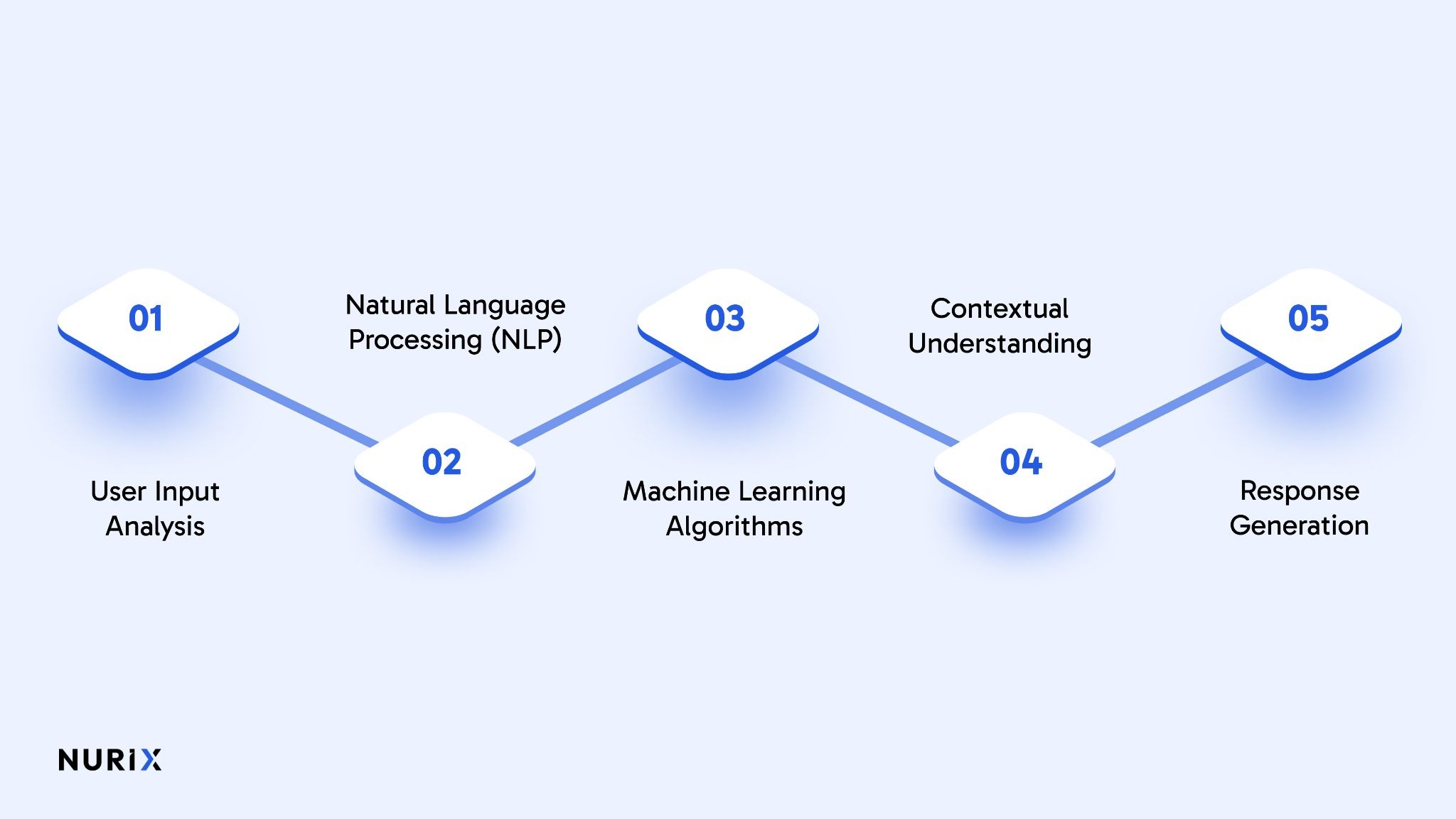
Step 1: User Input Analysis
Chatbots start by analyzing user input—whether text or voice—to identify keywords and phrases that indicate intent. This foundational step sets the stage for accurate understanding.
Step 2: Natural Language Processing (NLP)
Next, NLP techniques are applied to understand the meaning, sentiment, and context behind the user query. This helps the chatbot move beyond surface-level recognition to a deeper understanding.
Step 3: Machine Learning Algorithms
Chatbots leverage machine learning to refine intent recognition. By learning from past interactions, these algorithms improve classification accuracy over time and adapt to new user behaviors.
Step 4: Contextual Understanding
Context plays a vital role. Chatbots consider the conversation’s history, previous messages, and user-specific data to tailor their responses and ensure relevance.
Step 5: Response Generation
Finally, chatbots generate responses based on the identified intent. They use predefined rules or learned patterns to deliver timely and meaningful replies, enhancing user satisfaction.
The process of intent detection is only as effective as the techniques behind it. To truly understand how chatbots achieve precision and adaptability, let’s explore the key intent classification techniques that power their functionality.
Reduce response times by 36% with intelligent customer support solutions. NuPlay by Nurix AI ensures faster, more accurate resolutions! Click here to know more!
Chatbot Intent Classification Techniques
These techniques are designed to enhance chatbot performance by balancing simplicity, accuracy, and scalability. Each approach addresses unique challenges in language understanding, evolving to meet the growing demands of chatbot functionality.
Let’s explore them:
- Rules-Based Pattern Matching: Chatbots identify intent by matching user inputs to predefined keywords, ensuring quick and precise responses through chatbot intent classification.
- Machine Learning Algorithms: Using decision trees and Naive Bayes, chatbots learn from data, improving how chatbots identify intent over time for better accuracy.
- Deep Learning Models: Neural networks help chatbots spot complex patterns, refining chatbot intent classification for deeper, more contextual understanding.
- Natural Language Processing (NLP): NLP helps chatbots interpret user queries by understanding context, sentiment, and meaning, enhancing how chatbots identify intent.
- Multi-Label Intent Classification: This approach helps chatbots detect multiple intents within one query, improving chatbot intent classification in multi-faceted conversations.
The techniques behind chatbot intent classification gain depth when viewed in action. Real-world examples reveal how businesses apply these methods to solve specific challenges and create smoother, more intuitive customer interactions.
Also Read: Creating a Conversational AI Voice-Based Chatbot: Differences and Benefits
Real-Life Examples of Chatbot Intent
Exploring how chatbot intent classification works in real-world settings shows its powerful impact on customer interactions. These examples highlight how businesses use intent detection to improve engagement.
Here are a few examples:
- Ben & Jerry’s: Ben & Jerry’s used a chatbot to personalize interactions with users, delivering tailored flavor recommendations and providing information about local stores and events. This approach enhanced user engagement and strengthened the brand’s connection with customers.
- Michael Kors: On Facebook Messenger, Michael Kors utilized a chatbot to promote products and assist users in browsing collections. By offering quick responses and personalized styling advice, the chatbot made shopping more interactive and accessible.
- Amika: Amika’s "Ace" chatbot has significantly enhanced the shopping experience by offering personalized product recommendations tailored to individual hair care needs. During a flash sale, the chatbot demonstrated its effectiveness by driving an 800% increase in sales conversion rates, showcasing the impact of intent classification on customer engagement and purchase decisions.
While real-life examples show how businesses successfully use chatbot intent classification to enhance customer interactions, achieving these results isn’t without its challenges. Understanding the hurdles in intent detection is crucial for building more effective and adaptable chatbots. Let’s explore the key challenges and how they can be addressed.
Elevate your customer support experience with NuPlay by Nurix AI. Deliver fast, personalized assistance 24/7. Call us now!
Challenges in Chatbot Intent Detection
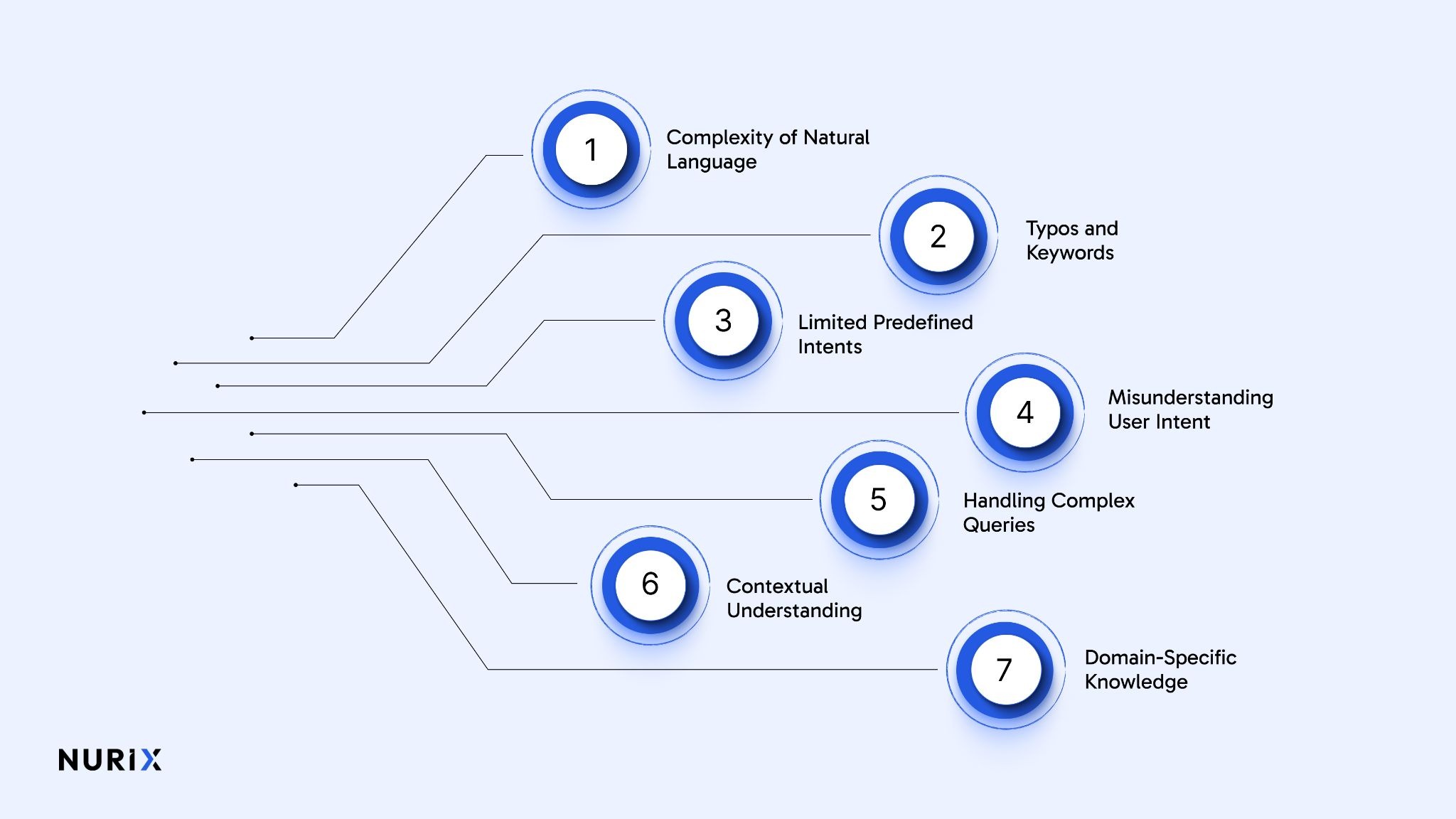
Accurately identifying user intent remains difficult when queries are vague, multi-layered, or expressed in natural, unstructured language. This often leads to incorrect responses, broken workflows, and a frustrating user experience.
Here are the key challenges in chatbot intent detection:
- Complexity of Natural Language: Human language is inherently nuanced, with diverse expressions, slang, and cultural variations. For chatbots, accurately identifying intent amid this linguistic variety and subtle differences in phrasing can be challenging.
- Typos and Keywords: Users often make typos or use keywords, complicating intent recognition and leading to misinterpretations in chatbot intent classification.
- Limited Predefined Intents: Predefined intents might not cover all user queries, causing gaps in chatbot intent classification and resulting in misclassifications.
- Misunderstanding User Intent: Variability in user input can lead to misinterpretations, leaving chatbots unable to identify intent correctly, resulting in poor responses.
- Handling Complex Queries: Multi-step or unclear queries challenge chatbots in detecting intent accurately and delivering relevant responses.
- Contextual Understanding: Chatbot intent classification struggles with dynamic conversations, where understanding context is key for accurate intent recognition.
- Domain-Specific Knowledge: In specialized fields, a lack of domain knowledge can lead to errors in how chatbots identify intent, hindering effective conversations.
Recognizing the challenges in chatbot intent detection is the first step toward building more effective systems. To address these obstacles, it’s essential to explore strategies that enhance intent recognition performance.
By improving how chatbots understand user queries, businesses can deliver more accurate, engaging, and meaningful interactions. Let’s look at the key ways to achieve this.
Also read: Top AI Chatbots for Customer Service
How to Improve Chatbot Intent Recognition Performance
Improving chatbot intent recognition is vital for handling diverse user queries and delivering meaningful responses. By addressing limitations in language understanding, context, and adaptability, chatbots can become more accurate and reliable. Let’s uncover effective ways to achieve this.
- Utilize Diverse Training Data: By incorporating varied phrases and synonyms, you improve how chatbots identify intent, leading to more accurate chatbot intent classification across queries.
- Regularly Update the Model: Keeping the model fresh with new data ensures better adaptability to user behavior, enhancing how chatbots identify intent for long-term success.
- Incorporate Contextual Understanding: Building on past interactions helps chatbots identify intent more effectively, ensuring chatbot intent classification is more context-aware and precise.
- Employ Pre-trained Language Models: Fine-tuning models like GPT or BERT improves how chatbots identify intent, boosting the accuracy of chatbot intent classification.
- Implement Feedback Loops: Collecting user feedback helps refine chatbot intent classification, improving how chatbots identify intent and ensuring better, more relevant responses.
- Balance Training Data Across Intents: Balanced datasets prevent bias in chatbot intent classification, ensuring that how chatbots identify intent is accurate across all user intents.
- Use Evaluation Metrics: Regular use of precision, recall, and other metrics helps improve chatbot intent classification, ensuring that how chatbots identify intent stays on target.
- Add Fallback Options: Using clarifying questions when chatbots identify intent incorrectly ensures users stay engaged, enhancing the chatbot’s overall intent classification ability.
- Focus on User-Centric Design: Intuitive design enhances chatbot intent classification, offering a smoother user experience and improving how chatbots identify intent.
Enhancing chatbot intent recognition ensures better performance today, but what about tomorrow? As technology evolves, so do the methods and possibilities for intent detection.
Exploring future trends in chatbot intent recognition reveals how advancements like conversational AI, improved contextual understanding, and emerging technologies will shape the next generation of chatbots.
Also Read: Using AI in Customer Support Software
Future Trends in Chatbot Intent Recognition
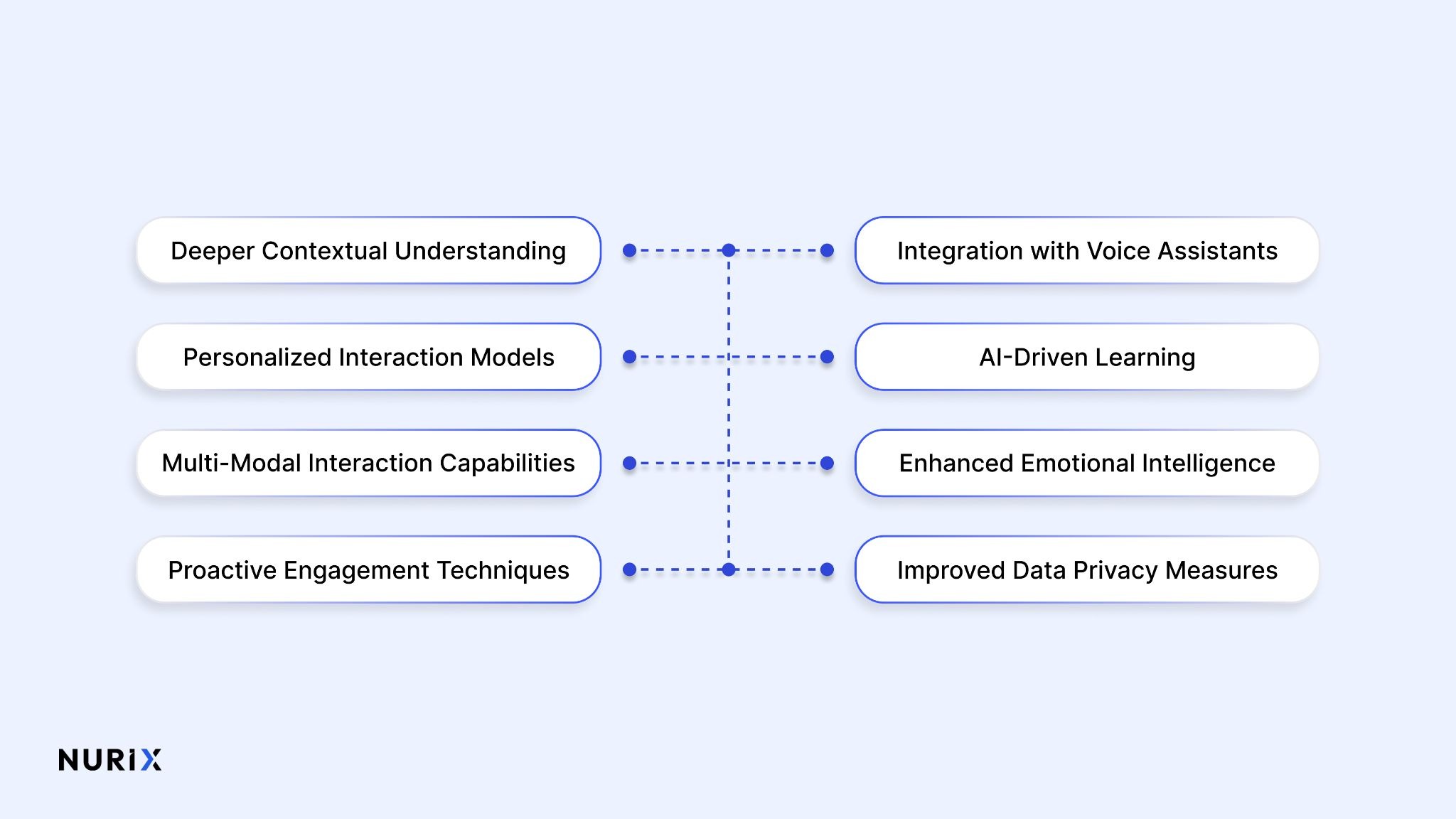
The field of chatbot intent recognition is advancing rapidly. As users demand more personalized experiences, chatbot intent classification and how chatbots identify intent will continue to evolve.
According to Gartner, by 2027, chatbots will become the primary customer service channel for roughly a quarter of organizations, highlighting the growing importance of accurate intent recognition.
- Deeper Contextual Understanding: Future algorithms will interpret subtle nuances in user queries, enhancing how chatbots identify intent and improving chatbot intent classification.
- Integration with Voice Assistants: Voice-based systems will enable chatbots to better understand spoken language, improving chatbot intent classification and how chatbots identify intent in voice interactions.
- Personalized Interaction Models: Tailored intent models based on user history will make chatbot intent classification more relevant, leading to more engaging and accurate responses.
- AI-Driven Learning: Continuous learning from interactions will help chatbots adapt, improving how chatbots identify intent and boosting chatbot intent classification accuracy over time.
- Multi-Modal Interaction Capabilities: Future chatbots will process text, voice, and visuals, enhancing how chatbots identify intent across various inputs and improving overall chatbot intent classification.
- Enhanced Emotional Intelligence: Chatbots will recognize emotional cues in user interactions, allowing for more empathetic responses and refined chatbot intent classification.
- Proactive Engagement Techniques: Anticipating user needs based on past interactions will help chatbots predict intent and proactively assist, improving chatbot intent classification.
- Improved Data Privacy Measures: As privacy concerns grow, chatbots will ensure secure data handling while maintaining effective how chatbots identify intent and chatbot intent classification.
By embracing these trends, businesses can enhance their chatbot’s ability to accurately identify user intent, improving both customer satisfaction and engagement.
Also Read: Generative AI in Customer Service: Use Cases and Benefits
Conclusion
Nailing user intent is crucial for creating chatbots that truly engage customers. By sharpening how chatbots identify intent and improving intent classification, businesses can deliver personalized experiences that stand out.
This not only boosts satisfaction but also builds loyalty. A well-designed chatbot can transform casual interactions into meaningful relationships, making it a valuable asset for any brand.
Transform Your Customer Support with NuPlay by Nurix AI!
- Instant, intelligent AI chatbots for seamless customer engagement.
- Automate repetitive tasks, freeing agents for high-value work.
- Resolve queries 36% faster with real-time AI support.
- 24/7 omnichannel service without added operational costs.
- Cut costs by 60%, boosting overall efficiency.
- Maximize agent productivity by letting AI handle routine queries.
Elevate your customer service with NuPlay by Nurix AI. Revolutionize your support experience today! Get in touch with us!
Chatbot intent refers to the purpose behind a user's query, guiding the bot's response.
Chatbots use natural language processing and machine learning to analyze user input and determine intent.
Intent detection ensures relevant responses, enhancing user satisfaction and engagement during interactions.
Common intents include FAQs, order tracking, appointment scheduling, and product inquiries.
Businesses can enhance classification by training models with diverse data and continuously refining algorithms based on user interactions.
Don’t miss what’s next in AI.
Subscribe for product updates, experiments, & success stories from the Nurix team.