.jpg)

AI is no longer a pilot initiative in insurance. It is becoming a core layer of claims operations. Recent industry data (McKinsey, 2025) shows that over 88% of organizations are already using AI in at least one business function, with claims processing emerging as one of the fastest areas of adoption.
For claims teams, the pressure is clear. Manual First Notice of Loss (FNOL), document-heavy workflows, and delayed decisioning are slowing down settlements and increasing operational costs as claim volumes rise.
AI for claims processing addresses this by automating how claims are captured, validated, and routed. Using machine learning and Natural Language Processing (NLP), it converts unstructured inputs like calls, documents, and images into structured data that systems can act on instantly.
In this guide, you’ll learn how AI is used in claims processing, the core capabilities behind it, high-impact use cases, and how to choose the right platform for enterprise-scale deployment.
What is AI for Claims Processing?
AI for claims processing automates intake, document extraction, triage, and fraud detection across the claims lifecycle. Insurers reduce costs, improve accuracy, and speed up settlements using AI-driven workflows with human oversight and real-time decisioning.
Key Takeaways
- AI for Claims Processing Is Moving to Execution at Scale: Insurers are shifting from pilots to production by automating FNOL, triage, and fraud workflows, reducing cycle time and allowing consistent, high-volume claims processing outcomes
- Real-Time Intake Defines Competitive Advantage: AI for claims processing that captures structured data instantly through voice and digital channels reduces intake errors and accelerates downstream decisions across claims workflows
- High-ROI Use Cases Drive Adoption First: FNOL automation, Straight-Through Processing (STP), and fraud triage deliver measurable impact on cost per claim and processing speed, making them the first priorities for enterprise deployment
- Orchestration Across Systems Is the Real Differentiator: Insurance claims technology that executes workflows across claims, policy, and CRM systems removes manual handoffs and improves operational throughput at scale
- Enterprise-Ready AI Requires Governance and Integration Depth: AI for insurance claims processing must combine auditability, API-based integrations, and human-in-the-loop controls to ensure compliance, scalability, and long-term operational reliability
How AI Is Used in Insurance Claims Processing
AI in claims processing embeds machine learning, Natural Language Processing (NLP), and automation across First Notice of Loss (FNOL), document ingestion, triage, fraud scoring, and settlement workflows, allowing insurers to process claims with structured data extraction, real-time decisioning, and reduced manual intervention across systems.
Operational applications across the claims lifecycle include:
.jpg)
- FNOL Data Capture Automation: Voice and chat agents capture structured FNOL data, validate policy details, and create claims instantly within core systems.
- Document Intelligence Processing: Optical Character Recognition (OCR) extracts data from invoices, medical reports, and images into structured claim fields for downstream workflows.
- AI-Based Claim Triage: Machine learning models score claim severity and complexity, routing cases to Straight-Through Processing (STP) or human adjusters.
- Fraud Pattern Detection Systems: AI analyzes behavioral and historical claim data to identify anomalies and assign risk scores for Special Investigations Unit (SIU) review.
- Workflow Orchestration Execution: Agentic AI triggers actions across APIs, updating systems, notifying stakeholders, and advancing claims without manual follow-ups.
AI operationalizes claims workflows by converting unstructured inputs into structured decisions, allowing faster processing, controlled automation, and scalable execution across enterprise insurance environments.
See how automation is reshaping frontline workflows in How AI Is Changing Insurance Agent Roles
Core Capabilities Powering Modern AI-Driven Claims Processing
Modern AI-driven claims processing combines ML, NLP, computer vision (CV), and orchestration systems to automate data extraction, decisioning, and execution. These capabilities convert unstructured claim inputs into structured workflows, allowing real-time processing, predictive risk assessment, and scalable automation across enterprise insurance operations.
The following capabilities form the technical backbone of AI-driven claims systems:
- Machine Learning And Predictive Modeling: Machine Learning (ML) models analyze historical claims data to predict outcomes, estimate costs, and detect fraud using advanced architectures like Graph Neural Networks (GNNs).
- Natural Language Processing And LLMs: Natural Language Processing (NLP) and Large Language Models (LLMs) extract structured data from documents, while Retrieval-Augmented Generation (RAG) ensures responses use real-time enterprise data.
- Computer Vision For Damage Assessment: Computer Vision (CV) models analyze images to detect damage, classify severity, and estimate repair costs using Convolutional Neural Networks (CNNs).
- Robotic Process Automation Integration: Robotic Process Automation (RPA) executes rule-based tasks like claim registration and payment initiation, while AI models guide dynamic routing decisions.
- Cloud, APIs, and Explainable AI Governance: Cloud-native systems use APIs for real-time integration, while Explainable AI (XAI) frameworks like SHAP and LIME ensure transparent, auditable decisions.
These capabilities allow insurers to process claims with higher accuracy, faster decision cycles, and controlled automation while maintaining compliance, scalability, and full visibility across complex claims operations.
Explore broader applications across workflows in Use Cases of AI and RPA in the Insurance Industry
5 High-Impact Applications of AI for Claims Processing in Insurance
AI for claims processing delivers the highest ROI when applied to specific operational bottlenecks across intake, decisioning, fraud detection, and recovery workflows. The following applications are prioritized based on their impact on cycle time, cost per claim, and processing accuracy in enterprise insurance environments.
.jpg)
Each application connects business outcomes with measurable KPIs and deployable capabilities.
1. Instant FNOL Capture (Reduce Intake Time and Errors)
AI automates First Notice of Loss (FNOL) capture using voice, chat, and digital channels to create structured claims instantly.
What to measure:
- Time from FNOL submission to claim creation
- FNOLs requiring manual correction
- Time to first adjuster or automated action
Capabilities to implement:
- Multichannel intake (web, chat, mobile, voice) with consistent data capture
- NLP-based extraction of incident details into structured claim fields
- Real-time validation (policy match, required fields, basic coverage checks)
- Confidence-based routing to human review for ambiguous or incomplete FNOLs
- Direct integration into the core claims system with an auditable intake trail
Enterprise impact: Reduces intake delays and improves downstream data quality.
2. Scale Straight-Through Processing (STP) for Routine Claims (Cut Cost per Claim)
Straight-Through Processing (STP) automates low-risk claims using rules and model-driven decisions.
What to measure:
- Percentage of claims settled via STP
- Average handling cost per claim
- Reopen or exception rate after settlement
Capabilities to implement:
- Clear STP eligibility rules based on coverage, claim value, and risk thresholds
- Automated ingestion and verification of receipts, photos, and estimates
- Decision engines combining deterministic rules with model-driven risk scores
- Automated payment and notification workflows with built-in controls
- Continuous monitoring of outcomes to adjust thresholds and rules
Enterprise impact: Lowers operational cost and increases processing throughput.
3. Faster Adjuster Decisions With Decision Support (Raise Throughput and Consistency)
AI reduces adjuster workload by summarizing claim data and recommending next actions.
What to measure:
- Claims resolved per adjuster
- Median decision time for mid-complexity claims
- Decision reversals or quality review findings
Capabilities to implement:
- AI-generated claim summaries highlighting key facts, policy terms, and history
- Suggested next actions with rationale and confidence indicators
- Priority queues based on urgency, risk, and expected effort
- Search and retrieval of similar historical claims and outcomes
- Automatic transcription and structuring of call notes and communications
Enterprise impact: Improves adjuster productivity and decision consistency.
4. Smarter Fraud Triage (Prioritize Real Risks Earlier)
AI identifies fraud signals earlier using cross-system data analysis and anomaly detection.
What to measure:
- Percentage of flagged claims accepted by SIU
- Time from FNOL to SIU referral
- Fraud-related savings or prevented losses
Capabilities to implement:
- Pattern and anomaly detection across claim, policy, and behavioral data
- Rules for known fraud indicators (provider patterns, timing, inconsistencies)
- Explainable risk scores that highlight why a claim is flagged
- Tiered routing: immediate SIU referral vs. enhanced adjuster review
- Feedback loops from investigation outcomes to refine detection logic
Enterprise impact: Reduces fraud leakage and improves investigation efficiency
5. Faster Recoveries & Vendor Orchestration (Protect Margins After Payment)
AI automates subrogation and recovery workflows by identifying liability and coordinating vendors.
What to measure:
- Subrogation identification rate
- Recovery dollars collected per period
- Time from claim payment to recovery initiation
Capabilities to implement:
- Automated scanning of claims for third-party liability indicators
- Rule-based prioritization by expected recovery value
- Workflow orchestration for vendors, legal partners, and internal teams
- Real-time visibility into recovery status, aging, and vendor performance
- Automated documentation and correspondence to reduce manual follow-ups
Enterprise impact: Increases recovery rates without adding operational overhead
AI for claims processing delivers the most value when applied to FNOL, Straight-Through Processing (STP), decision support, fraud detection, and recoveries. Focusing on measurable outcomes and deploying these use cases in sequence helps insurers reduce cycle time, control costs, and scale automation with precision.
NuPlay by Nurix AI is an enterprise AI voice and chat platform that delivers low latency and supports 400+ integrations for real-time claims automation. It allows insurers to deploy FNOL automation, decision support, fraud detection, and workflow orchestration within a single production-grade system.
How to Choose the Right AI Platform for Claims Processing
Selecting an AI platform for claims processing requires evaluating system capabilities across data ingestion, orchestration, compliance, and integration depth. The right platform should align with measurable operational goals, support multi-format inputs, maintain auditability, and execute workflows across systems without increasing manual dependencies or process fragmentation.
Key evaluation criteria for enterprise AI platform selection include:
- Outcome-Driven Evaluation Criteria: Define measurable targets such as cycle time reduction, cost per claim, and fraud detection accuracy before comparing vendors.
- Multimodal Data Processing Capability: Platform must process voice, chat, documents, and images while maintaining context continuity across channels and claim stages.
- Auditability and Governance Controls: Ensure systems provide traceable logs, explainable decisions, and human-in-the-loop validation for compliance and regulatory review.
- Integration Architecture and API Depth: Evaluate Application Programming Interface (API) support, real-time data sync, and compatibility with claims, policy, and Customer Relationship Management (CRM) systems.
- Execution-Oriented Workflow Orchestration: Prioritize platforms that trigger actions across systems instead of only providing recommendations, reducing manual follow-ups and operational delays.
The right AI platform aligns technical capabilities with measurable outcomes, integrates seamlessly into existing systems, and executes workflows reliably while maintaining full control, visibility, and compliance across enterprise claims operations.
Discover additional real-world implementations in Top 7 Generative AI Use Cases in Insurance: Benefits and Challenges
AI in Claims Processing Trends (2026 and Beyond)
AI in claims processing is shifting toward proactive, real-time systems that combine Agentic AI, Internet of Things (IoT), and multimodal data processing. The market is expected to grow from 2026 to approximately USD 176.58 billion by 2035 (Precedence Research), reflecting how insurers are redesigning workflows to detect risk earlier and automate decisions at the source.
Emerging trends shaping next-generation claims systems include:
- Agentic AI Workflow Execution: Agentic AI systems autonomously complete multi-step tasks like coordinating repairs, using predefined goals, and system-level orchestration with human oversight.
- Multimodal Data Processing Systems: AI models analyze text, voice, and images together, allowing richer claim context and more accurate decisions across complex claim scenarios.
- IoT-Based Claim Triggering: Internet of Things (IoT) sensors in vehicles and homes detect incidents instantly, triggering claims and capturing real-time event data at the source.
- Digital Twins And Edge Processing: Digital twins simulate asset damage using live data, while edge computing processes data locally to reduce latency and allow immediate decisions.
- Explainable And Privacy-Preserving AI: Explainable AI (XAI) frameworks like SHAP and LIME provide transparent decision logic, while federated learning helps secure model training without sharing raw data.
AI in claims processing is evolving into proactive, real-time systems that combine automation, predictive intelligence, and governance, allowing insurers to prevent losses, accelerate decisions, and operate with greater precision and control.
Understand why early-stage automation matters in Why Insurers Can’t Ignore AI for FNOL Handling Now
How NuPlay by Nurix AI Allows Enterprise-Scale Claims Automation
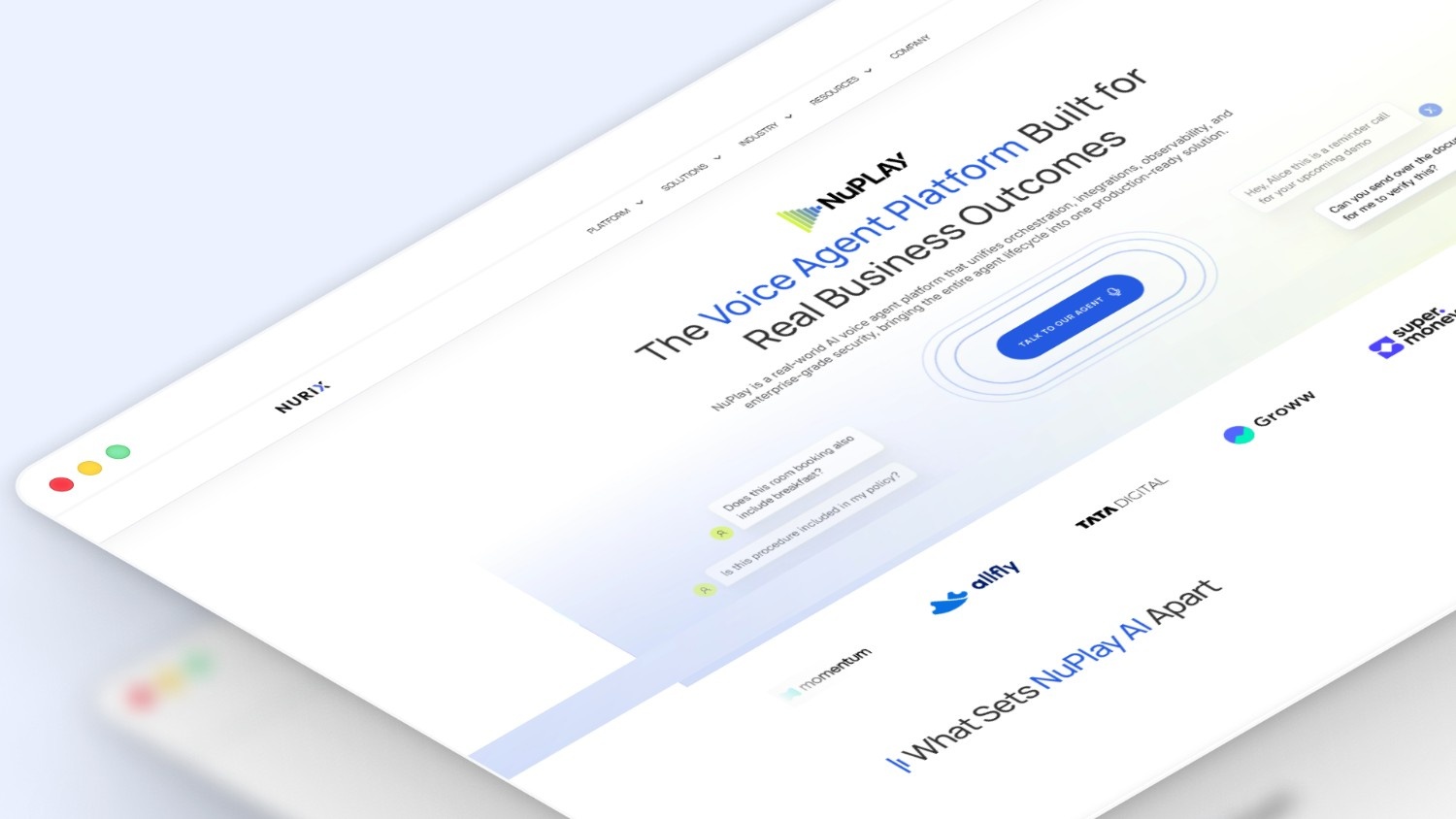
NuPlay by Nurix AI is an enterprise AI voice and chat platform that delivers sub-800ms latency and supports 400+ integrations for real-time claims automation. It executes claims workflows across intake, decisioning, and post-processing by orchestrating systems, data, and actions, allowing insurers to run high-volume operations with measurable speed, accuracy, and control.
NuPlay by Nurix AI capabilities that directly help production-scale claims execution include:
- Sub-800ms Voice AI Execution: Processes First Notice of Loss (FNOL) interactions in real time, capturing structured claim data without latency-driven drop-offs or context loss.
- Agentic Workflow Orchestration Engine: Executes multi-step claims workflows across systems using coordinated AI agents, eliminating manual handoffs and ensuring continuous process flow.
- 300+ Integration Ecosystem (API-Based Connectivity): Connects claims systems, policy platforms, and Customer Relationship Management (CRM) tools through secure Application Programming Interfaces (APIs) for real-time data exchange.
- NuPulse Observability And Performance Tracking: Monitors metrics like completion rates, drop-offs, and decision outcomes, allowing continuous optimization through real-time feedback loops.
- Enterprise Governance And Human-In-The-Loop Controls: Maintains audit trails, explainable decisions, and controlled automation to meet compliance and regulatory requirements in insurance environments.
NuPlay by Nurix AI transforms claims operations into execution-ready systems by combining real-time voice AI, orchestration, and deep integrations, allowing insurers to scale workflows with speed, precision, and measurable business outcomes.
Real FNOL Results With AI for Claims Processing
A leading P&C insurer deployed NuPlay’s Claims Agent, a 24/7 virtual assistant that provides Instant FNOL Filing, smart incident capture, and seamless integration with AMS platforms like Applied and Momentum, and saw measurable gains.
Key outcomes:
- 70%+ of FNOL filings handled without agents.
- 2× increase in digital FNOL adoption.
- 40% reduction in support workload.
- 22% uplift in customer satisfaction.
These results came with real-time claim updates, multilingual support, and unlimited concurrent sessions, so customers get fast, accurate responses even during spikes.
For insurers ready to reduce friction at scale, this approach turns AI for claims processing into a steady operational advantage.
Conclusion
AI for claims processing is becoming a practical layer in how insurers handle growing volumes, tighter timelines, and higher expectations for accuracy. The focus is now on applying AI where it delivers consistent outcomes across everyday claims workflows.
As insurers move from pilots to production, AI for claims processing becomes less about experimentation and more about execution at scale.
If you’re looking to operationalize these capabilities across your claims workflows, NuPlay by Nurix AI allows real-time voice intake, workflow orchestration, and system-level execution designed for enterprise environments.
Schedule a custom demo with NuPlay by Nurix AI to see how these capabilities map to your FNOL and STP goals.
Author: Sakshi Batavia — Marketing Manager
Sakshi Batavia is a marketing manager focused on AI and automation. She writes about conversational AI, voice agents, and enterprise technologies that help businesses improve customer engagement and operational efficiency.