.jpg)

Phone-based sales outreach remains effective, but scaling meaningful conversations is difficult. Sales representatives can only handle a limited number of calls, while valuable insights often go uncaptured.
Meanwhile, the Contact Center AI software market is projected to reach $15 billion by 2025 and grow at a 22% CAGR through 2033 (Archive Market Research, 2026-2033), signaling a major shift toward intelligent voice automation.
This guide explains how AI sales calling works, the tools powering it, and how sales teams can implement it effectively.
In Short
- AI-Powered Sales Conversations: AI sales calling uses conversational artificial intelligence to automate prospect calls, qualify leads, and capture structured pipeline data from voice interactions.
- Core Technology Stack: Systems combine Speech-to-Text (STT), Natural Language Processing (NLP), and Large Language Models (LLMs) to interpret intent and generate real-time responses.
- Key Sales Use Cases: Teams use AI sales calls for automated prospecting, real-time call assistance, and post-call intelligence that improves coaching and pipeline forecasting.
- Leading AI Sales Platforms: Tools such as NuPlay, Gong, Chorus, Cresta, and Balto allow voice automation, conversation analytics, and real-time sales guidance.
- Business Impact: AI sales calling scales outreach while converting voice conversations into structured Customer Relationship Management (CRM) insights for better sales execution.
What Are AI Sales Calls?
AI sales calling refers to voice-based sales conversations conducted or assisted by conversational artificial intelligence systems that qualify prospects, schedule meetings, and update CRM records automatically.
Unlike robocalls that play pre-recorded messages, AI sales calls conduct two-way conversations that interpret buyer intent and respond dynamically throughout the sales funnel.
Core technical capabilities that define AI sales calls in enterprise sales environments include the following components.
- Speech Recognition Pipeline (STT): STT converts live voice audio into structured text streams, allowing downstream NLP models to interpret buyer intent.
- Conversational Intent Detection (NLP): NLP models classify questions, objections, and buying signals by analyzing linguistic patterns and contextual conversation history.
- Autonomous Sales Agents: AI voice agents independently conduct outbound prospecting calls, qualify leads, and schedule meetings using predefined sales workflows and CRM-connected prospect data.
- Agent Assist Copilots: Real-time copilots surface objection-handling prompts, product documentation, and competitive insights during calls by querying CRM and knowledge systems.
- Conversation Intelligence Analytics: Machine learning models evaluate talk-to-listen ratios, sentiment shifts, and pricing objections to generate performance insights for pipeline forecasting and sales coaching.
AI sales calls convert conversations into structured revenue data, allowing scalable outreach while maintaining personalized buyer engagement.
To see how voice automation is transforming real conversations between brands and customers, explore How AI Voice Calls Are Changing Customer Interactions.
How AI Sales Calls Work
AI sales calls run through a real-time conversational pipeline. Voice input, intent detection, response generation, and CRM updates execute within milliseconds to maintain a natural conversation.
The operational workflow behind AI sales calls relies on several tightly connected components that coordinate voice processing, intent detection, and sales workflow automation.
- Speech Signal Processing: Automatic Speech Recognition (ASR) converts live audio streams into timestamped transcripts so downstream NLP models can analyze conversational meaning.
- Intent Classification Engine: NLP models classify prospect responses into structured intents such as pricing objection, feature inquiry, or purchase interest.
- Dialog Policy Orchestration: Dialog Management systems apply decision trees and LLMs to determine the next response based on conversation context and sales objectives.
- Knowledge Retrieval Layer: Retrieval-Augmented Generation (RAG) connects AI agents to CRM records, product documentation, and knowledge bases to deliver accurate responses.
- Voice Response Synthesis: TTS engines convert generated responses into natural speech with controlled pacing, tone modulation, and brand-aligned voice characteristics.
AI sales call systems orchestrate speech processing, intent detection, knowledge retrieval, and CRM synchronization simultaneously, allowing voice agents to maintain natural conversations while executing structured sales workflows.
Benefits and Use Cases of AI Sales Calls for Sales Teams
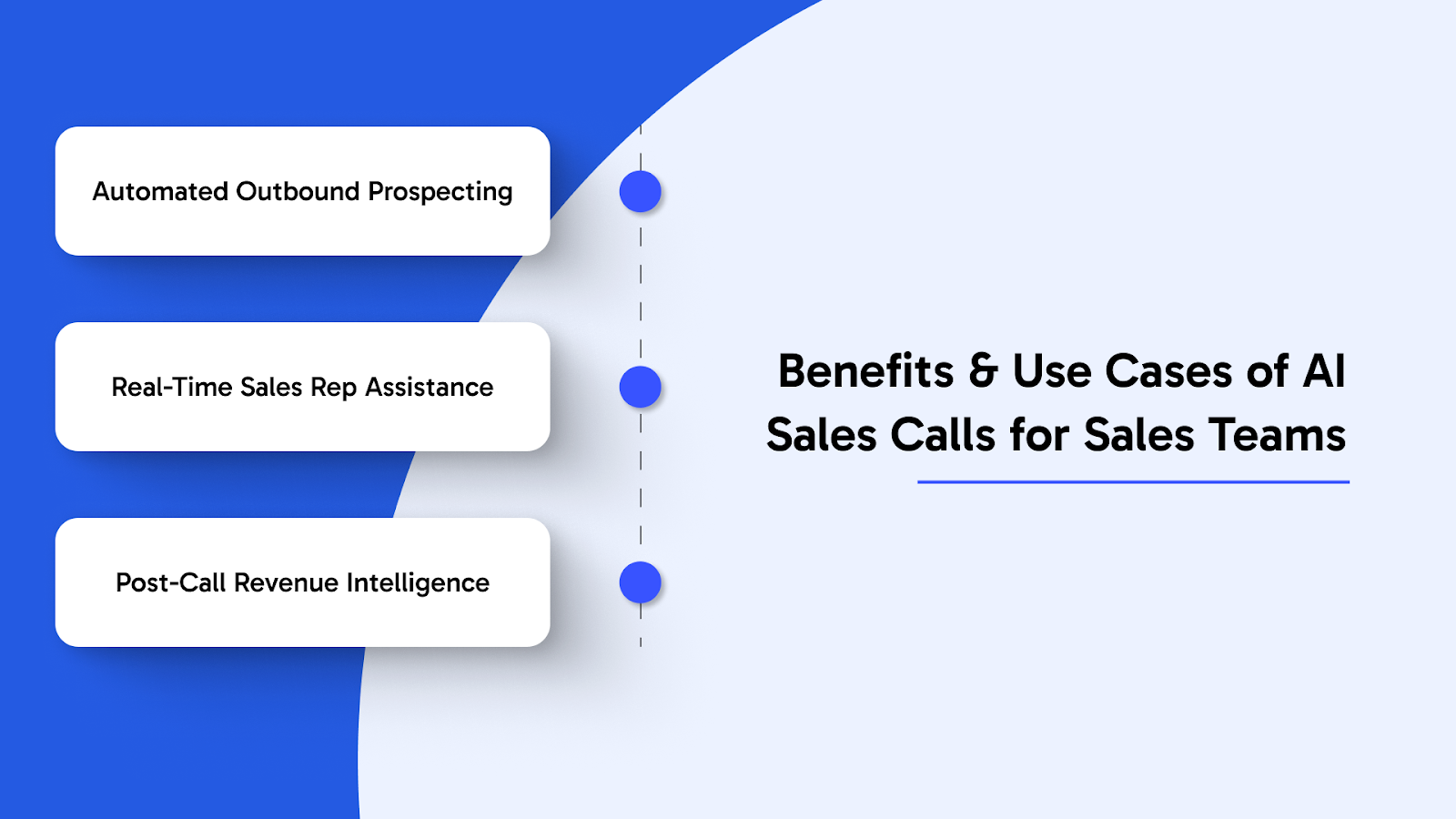
AI sales calls improve sales team productivity by automating prospect outreach, assisting representatives during live conversations, and converting call data into structured CRM insights.
These systems increase pipeline velocity by scaling outbound prospecting, providing real-time call guidance, and generating post-call intelligence for forecasting and coaching.
1. Automated Outbound Prospecting
AI sales call systems scale outbound prospecting by automatically dialing, qualifying, and routing interested prospects to sales representatives without requiring manual dialing workflows.
- High-Volume Lead Outreach: Artificial intelligence voice agents contact thousands of prospects daily using integrated telephony APIs (Application Programming Interfaces) while maintaining consistent messaging and structured qualification scripts.
- Automated Lead Qualification: NLP analyzes prospect responses to identify buying intent, company size, and budget readiness before routing qualified opportunities into CRM pipelines.
- Meeting Scheduling Automation: AI sales agents automatically book discovery calls by syncing availability with calendar systems such as Google Calendar or Microsoft Outlook through secure scheduling integrations.
2. Real-Time Sales Rep Assistance
AI sales call copilots analyze live conversations and surface contextual intelligence that helps representatives respond faster, handle objections effectively, and maintain structured conversation flow during calls.
- Objection Detection Intelligence: ML models detect competitor mentions, pricing objections, or hesitation signals during calls and automatically surface contextual responses from product knowledge repositories.
- Dynamic Sales Playbooks: AI copilots present relevant battle cards, pricing guidelines, and product positioning documents when keywords appear during conversations, keeping representatives aligned with approved messaging.
- Conversation Performance Monitoring: Artificial intelligence systems track talk-to-listen ratios and interruption frequency to help representatives maintain balanced, buyer-focused conversations during discovery or qualification calls.
3. Post-Call Revenue Intelligence
AI sales call platforms convert conversation data into structured analytics that support pipeline forecasting, coaching programs, and operational automation across revenue teams.
- Automated Call Summaries: LLMs generate structured meeting summaries that highlight objections, decision criteria, and next steps, then automatically sync records to CRM systems.
- Deal Risk Detection: Artificial intelligence analyzes conversation transcripts to identify signals such as pricing hesitation, competitor references, or unclear decision authority that indicate potential deal risk.
- Pipeline Forecast Analytics: Machine Learning models aggregate conversation insights across deals to predict closing probability and forecast pipeline revenue more accurately than traditional manual sales reporting.
AI sales calls deliver measurable benefits across the sales funnel by automating outreach, supporting live conversations, and converting customer interactions into structured pipeline intelligence inside Customer Relationship Management (CRM) platforms.
See how enterprise teams automate sales conversations with NuPlay AI voice agents. Schedule a demo to watch AI sales calling in action.
Types of AI Sales Call Systems
AI sales call systems are conversational artificial intelligence platforms that automate outbound prospecting, assist live sales conversations, and analyze call data across enterprise sales workflows.
- Autonomous Voice Agents: Artificial intelligence agents independently conduct outbound calls, qualify prospects, and schedule meetings using NLP and Large Language Models (LLMs).
- Agent Assist Copilots: Real-time copilots listen in on sales conversations and provide contextual prompts by analyzing transcripts using NLP.
- Conversation Intelligence Platforms: Post-call analytics systems use Machine Learning (ML) models to evaluate transcripts, detect objection patterns, and measure metrics such as talk-to-listen ratios.
- Predictive Dialing Systems: Artificial intelligence dialing infrastructure prioritizes lead lists using predictive scoring models before automatically initiating high-volume outbound calling campaigns.
- Hybrid Human-AI Sales Systems: Hybrid architectures allow artificial intelligence to handle prospect discovery and lead qualification, then route sales-ready opportunities to human representatives.
AI sales call systems combine automation, conversational intelligence, and workflow orchestration to scale outbound engagement while maintaining structured data capture across CRM systems.
Best AI Tools for Sales Calls in 2026
The best AI tools for sales calls help teams automate prospect outreach, analyze conversations, and guide representatives during live calls. Leading platforms in 2026 include NuPlay, Gong, Chorus, Cresta, Balto, Salesken, Avoma, and Fireflies, combining voice automation, conversation intelligence, and real-time sales coaching.
Best AI Sales Call Tools: Comparison 2026
Widely used AI sales call platforms in 2026 include:
1. NuPlay
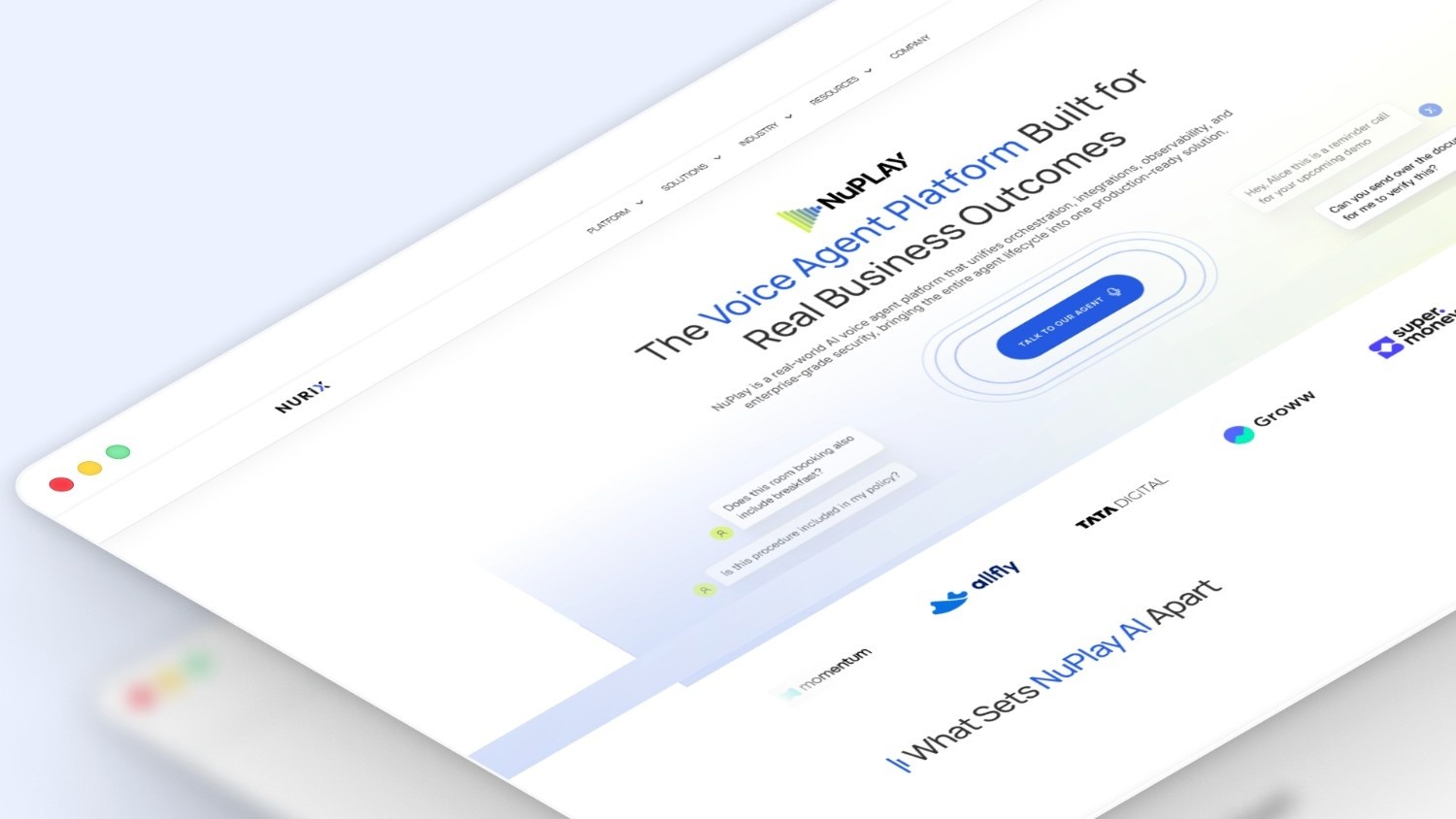
NuPlay is an AI voice agent platform that conducts outbound sales conversations and qualifies leads through conversational artificial intelligence.
- Best for: Enterprises automating outbound prospecting and lead qualification through AI voice agents.
- Pricing Model: Enterprise platform subscription with usage-based voice interaction pricing.
- Integrations / Compliance: Integrates with CRM platforms like Salesforce and HubSpot and enterprise systems such as Enterprise Resource Planning (ERP); designed with enterprise security and governance controls.
2. Gong
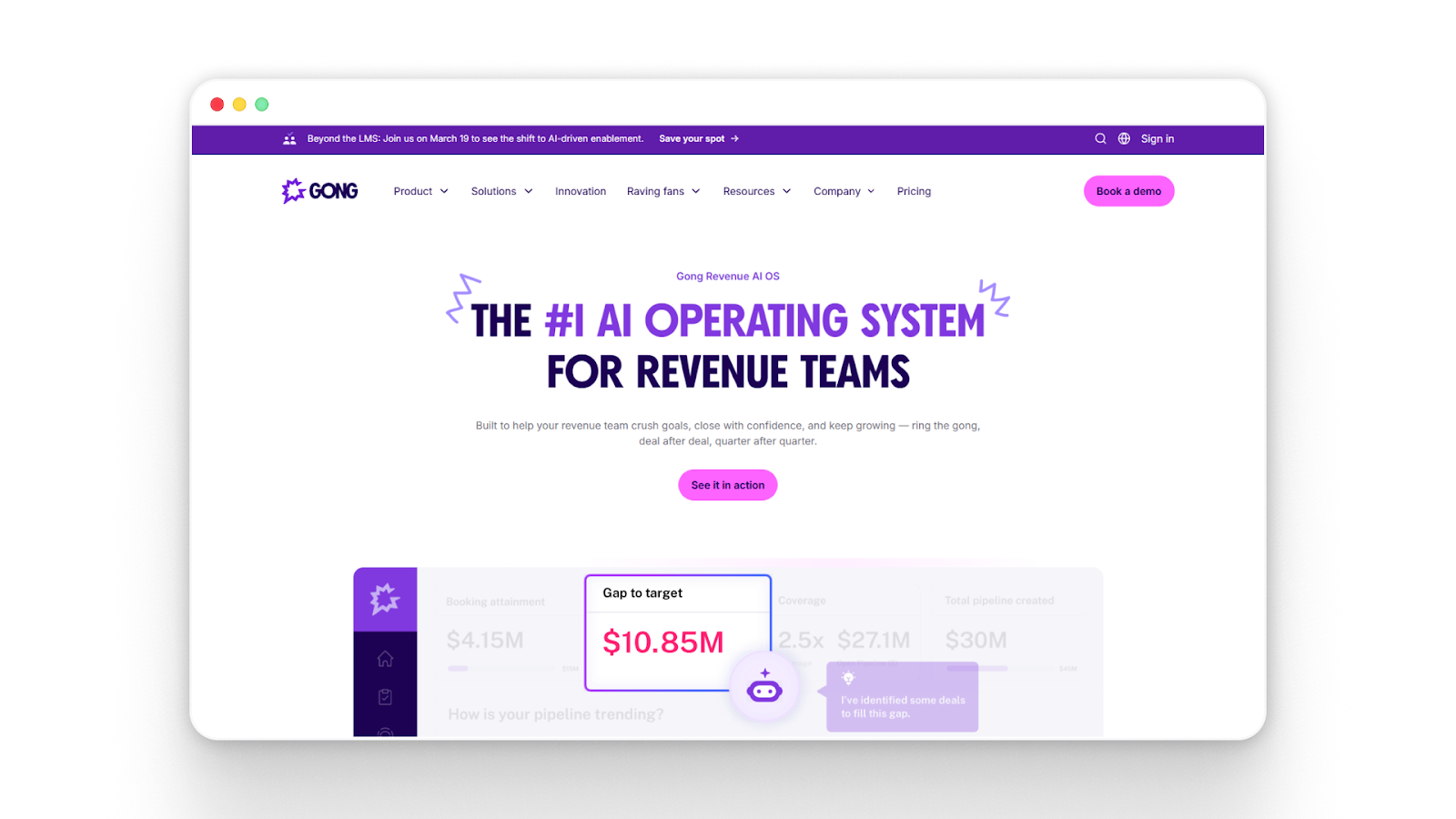
A revenue intelligence platform that analyzes recorded sales conversations to uncover deal risks, messaging effectiveness, and coaching opportunities.
- Best for: Revenue operations teams seeking conversation analytics across large sales pipelines.
- Pricing Model: Annual enterprise licensing based on the number of users and conversation volume.
- Integrations/Compliance: Integrates with Salesforce, HubSpot, Zoom, and Slack; enterprise-grade security and compliance certifications.
3. Chorus by ZoomInfo
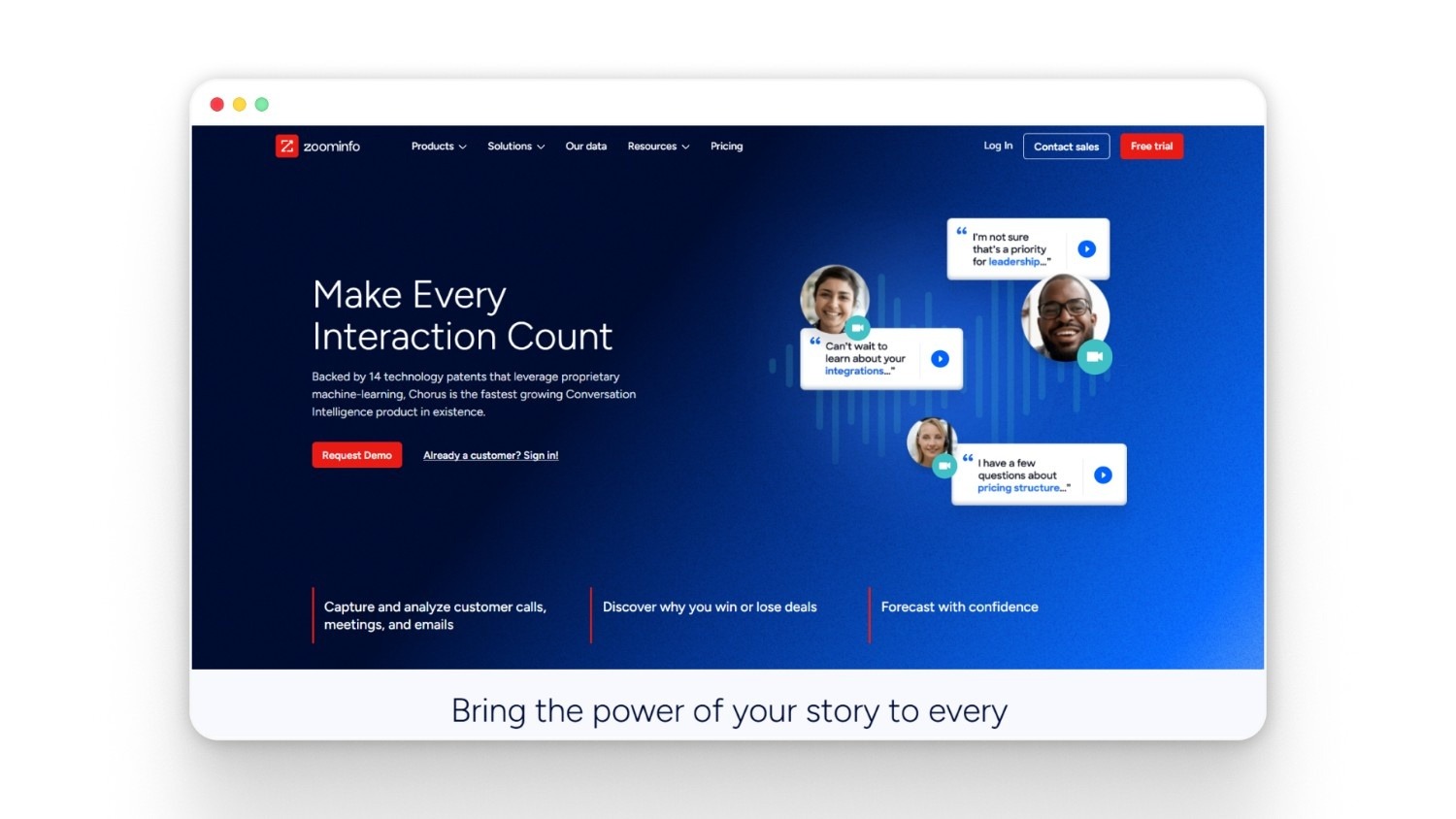
A conversation intelligence platform that records and analyzes sales calls to identify engagement patterns and successful messaging strategies.
- Best for: Sales enablement teams focused on coaching and improving call performance.
- Pricing Model: Enterprise SaaS subscription with custom pricing tiers.
- Integrations/Compliance: Integrates with Salesforce, ZoomInfo, and major video conferencing platforms.
4. Cresta
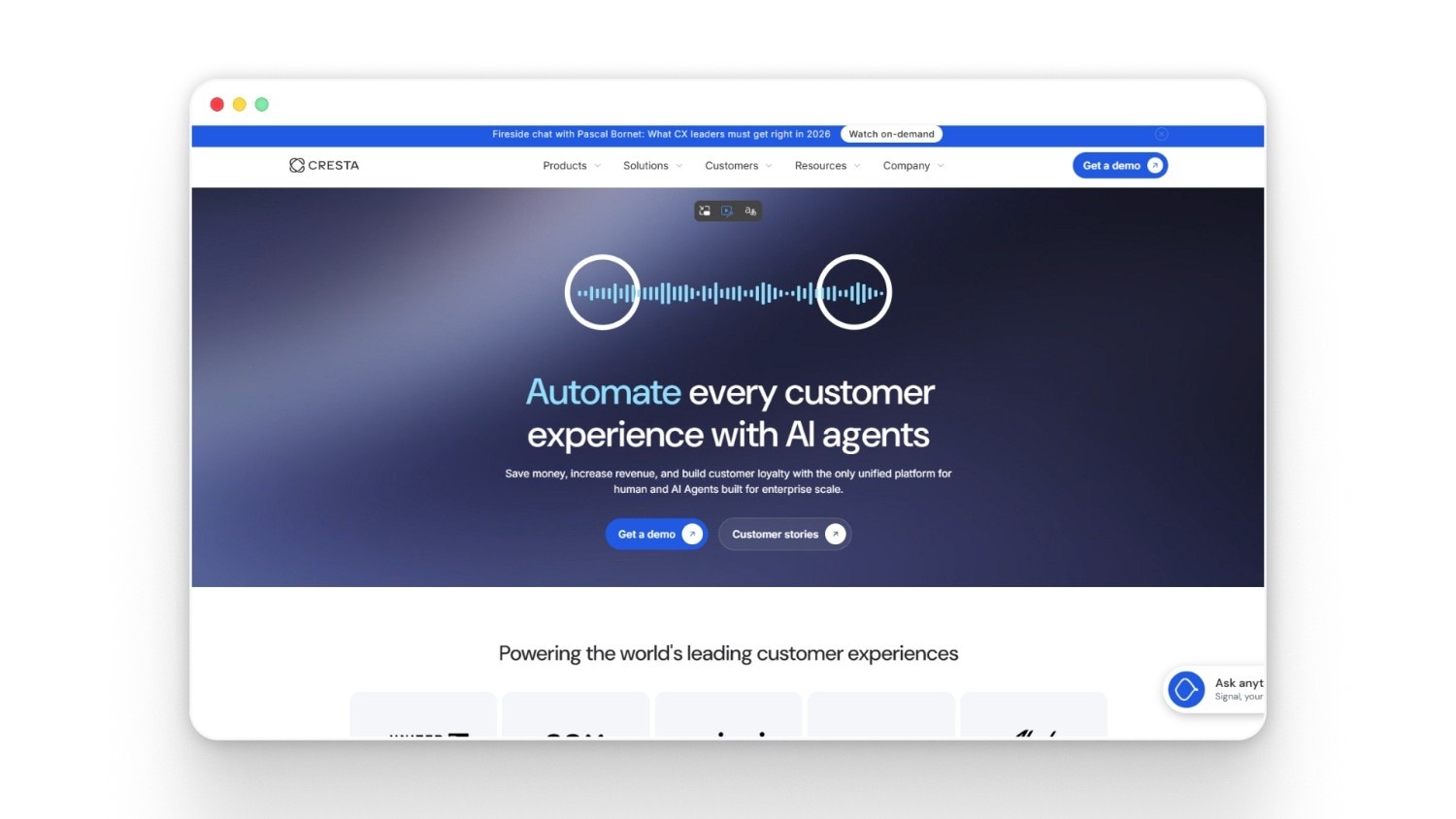
An artificial intelligence platform providing real-time guidance and suggestions to sales representatives during customer conversations.
- Best for: Contact centers and inside sales teams that need live coaching during calls.
- Pricing Model: Enterprise subscription is typically based on user seats.
- Integrations/Compliance: Integrates with call center software, CRM platforms, and enterprise communication systems.
5. Balto
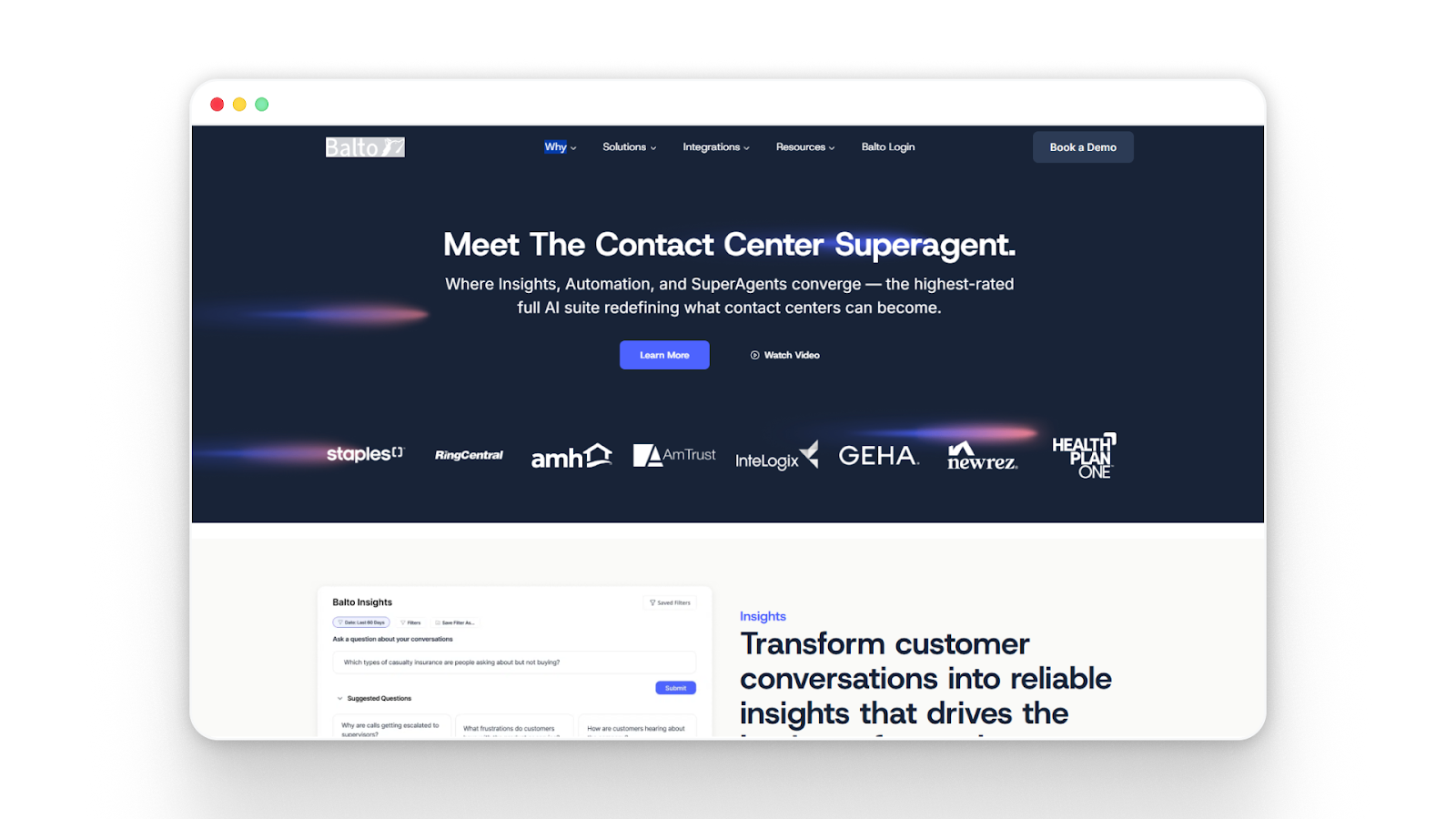
Real-time call guidance platform that monitors conversations and provides prompts, scripts, and compliance reminders.
- Best for: Sales teams operating in regulated industries requiring structured scripts and compliance oversight.
- Pricing Model: Per-user SaaS subscription model.
- Integrations /Compliance: Integrates with CRM systems and call center infrastructure; supports compliance monitoring workflows.
6. Salesken
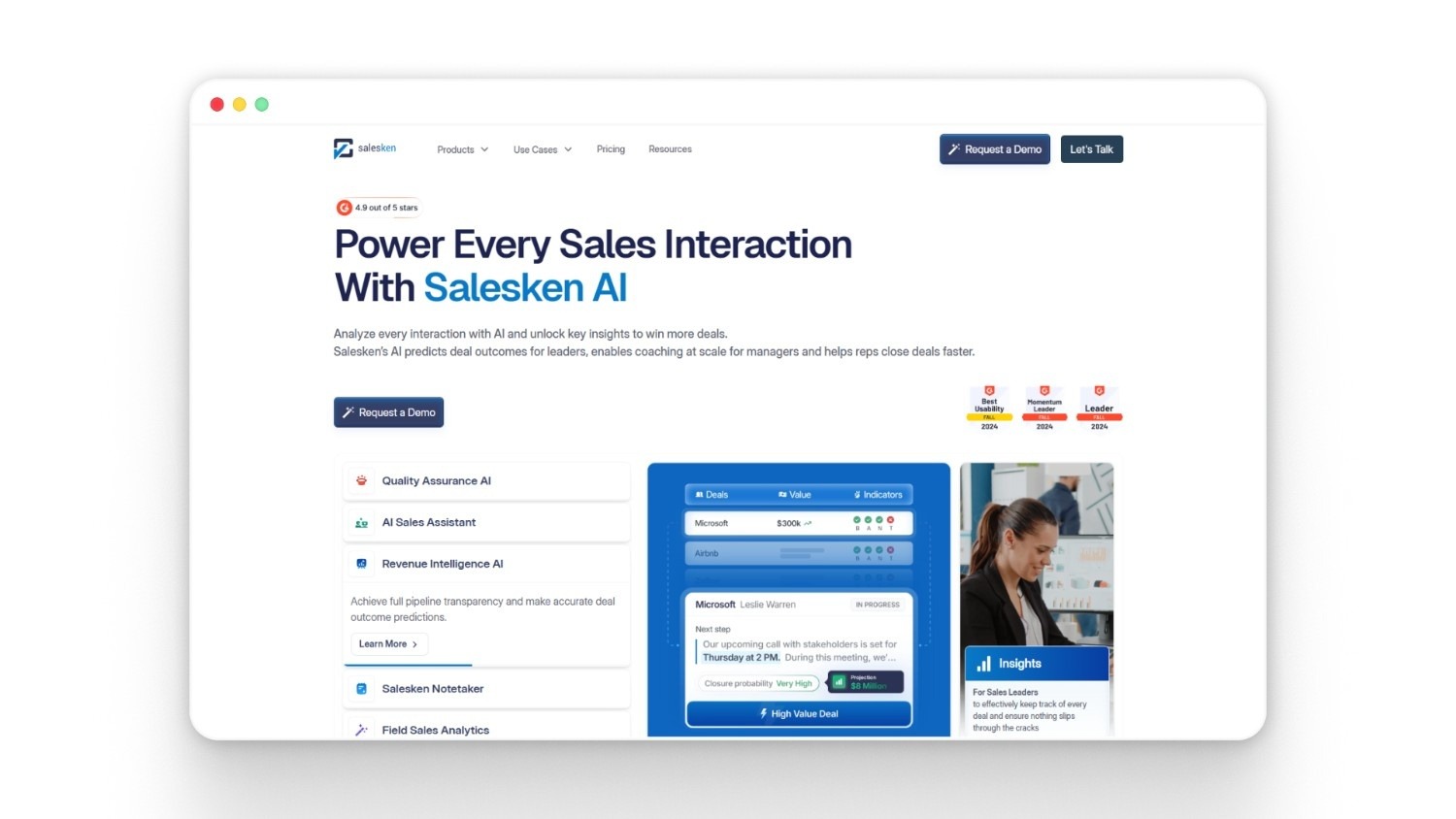
An AI-powered conversation analytics platform designed to improve call quality through real-time coaching and post-call insights.
- Best for: Sales teams focused on improving objection handling and conversation performance.
- Pricing Model: Enterprise SaaS subscription model.
- Integrations/Compliance: Integrates with CRM systems and sales engagement platforms used by inside sales teams.
7. Avoma
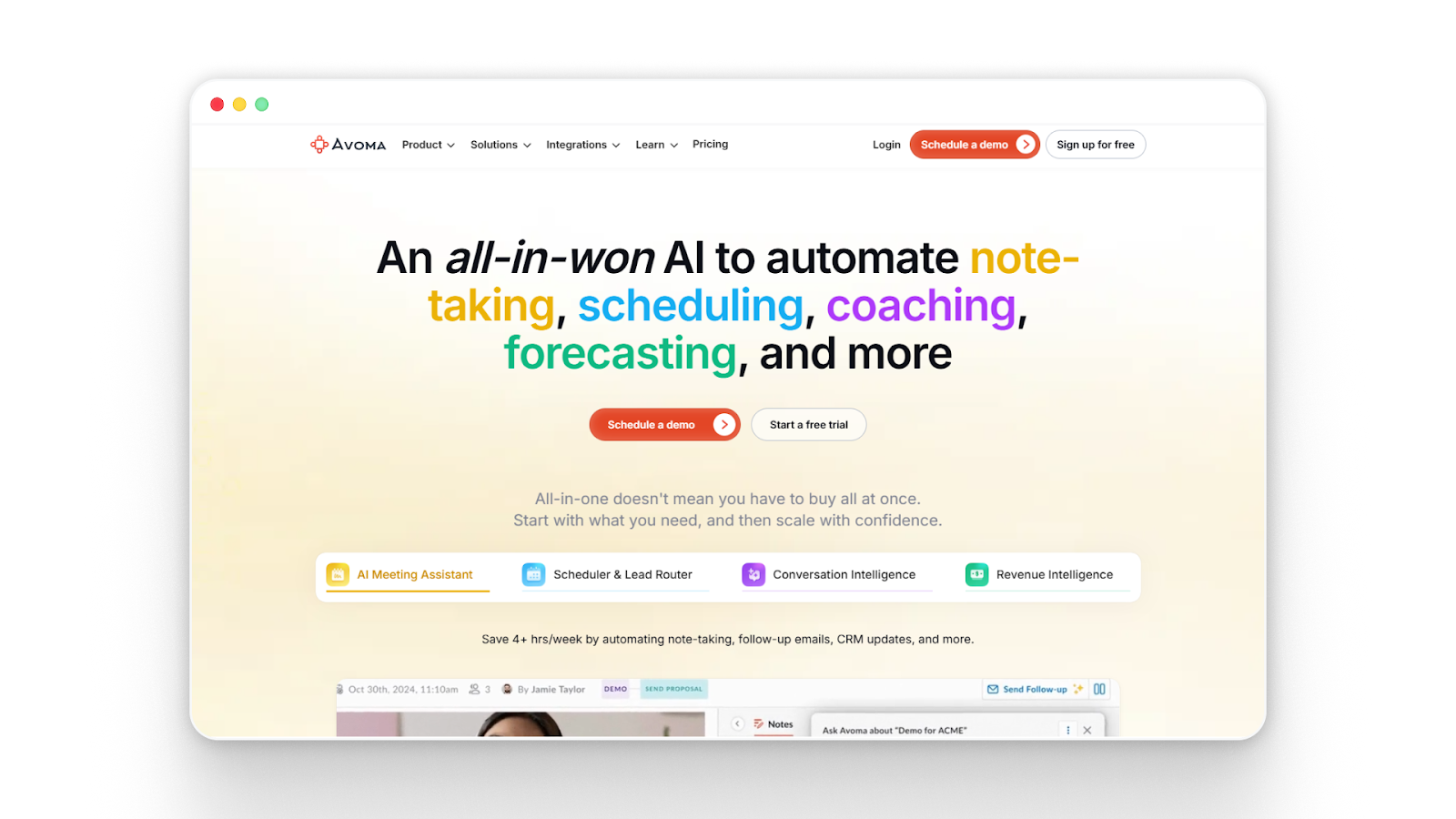
A meeting intelligence platform that records and transcribes sales calls while generating structured summaries and action items.
- Best for: Sales teams looking for automated call documentation and meeting insights.
- Pricing Model: Tiered SaaS subscription based on the number of users.
- Integrations/Compliance: Integrates with CRM systems, video conferencing tools, and calendar platforms.
8.Fireflies.ai
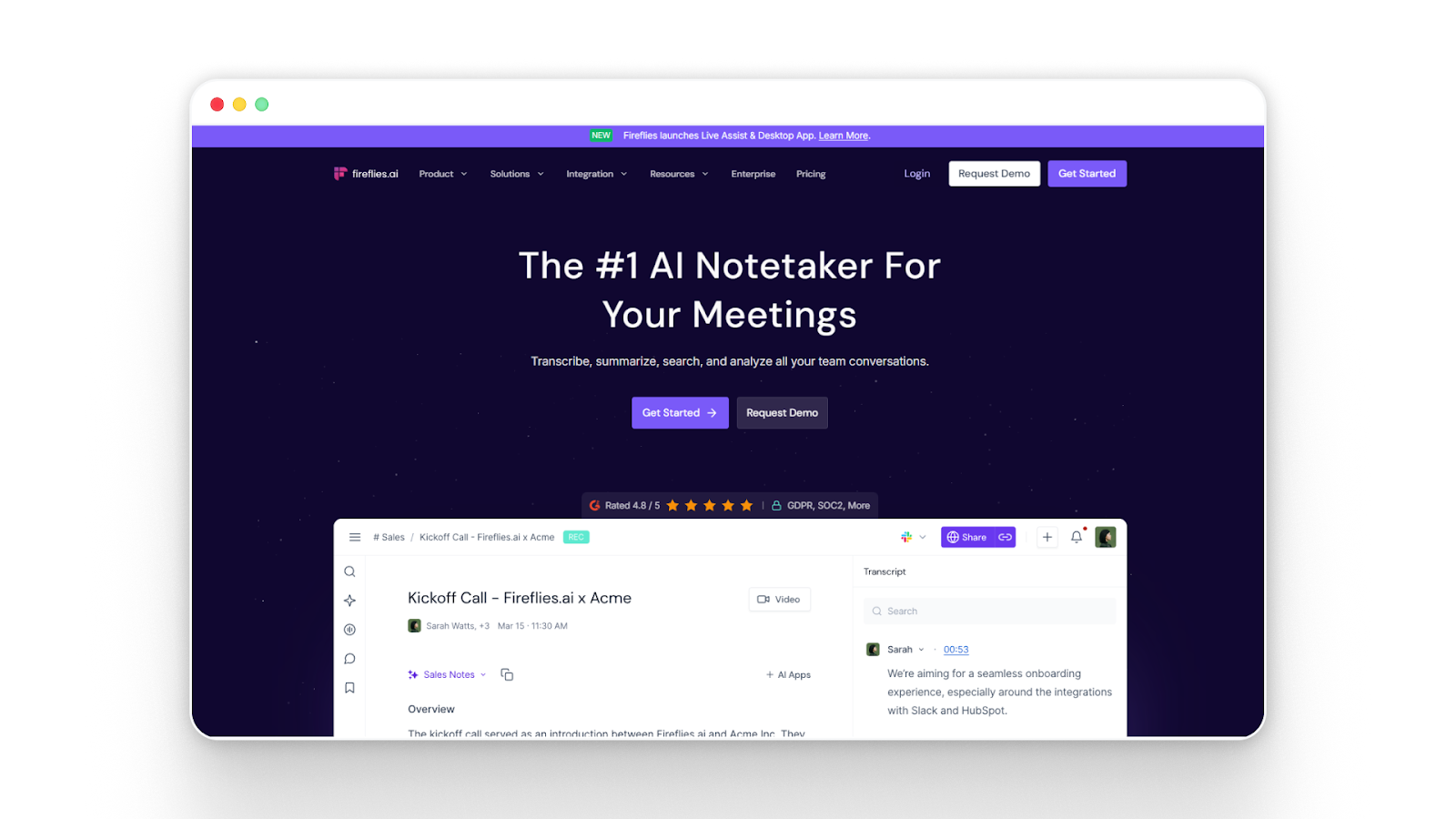
An AI meeting assistant that records, transcribes, and analyzes sales conversations for searchable insights.
- Best for: Teams needing lightweight conversation capture and meeting documentation.
- Pricing Model: Freemium model with paid subscription tiers for advanced analytics.
- Integrations/Compliance: Integrates with Zoom, Google Meet, Slack, and CRM tools for collaboration and knowledge sharing.
Together, these tools help sales organizations automate outreach, analyze customer conversations, and improve call performance while syncing insights into CRM platforms.
Learn the step-by-step approach to deploying AI-powered voice automation in How to Automate Your Call Center with AI: A 2026 Roadmap.
AI Sales Calls vs Traditional Cold Calling
AI sales calls use conversational artificial intelligence to automate or assist outbound prospect conversations, while traditional cold calling relies on manual dialing and human-managed interactions without real-time conversational intelligence.
The following table compares AI sales calls with traditional cold calling.
AI sales calls modernize outbound prospecting by combining automation, conversational intelligence, and CRM synchronization, allowing sales teams to scale outreach while improving data quality and call performance.
How to Implement AI Sales Calls in Your Sales Workflow
Implement AI sales calls by aligning conversational AI with CRM systems, defining performance metrics, integrating sales infrastructure, and deploying controlled rollouts to improve workflows without disruption.
Key steps for deploying AI sales calls include:
- Define Revenue Metrics: Establish measurable objectives such as lead qualification speed, opportunity conversion rate, and talk-to-listen ratio before deploying conversational artificial intelligence into outbound workflows.
- Select AI Sales Infrastructure: Choose platforms that support NLP, LLMs, and telephony integration, aligned with existing outbound prospecting workflows.
- Connect CRM and Data Systems: Allow two-way synchronization with CRM platforms so call summaries, prospect intent signals, and meeting outcomes automatically update pipeline records.
- Pilot Controlled Deployment: Launch AI sales calls with a limited group of Sales Development Representatives (SDRs) to test conversation flows, objection handling logic, and brand voice consistency.
- Monitor Performance And Compliance: Analyze conversation transcripts, conversion metrics, and privacy compliance requirements to continuously refine conversation scripts and maintain regulatory alignment for recorded calls.
AI sales calls deliver the greatest value when integrated gradually, aligned with measurable revenue metrics, and continuously optimized through conversation analytics and CRM pipeline feedback.
Learn the architecture, integrations, and infrastructure required for scalable voice AI in What You Need to Know Before Building an AI Voice Call Platform.
Future Trends in AI Sales Calls
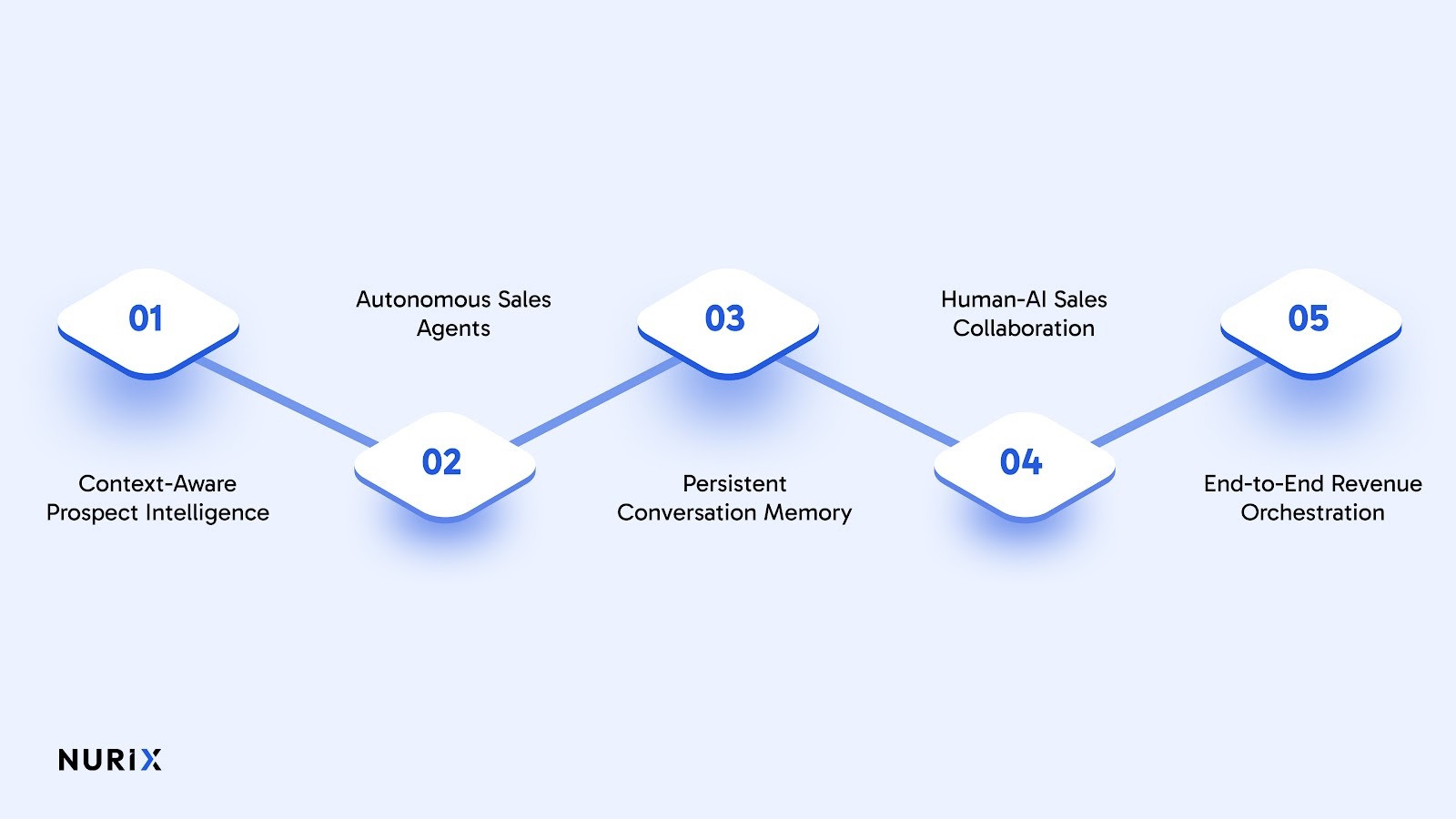
Future trends in AI sales calls focus on autonomous voice agents, deeper conversation intelligence, and tighter CRM integration. Advances in NLP and LLMs will allow hyper-personalized outreach, persistent conversation memory, and end-to-end automation of sales workflows.
Emerging technological developments shaping the next generation of AI sales calls include:
- Context-Aware Prospect Intelligence: AI systems will analyze intent signals from CRM data, website activity, and company news feeds to generate hyper-personalized outreach conversations.
- Autonomous Sales Agents: Artificial intelligence voice agents will independently initiate conversations, qualify prospects, recommend products, and route high-intent opportunities to human sales representatives.
- Persistent Conversation Memory: LLMs will maintain conversation context across multiple interactions, allowing artificial intelligence to reference past discussions during future sales calls.
- Human-AI Sales Collaboration: AI systems will handle data-heavy tasks such as lead qualification and call analysis while sales representatives focus on negotiation, relationship building, and deal closing.
- End-to-End Revenue Orchestration: Artificial intelligence will connect telephony systems, CRM platforms, and analytics tools to create unified sales workflows across the entire pipeline.
AI sales calls are moving quickly toward autonomous revenue systems in which conversational artificial intelligence, enterprise data infrastructure, and human sales expertise work together to accelerate pipeline growth.
Conclusion
AI sales calling is shifting outbound sales from manual dialing to scalable, intelligence-driven conversations. Instead of relying on rep bandwidth alone, organizations using AI sales calling can run continuous outreach while capturing structured pipeline insights from every interaction.
Enterprise platforms such as NuPlay operationalize this shift. NuPlay powers 799,982 conversations every month, allowing companies to achieve 65% cost savings, 80% automation coverage, and a 50% efficiency boost across sales and service workflows.
Ready to scale AI sales calling across your pipeline? Schedule a demo to see how NuPlay powers enterprise-grade voice agents in real sales environments.
Author: Sakshi Batavia — Marketing Manager
Sakshi Batavia is a marketing manager focused on AI and automation. She writes about conversational AI, voice agents, and enterprise technologies that help businesses improve customer engagement and operational efficiency.



.jpg)
.jpg)
.jpg)